
As part of Harwell XPS‘ series celebrating women in surface science, Prajna Bhatt was interviewed about her experiences in research and career. She’s absolutely brilliant and reflects in a very honest and clear way about how she feels about her work environment and the wider research field. Check out the video below!
Category Archives: Student News
PhD project available
We have a PhD project available through the open DTP studentships on gallium oxide thin films for electronic devices. You can find the project description here (the project ID is 2228cd1383). The project will involve the development of a solution-based, energy-efficient manufacturing process for Ga2O3-based materials, the interfacing of Ga2O3 with varying metallisation schemes to create device-relevant heterostructures, and the use of advanced X-ray spectroscopy techniques to explore the formed interfaces.
This project is part of the competitive DTP studentship call at UCL. Depending on the qualifications of the applicants, this project may not necessarily lead to a studentship. You can find all the information about the application process here.
Get in touch with Anna, if you are interested and/or have any questions.
Work selected as Diamond Science Highlight
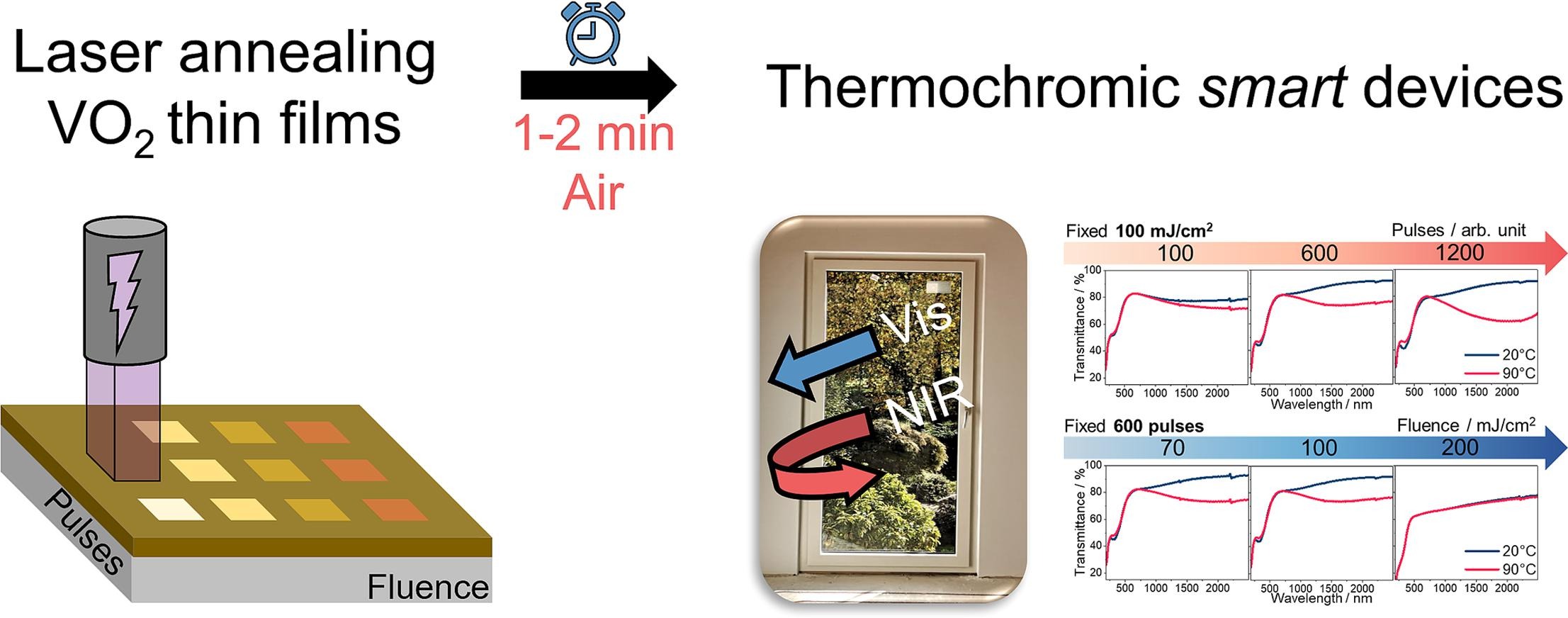
A study led by Maria Basso, a PhD student at the University of Padova, Italy, who visited the group for six months in 2022, has been selected as a Science Highlight by Diamond Light Source. Maria spent her time in the group working on developing a sol-gel dip-coating approach to vanadium dioxide films and their characterisation with a number of techniques, including laboratory and synchrotron-based X-ray photoelectron spectroscopy. During her stay with us, she was able to join one of our beamtimes at beamline I09 at Diamond and we found a bit of spare time to run some of the samples made at UCL. This provided complementary information to the more surface-sensitive data collected in our system at UCL. You can read the full manuscript here.
Chemistry Club
Earlier this year, we worked with the Salters’ Institute to create a series of four videos for their Chemistry Club, an innovative online learning platform for 11-14-year-olds. The topics include semiconductors, display screens, computers, and power electronics and highlight some areas in which the group works. The videos are based on interviews with Aysha, Curran, and Anna and also feature video content of Prajna and Yujiang. You can also see some of the labs and offices we work in at UCL.
Links to the individual videos:




Welcoming our MSci cohort
This year, the group is joined by three MSci students joining us to work on their final-year research projects. Emila and Obina are working on doping indium oxide sol-gel thin films for electronic devices under the guidance of Aysha Riaz, a PhD student in the group who leads our work in this area. Shiyang is working on understanding structure-electronic structure relationships in molecules exhibiting thermally activated delayed fluorescence. This project is co-supervised by Dr Laura Ratcliff from the University of Bristol, who supports the work’s theory aspect.
Congratulations Dr Kalha!
Curran successfully defended her PhD viva on the 6th of October – massive congratulations Dr Kalha!
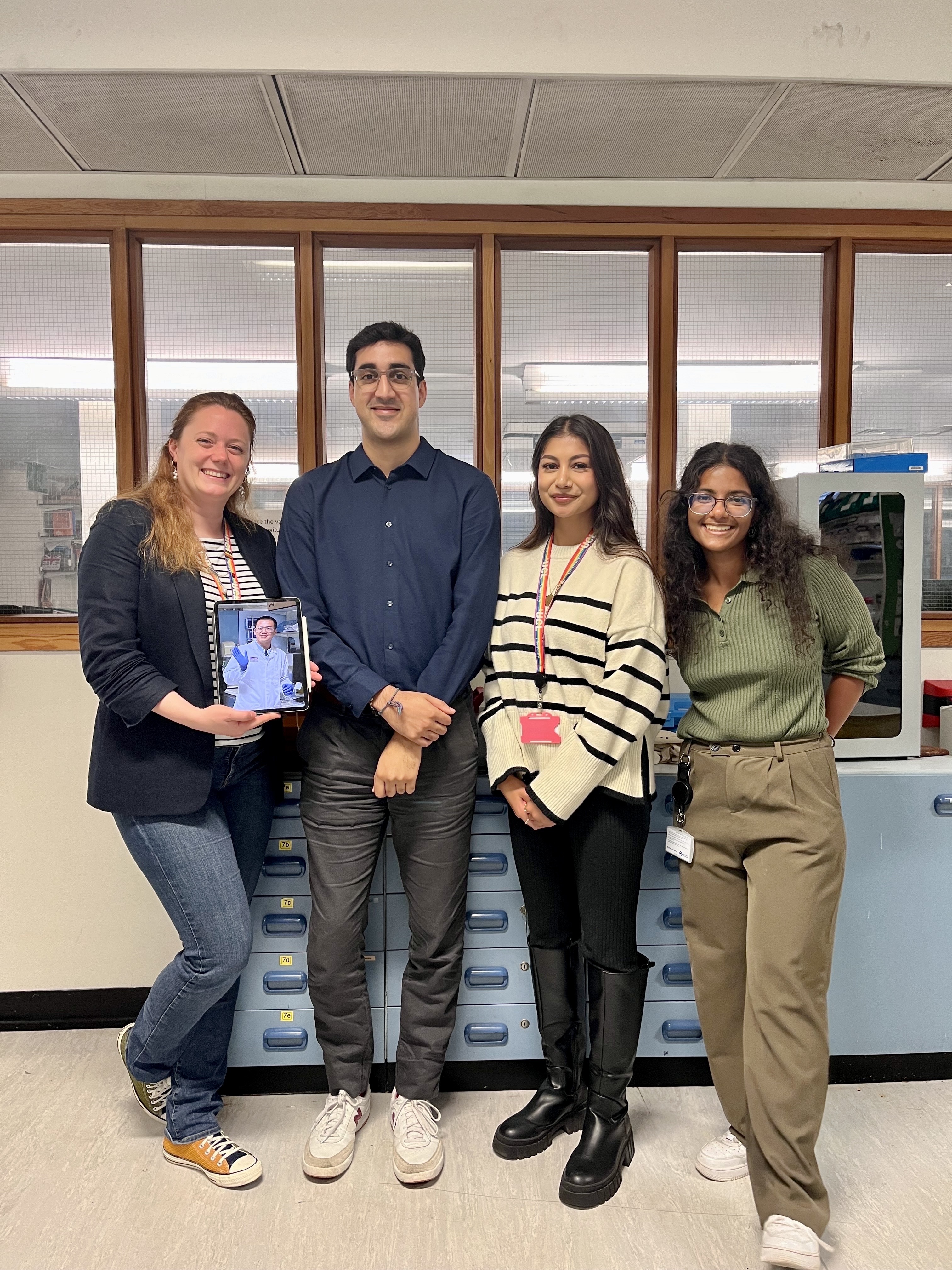
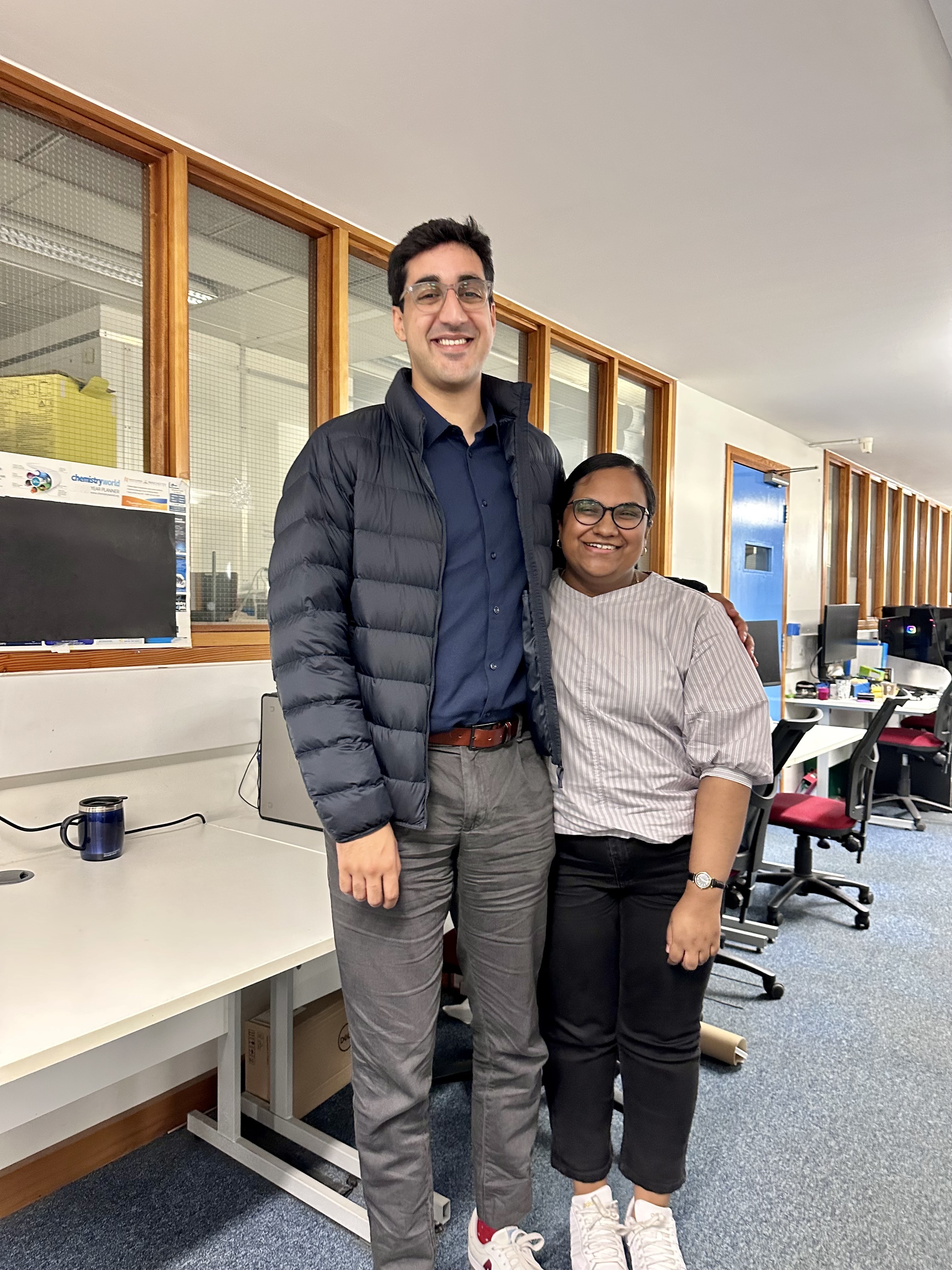
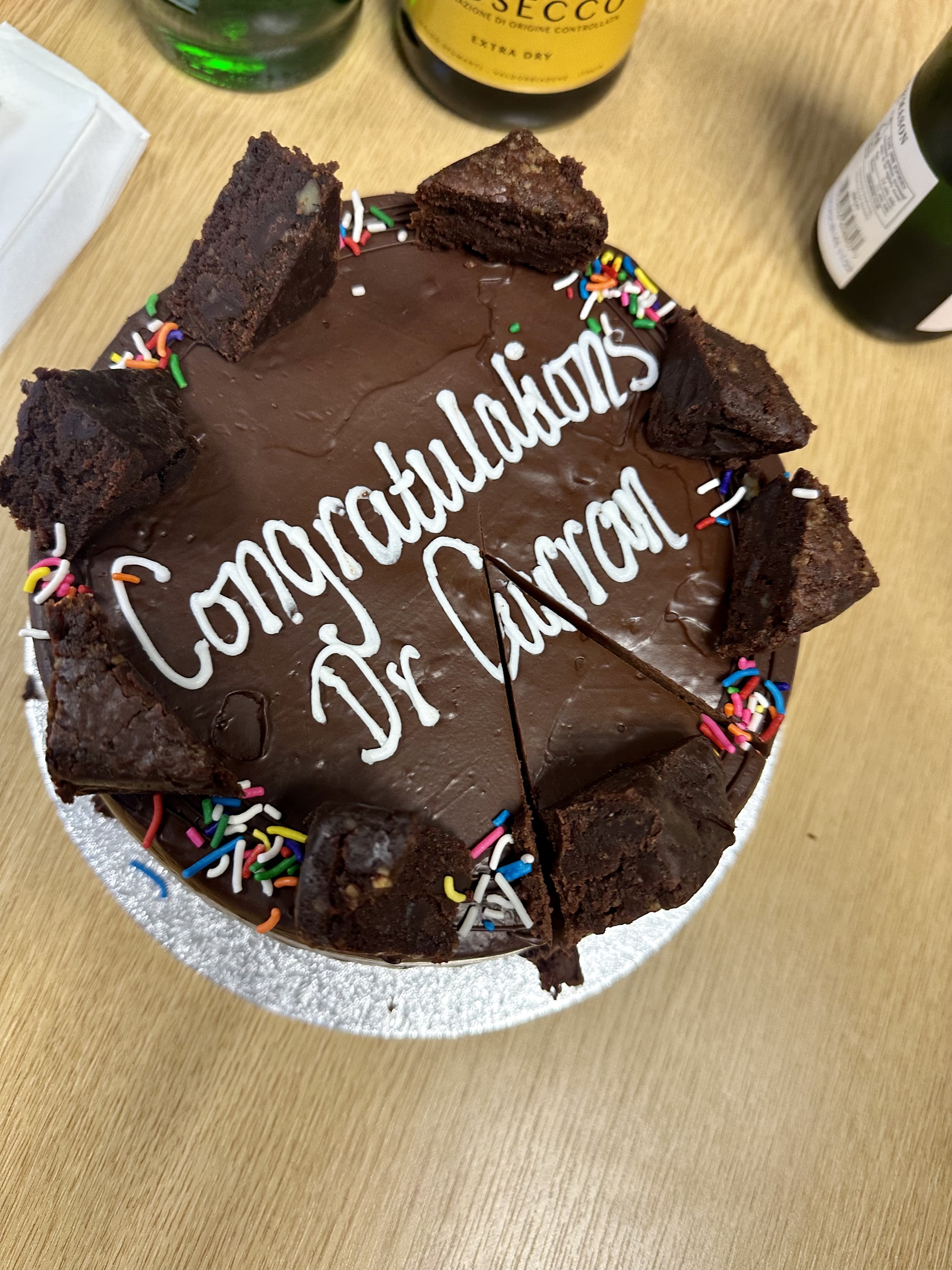
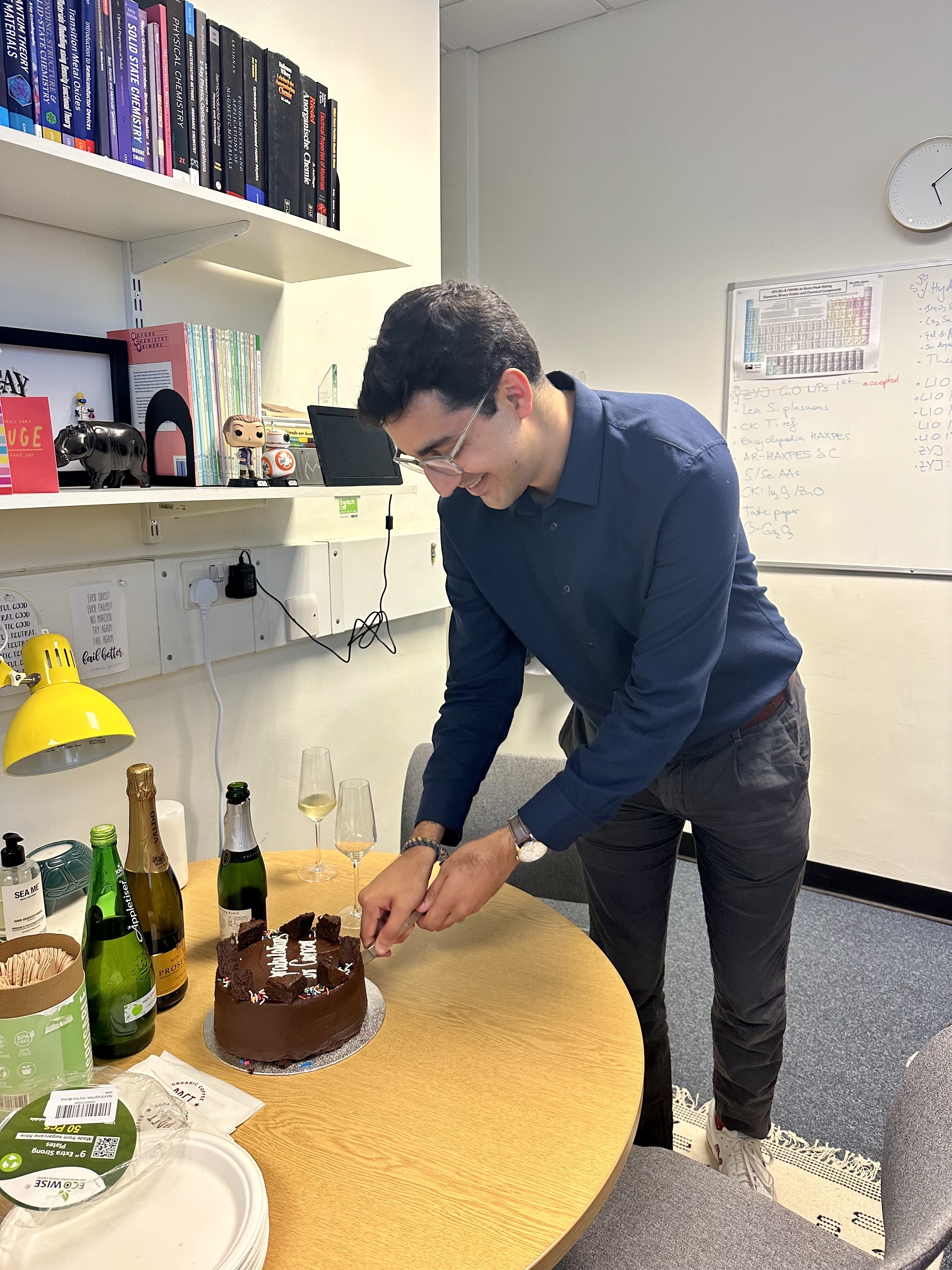
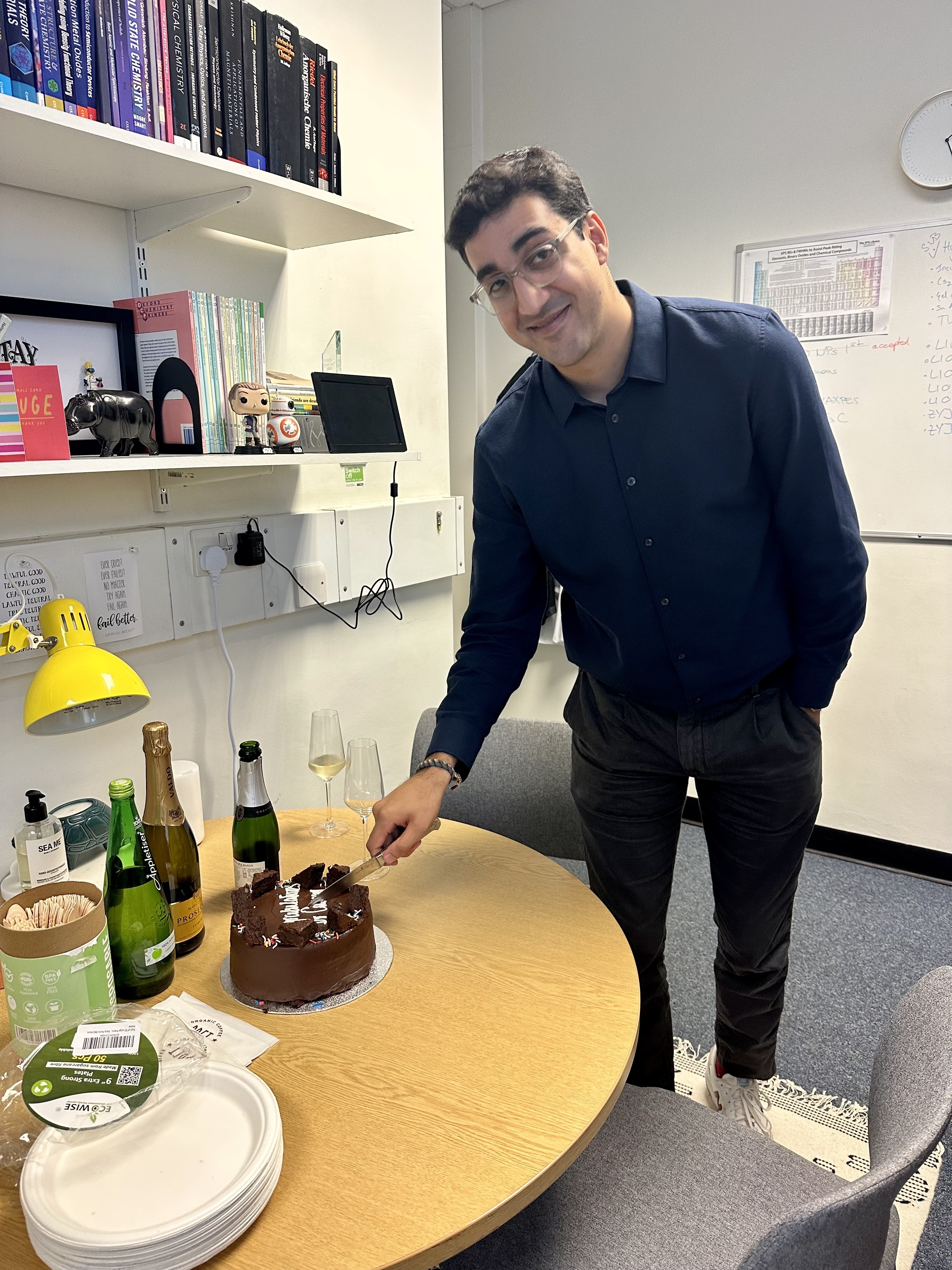
Curran’s thesis covered an impressive number of studies around the behaviour of TiW diffusion barriers for copper-based metallisation schemes in semiconductor devices, in particular for power electronic applications. His thesis is entitled “X-ray Photoelectron Spectroscopy of TixW1-x Diffusion Barriers”. Curran published a number of papers based on his PhD work, which you can read here, here, here, and here. Curran’s examiners were Pro Louis Piper from the University of Warwick and Prof Martijn Zwijnenburg – thank you!
Throughout his PhD Curran contributed greatly to the group’s overall activities, particularly with his patient explanations of best practive in XPS data collection and analysis. He (to date) has authored a total of 14 publications.
We are incredibly sad to see Curran leave the group, but he has moved on to greater and more exciting things as Investment Associate with Science Angel Syndicate. We are excited to follow his career and so delighted we could be part of it!
Department Start-of-Term Celebration
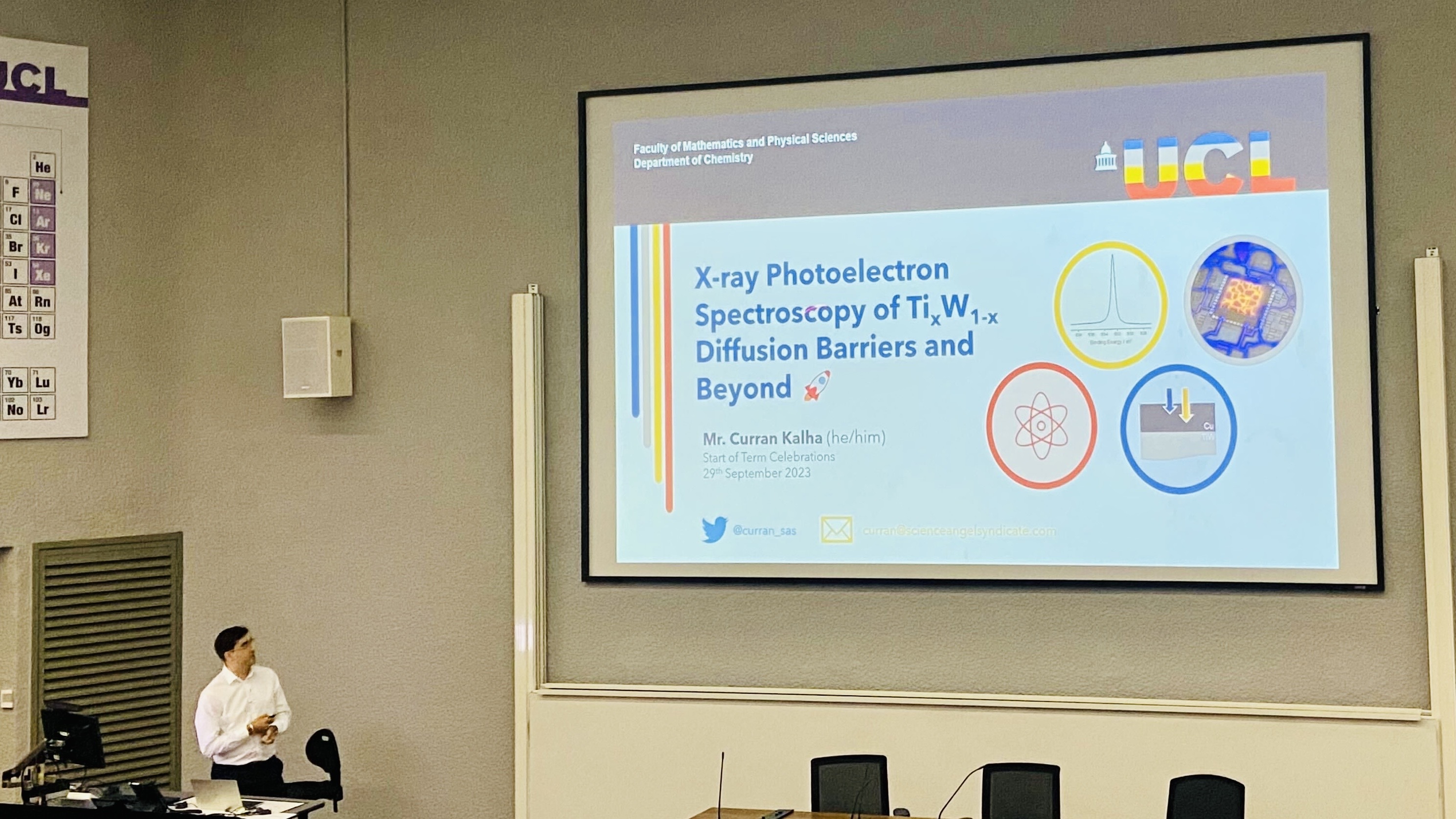
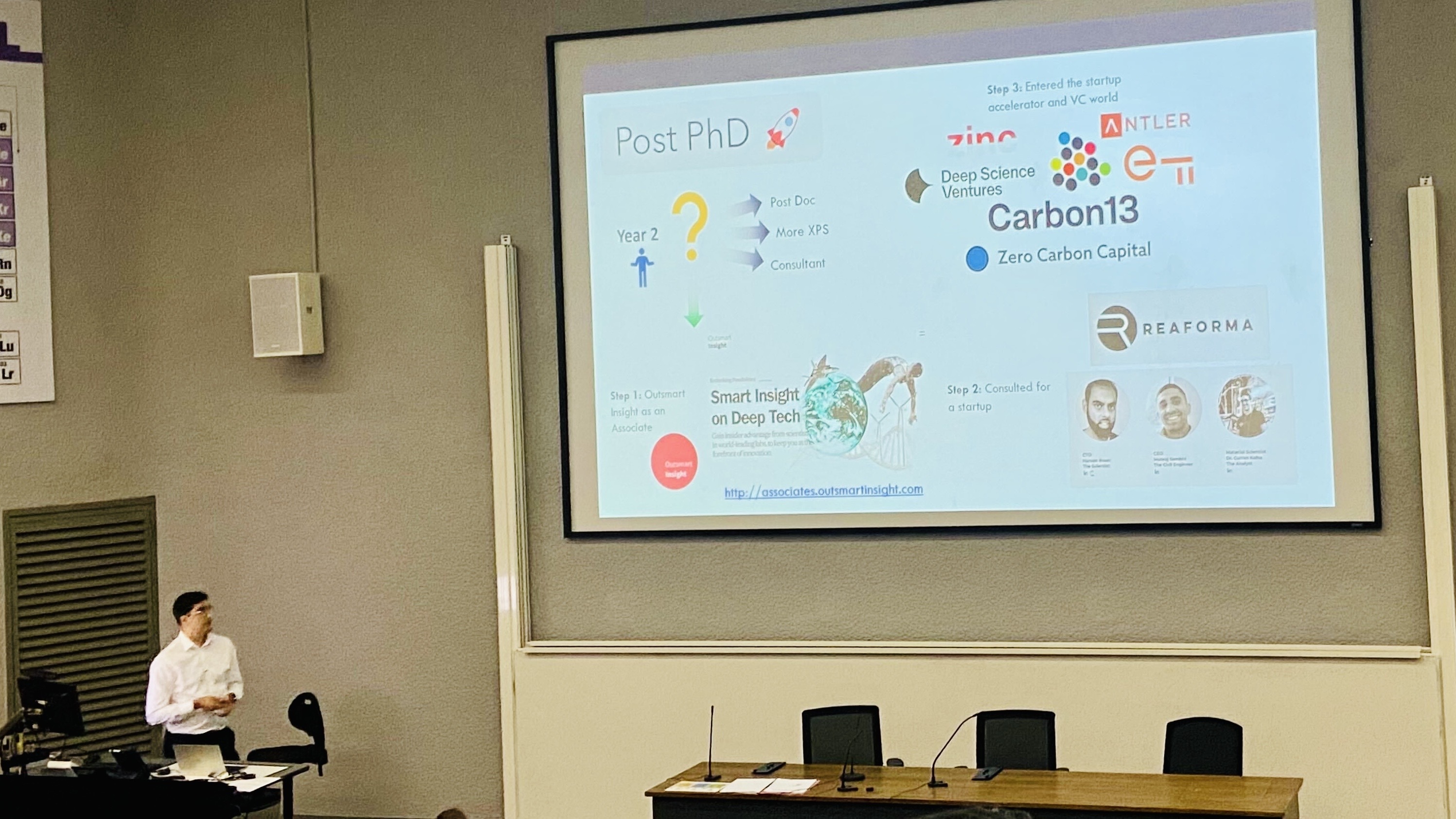
Curran gave an inspiring talk during the department’s start-of-term celebration giving an overview of his PhD research as well as talking about his career journey. The invite to present his research followed him winning the Research Excellence Award in the MAPS Faculty ECR Forum Awards. Congratulations!
Precision-guided! Tuning CuO nanostructure morphology by controlling synthesis temperature
CuO is a promising material in non-enzymatic glucose detection with advantages like high electrochemical activity, relatively low cost, and non-toxicity. When the material is nano-sized, its high surface area to volume ratio results in a greater number of active sites for the electron transfer process across the electrode, leading to a higher turnover reaction. A major challenge in the field is that various factors in the synthesis process impact the final product, thereby, leading to a different performance in glucose sensing.
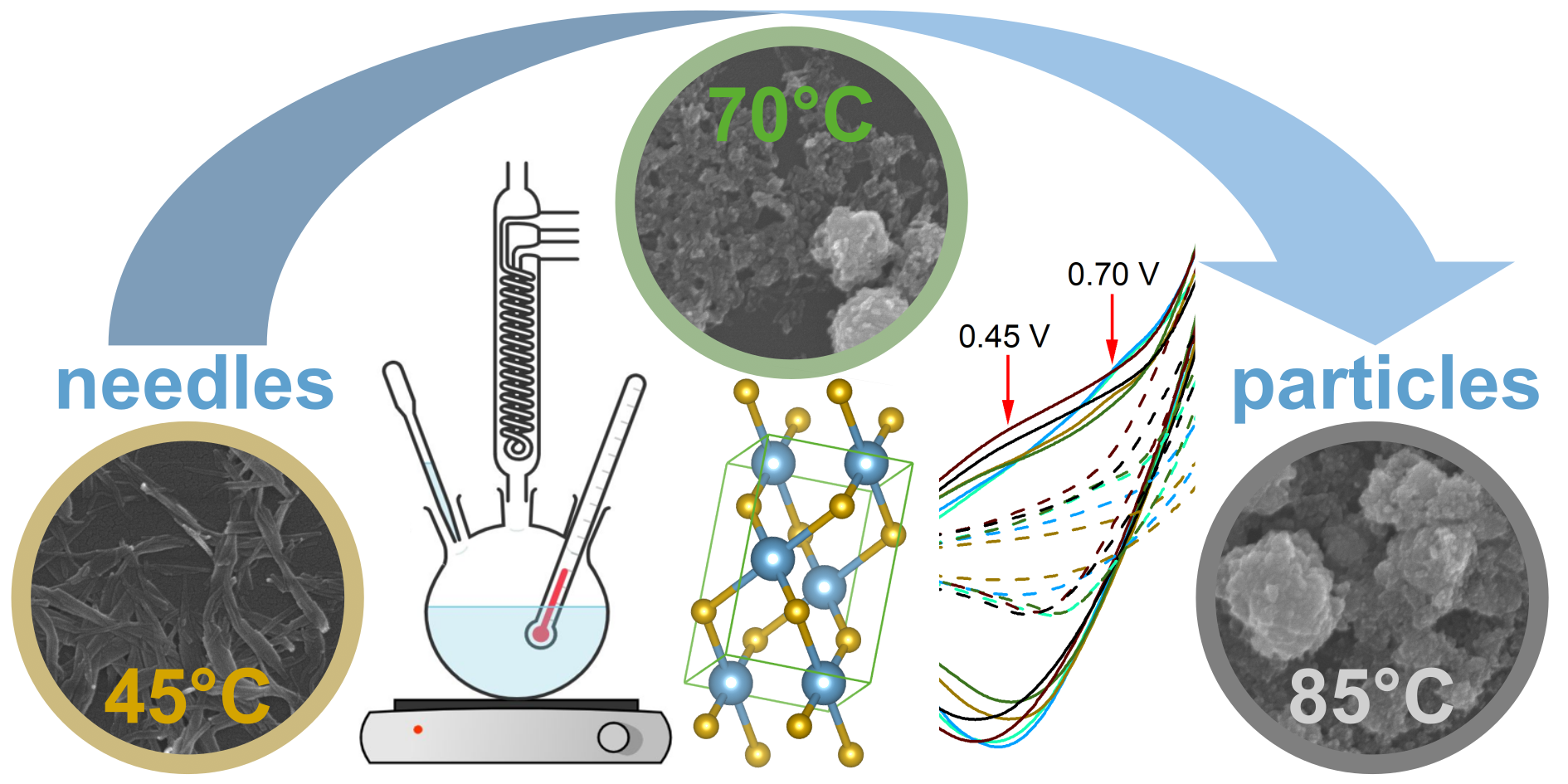
In our recent paper led by Yujiang Zhu and published in Materials Advances, we report that CuO nanostructures synthesised via a facile wet chemical precipitation method can be controlled by synthesis temperature to form specific morphologies. No matter what the synthesis temperature, all formed nanostructures are predominantly CuO with varying contributions from other surface species, and have the ability and selectivity to sense glucose. However, distinct differences are found in the morphology of the nanostructures found changing from nanoneedles to nanospheres with an increase in temperature. This goes hand in hand with a change in electrochemical behaviour. In the critical transition region, even changes of a few degrees completely change the morphology and electrochemical performance. This work helps to understand the critical relationship between synthesis temperature and final nanostructure and can explain the seemingly random nanostructures and sensing behaviour observed in the literature.
The paper also includes contributions from the MSci final year project of Carolina Vigil-Hernandez, who is currently pursuing a PhD with Simon Humphrey at the University of Texas at Austin. This work is the result of a long-standing collaboration with Dr Despina Moschou and her group from the Department of Electronic & Electrical Engineering at the University of Bath. In addition, we had great local support from Dr Gemma-Louise Davies and Steven Firth.
Do you want to know more about how different synthesis factors impact the formation and sensing behaviour of CuO nanostructures? Stay tuned for more papers by Yujiang coming soon!
2nd year PhD poster session
This week Aysha and Prajna presented some of their PhD work so far in the annual departmental poster session. It was a packed session and they both had to tackle in-depth discussions and challenging questions. Curran also emerged from thesis writing and working in his real job to scrutinise their formatting choices. Good training as both will be presenting the poster at MC16 in Dublin in the first week of July!
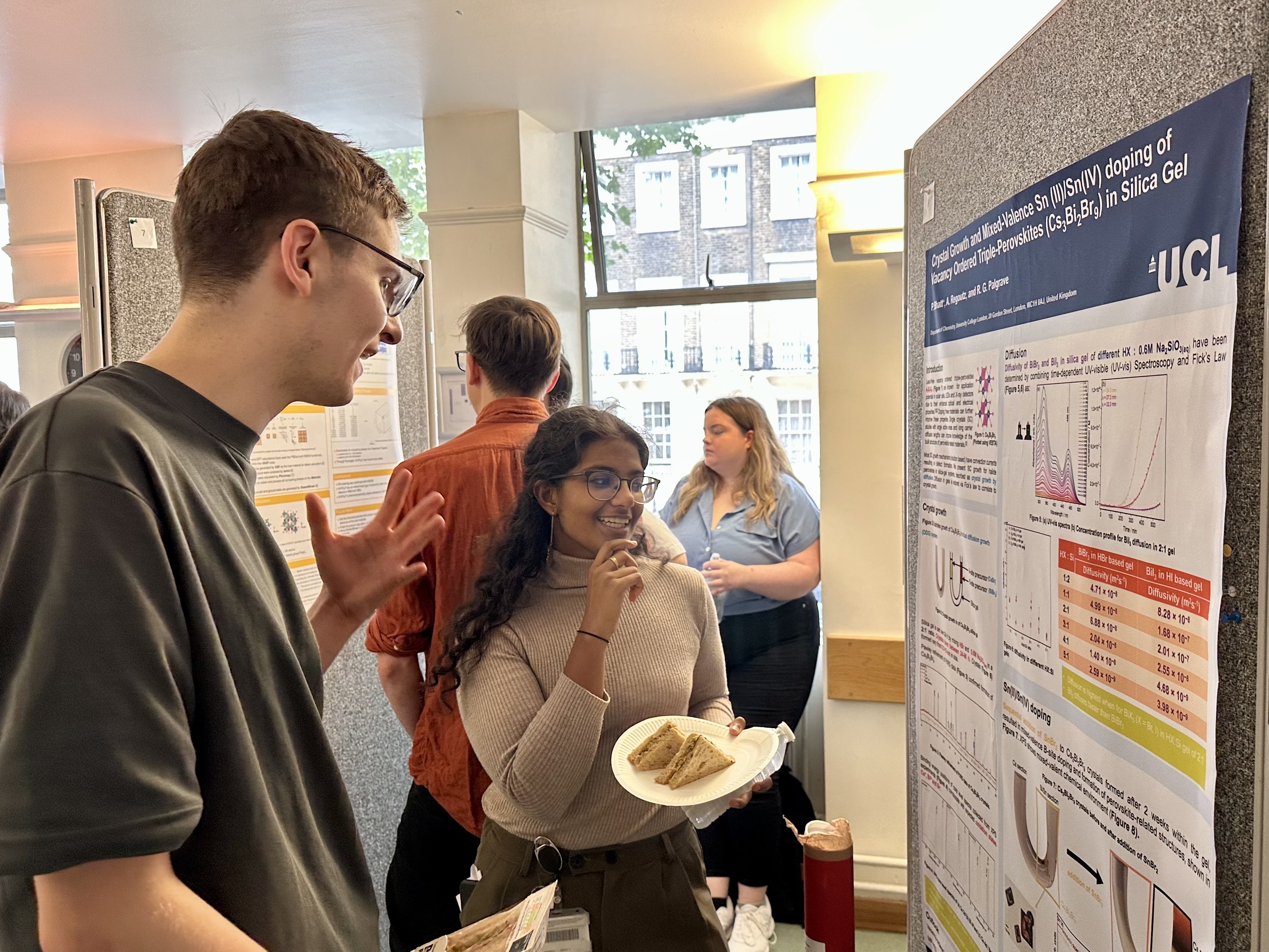
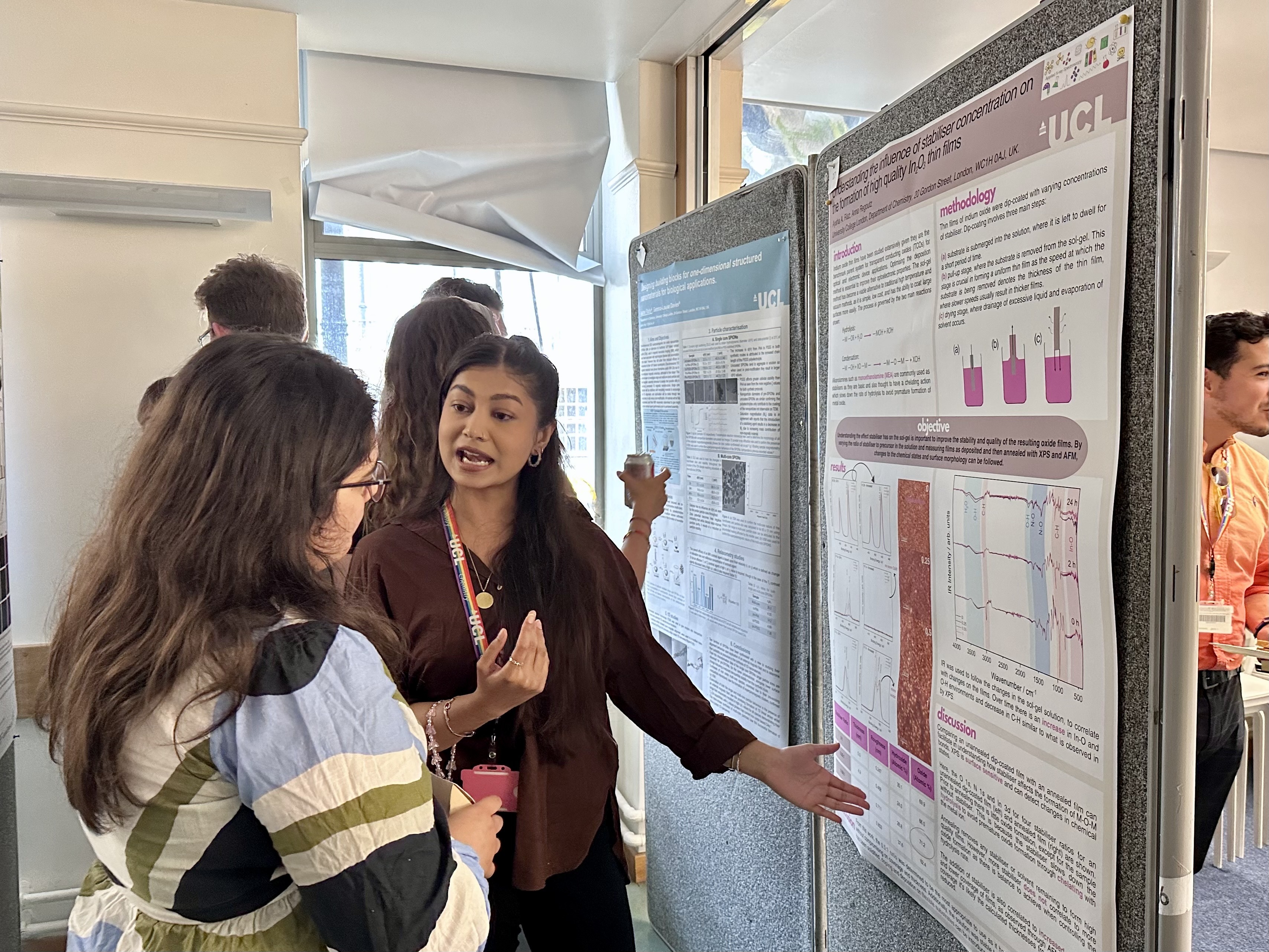
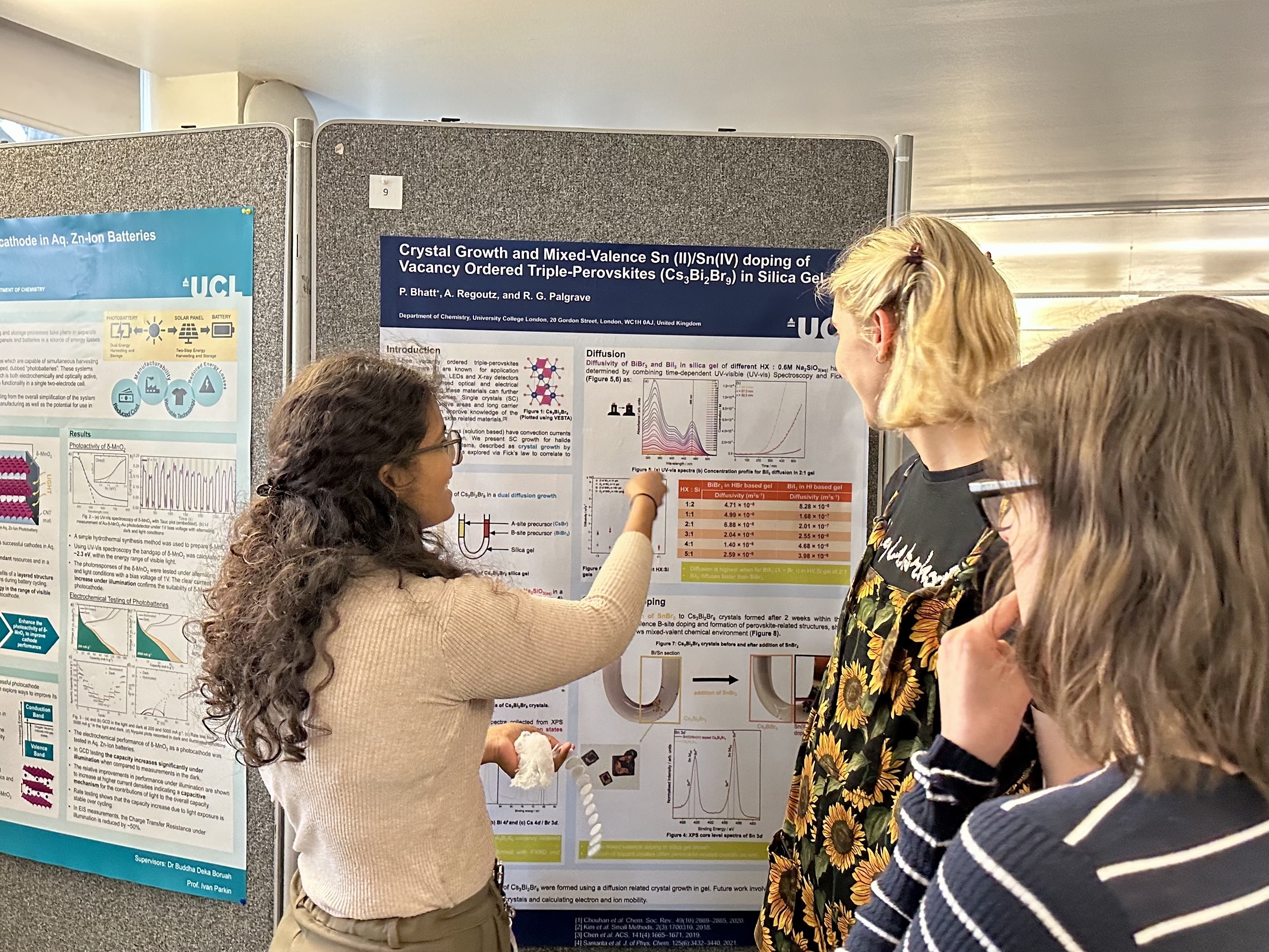

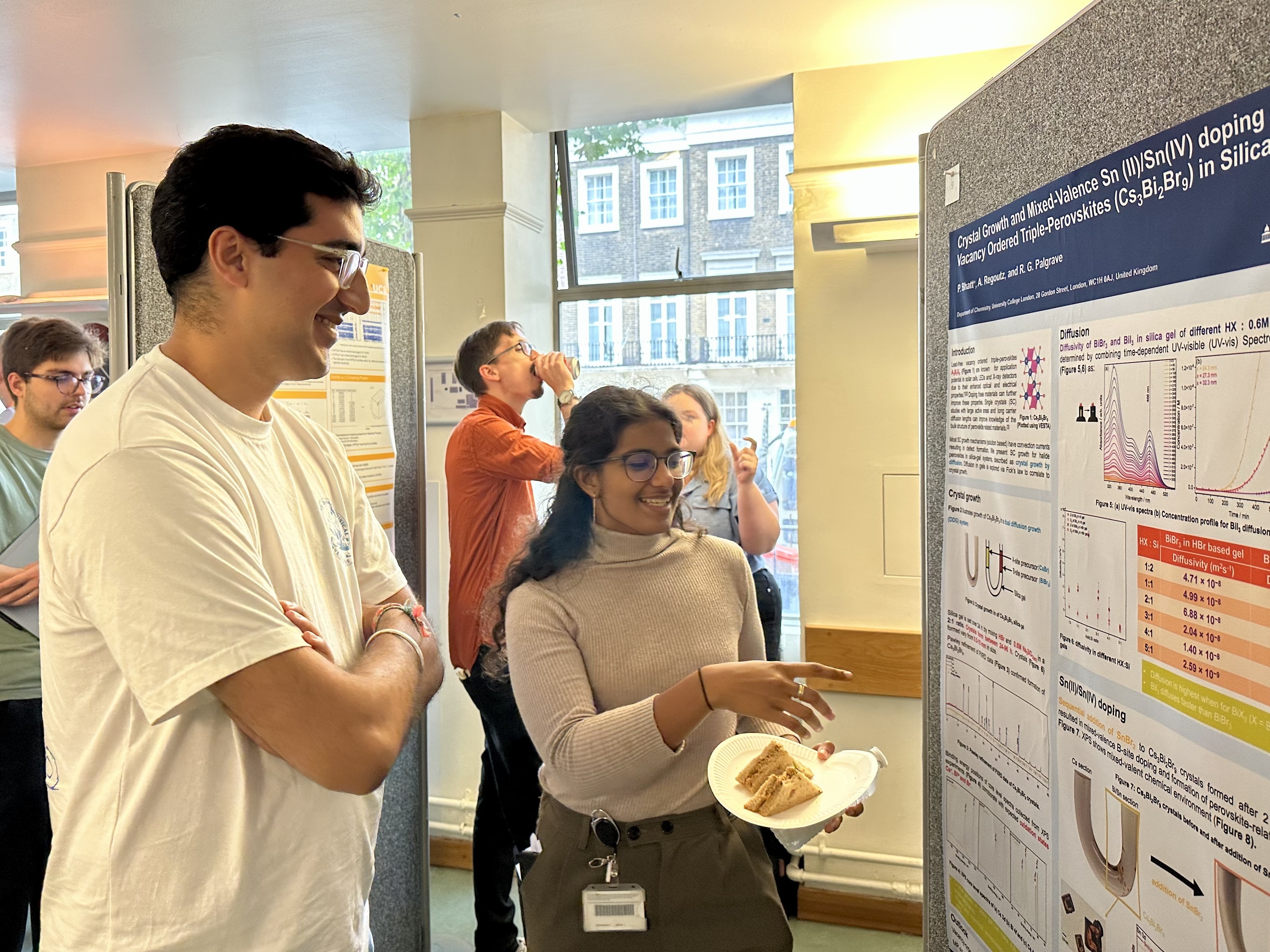
Aysha attends RSC Broadening Horizons
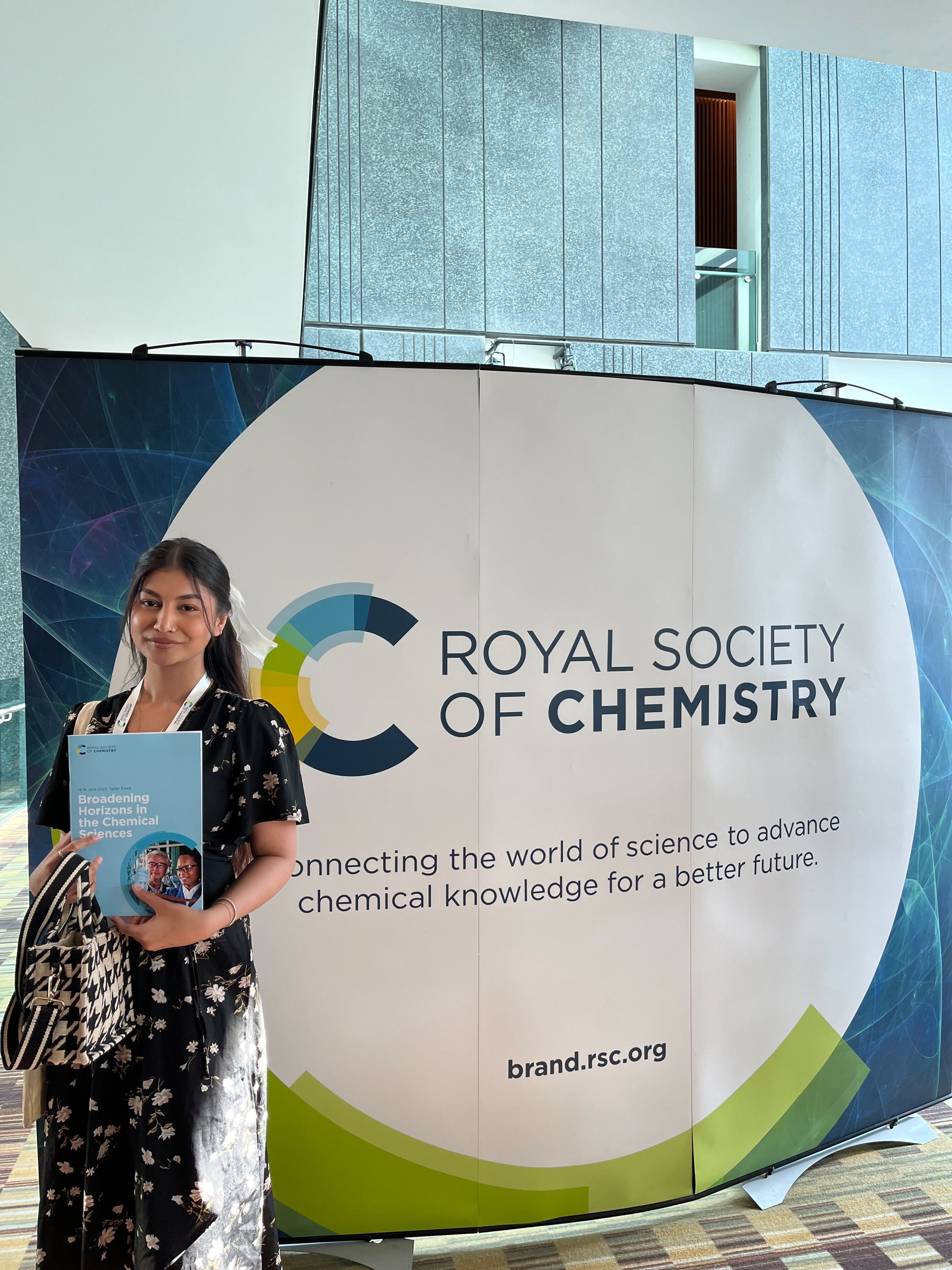
Aysha recently had the opportunity to join the RSC Broadening Horizons programme for minority students in the Chemical Sciences. She visited Manchester to take part in a 3-day networking event with other students, RSC members, and industry partners. Companies such as GSK, Unilever and Johnson Matthey were in attendance and gave motivational talks as well as insights into a career in the chemical sciences industry. Additionally, she got the chance to talk 1-on-1 with Liz Rowsell from Johnson Matthey about her research and how it would translate well into industry, specifically the skills she’s learnt in XPS! There was also a speech given by Professor Robert Mokaya, the only black professor in chemistry in the UK, who reminded everyone it is okay to be different but to be true to yourself. Altogether, it was a very exciting and insightful trip for her and she has made valuable connections from it. (Not to mention had a lovely stay in The Hilton!)
 Regoutz Group