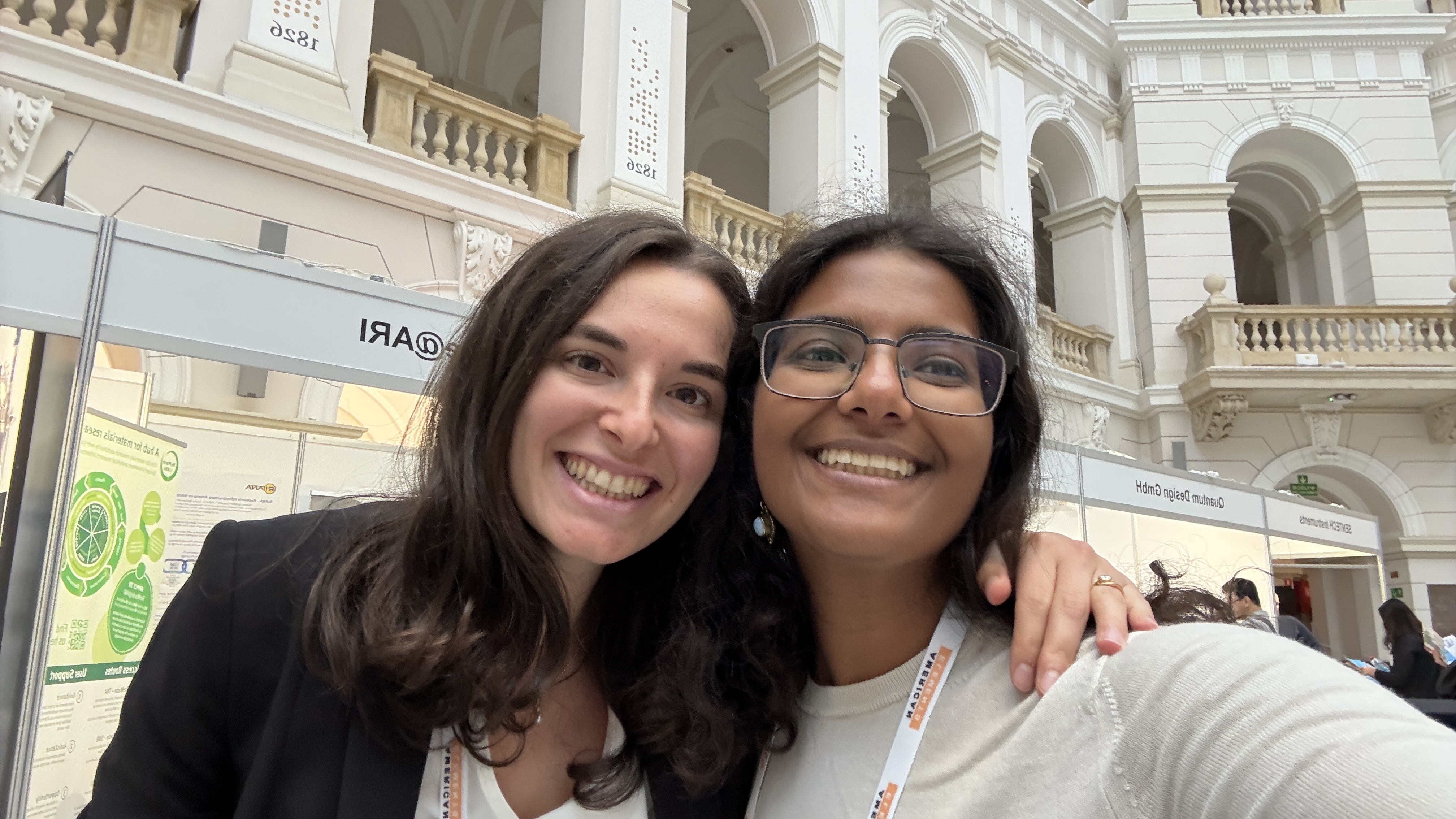
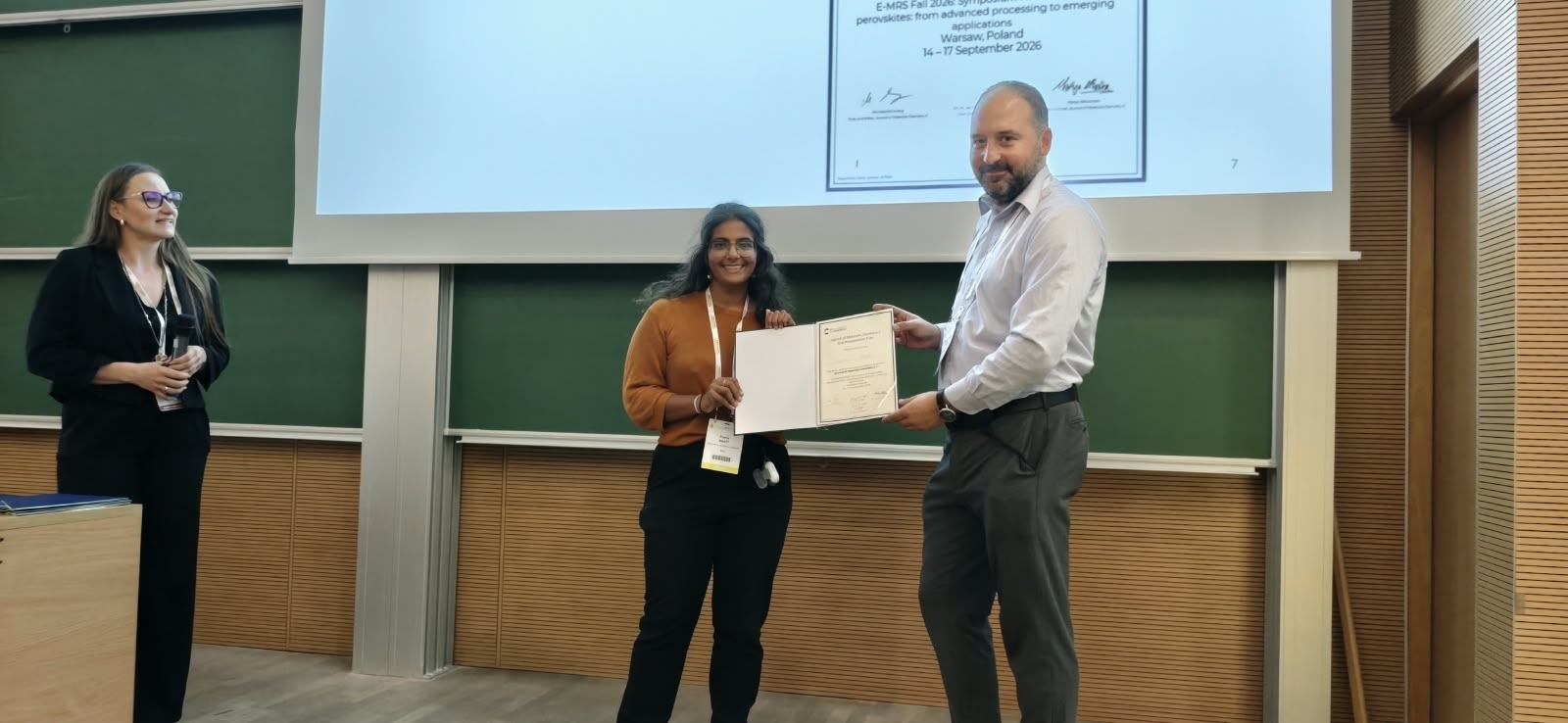
In mid-September two former group members reunited at the E-MRS Fall 2026 meeting in Warsaw, Poland. Dr Maria Basso presented her work on photonic annealing for metal oxide thin films giving both an oral and a poster presentation. Dr Prajna Bhatt won an oral presentation prize from the Journal of Materials Chemistry C for her presentation on (you can read all about this story here). Congratulations!
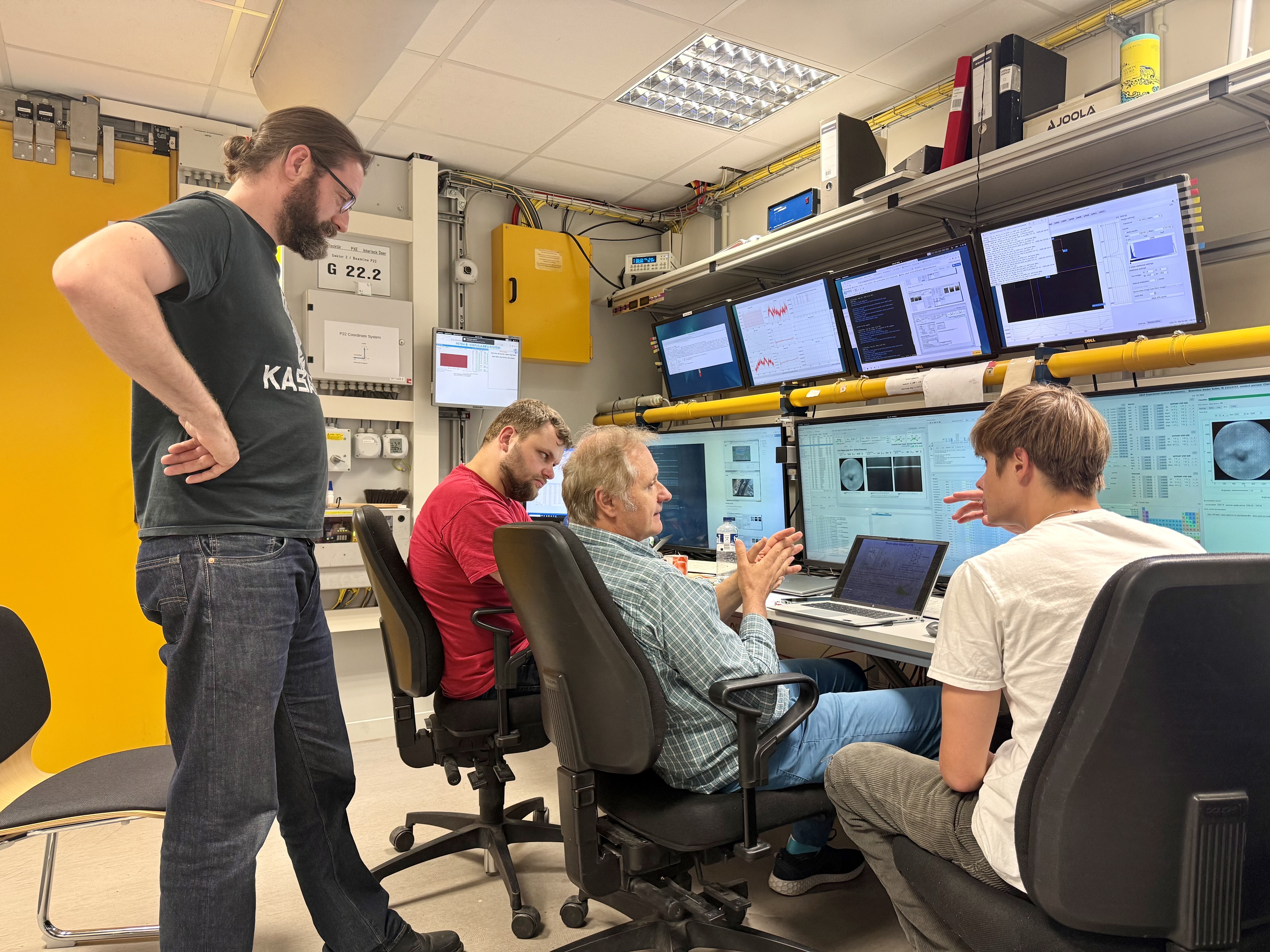
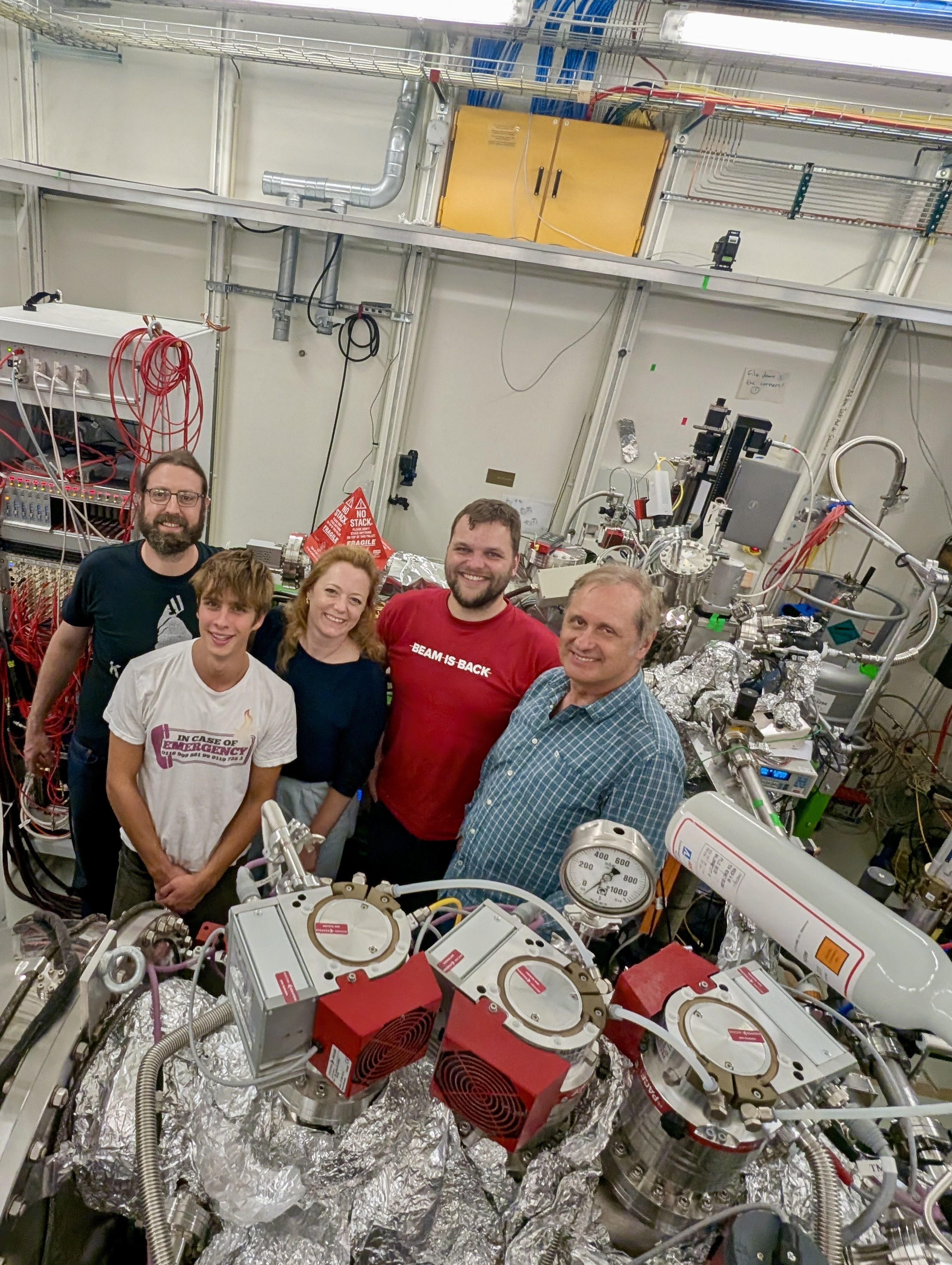
In mid-August we had the chance to be part of our first experiment on a momentum microscope. This was also Sam’s first ever synchrotron experiment. Sam is a second-year undergraduate at St Edmund Hall, who is spending 10 weeks over the summer in our group working on our transition metal hydride project as part of the EPSRC Vacation Internship scheme.
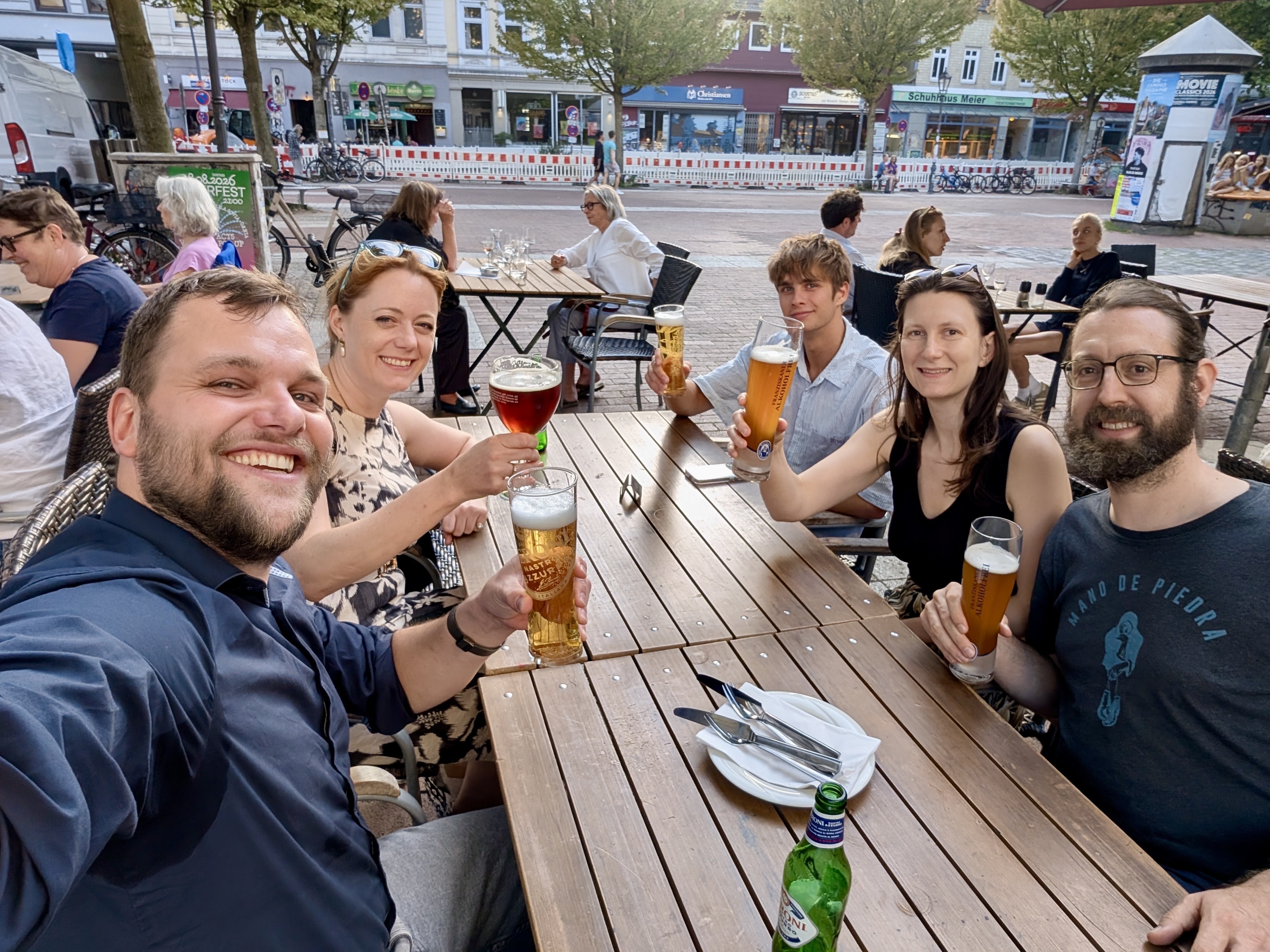
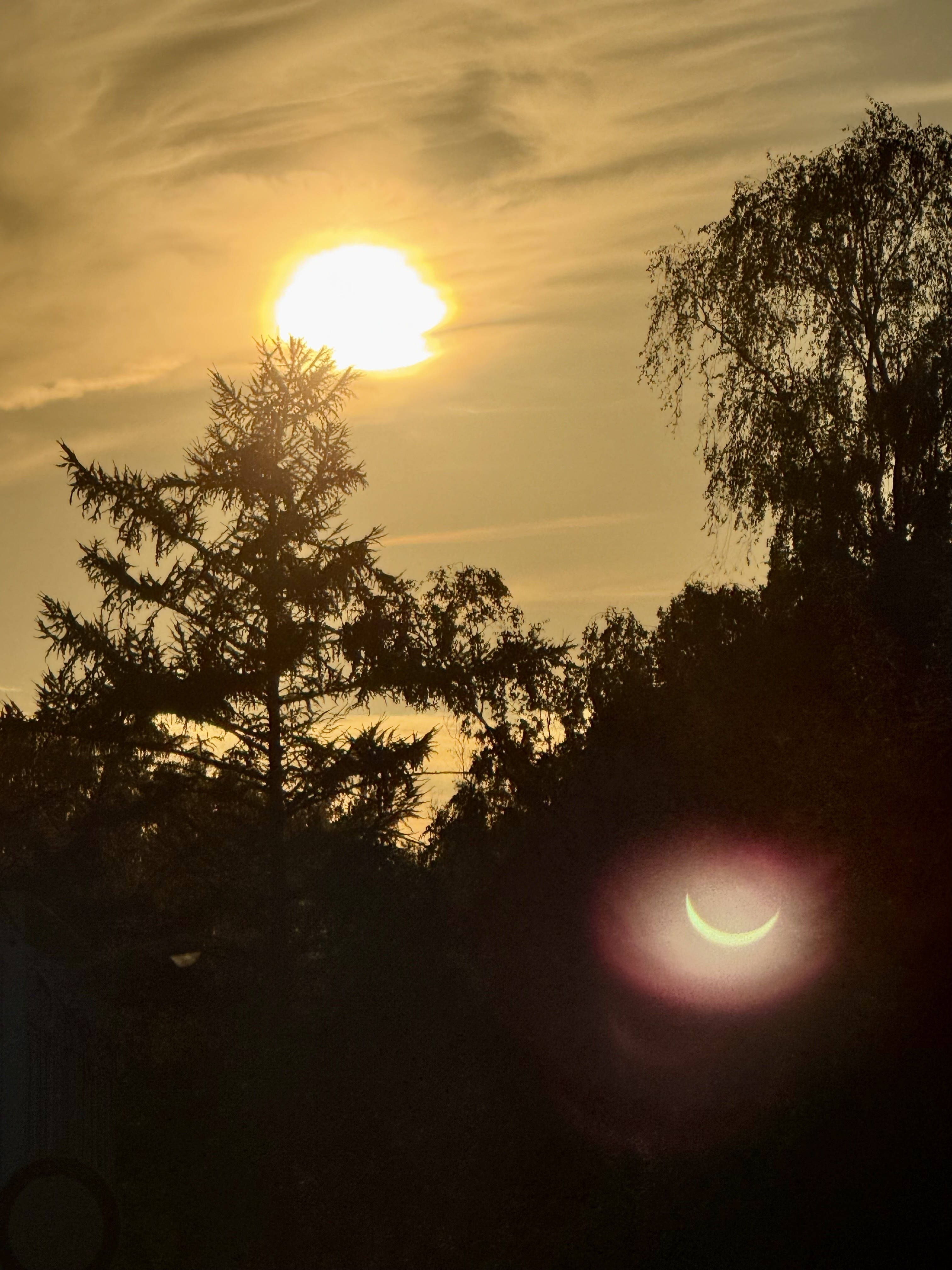
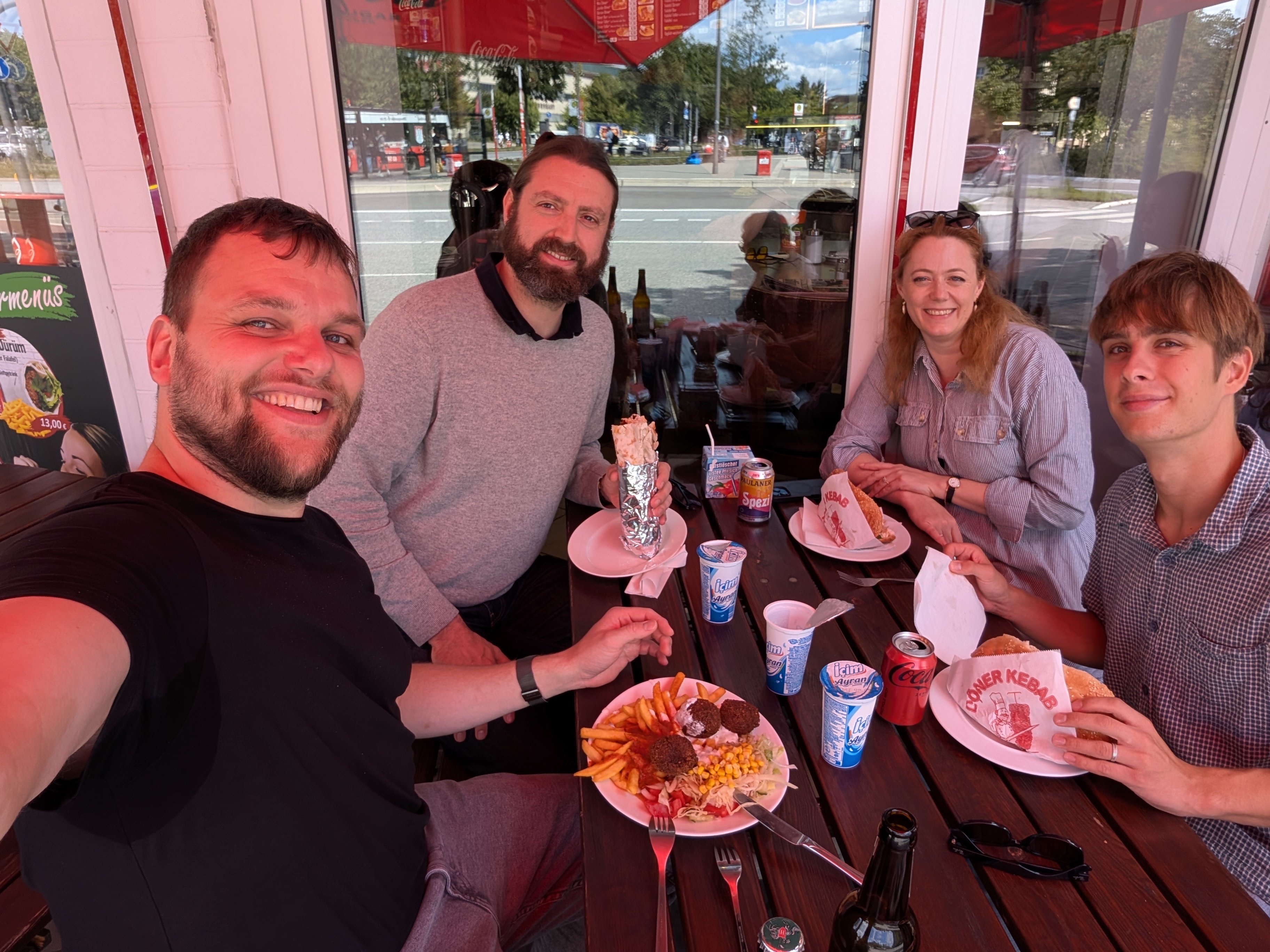
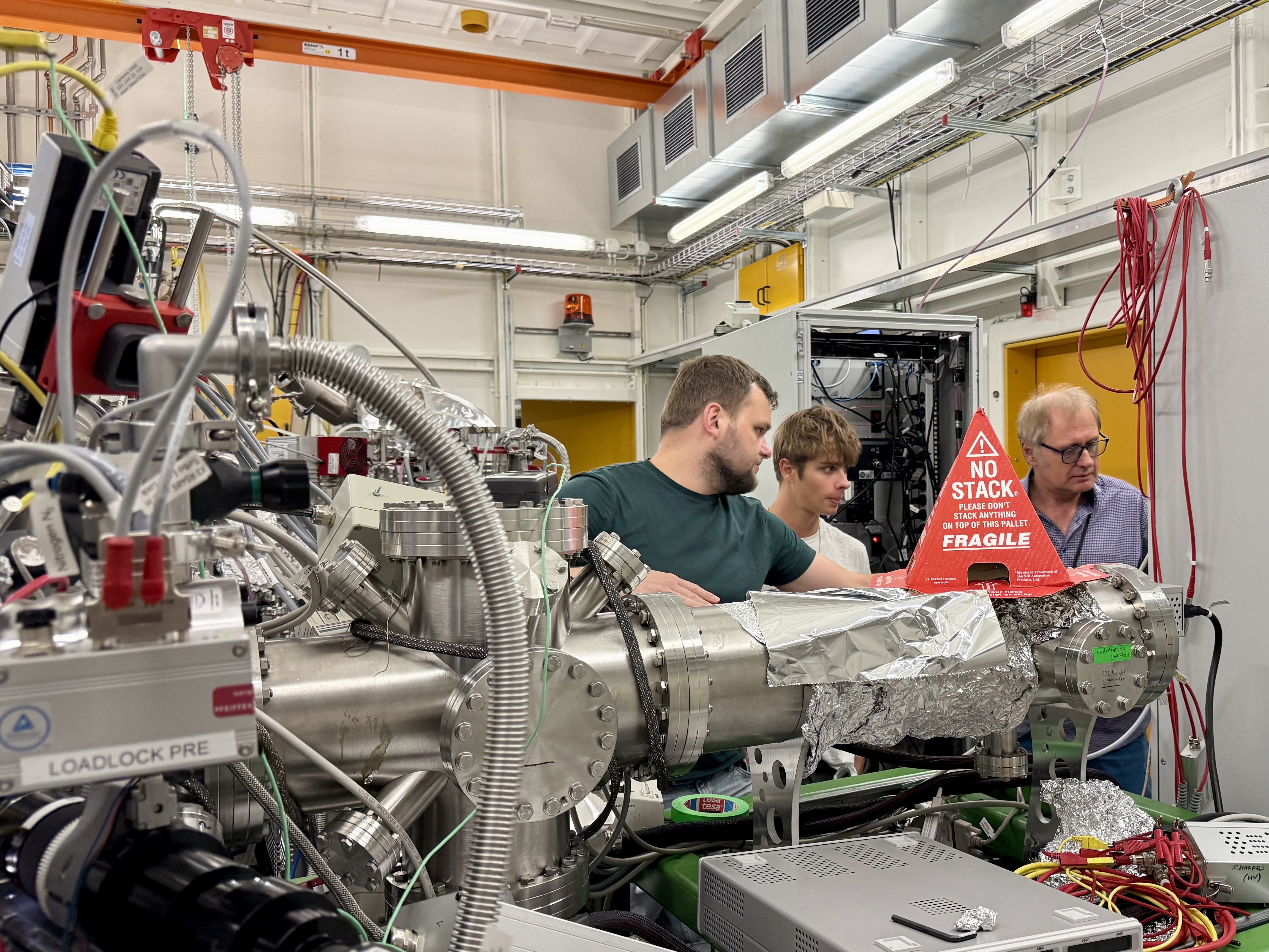
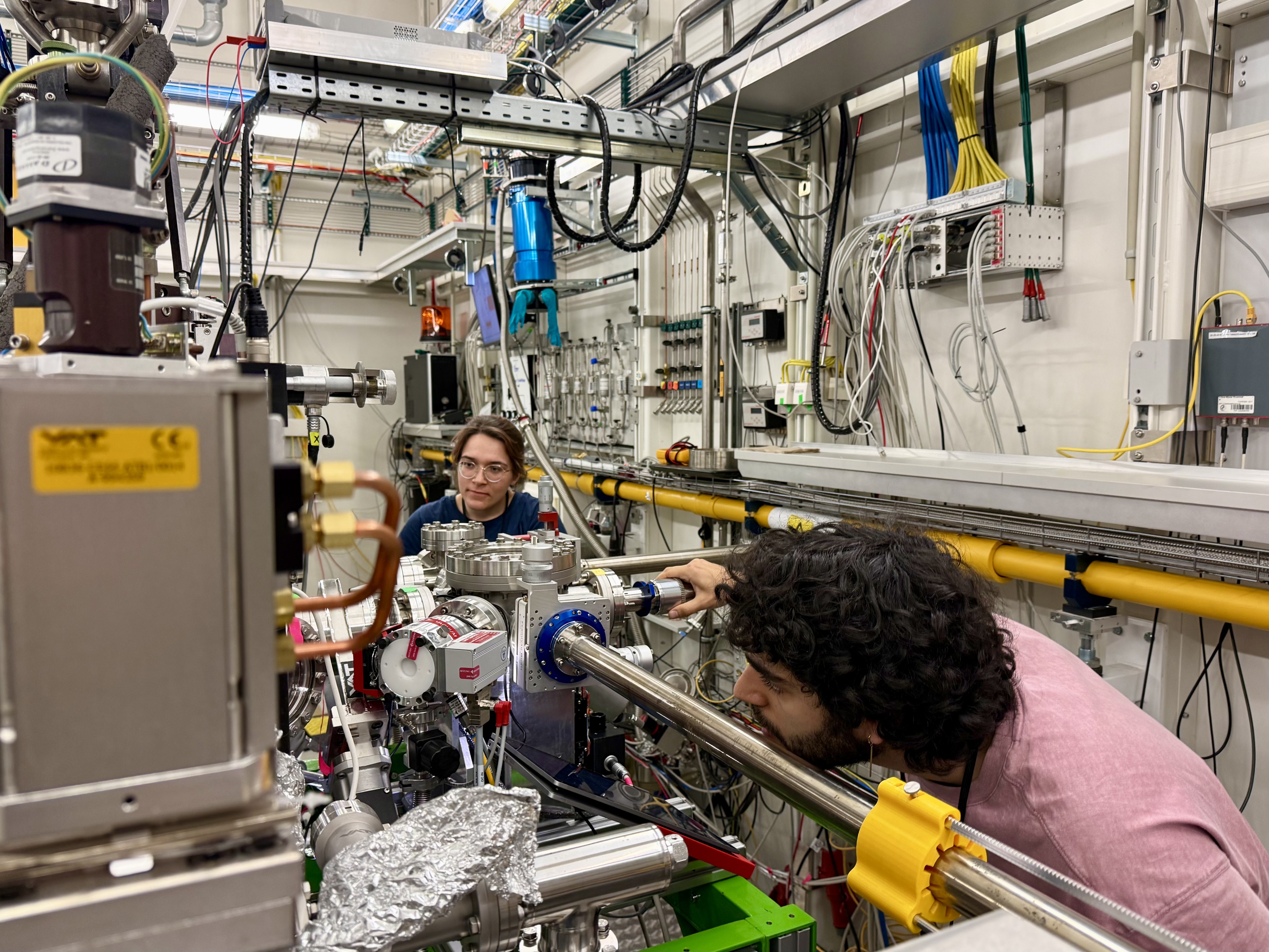
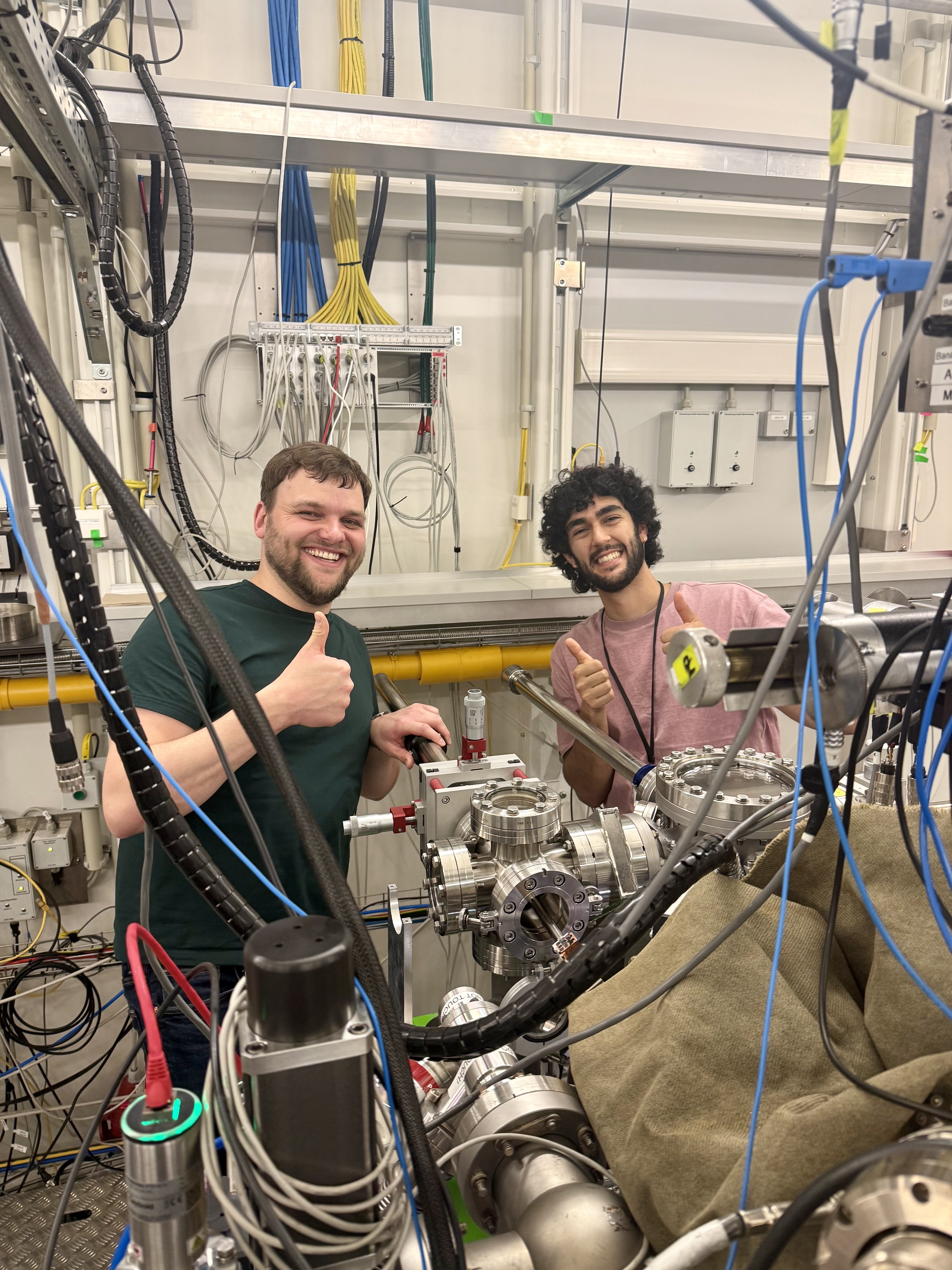
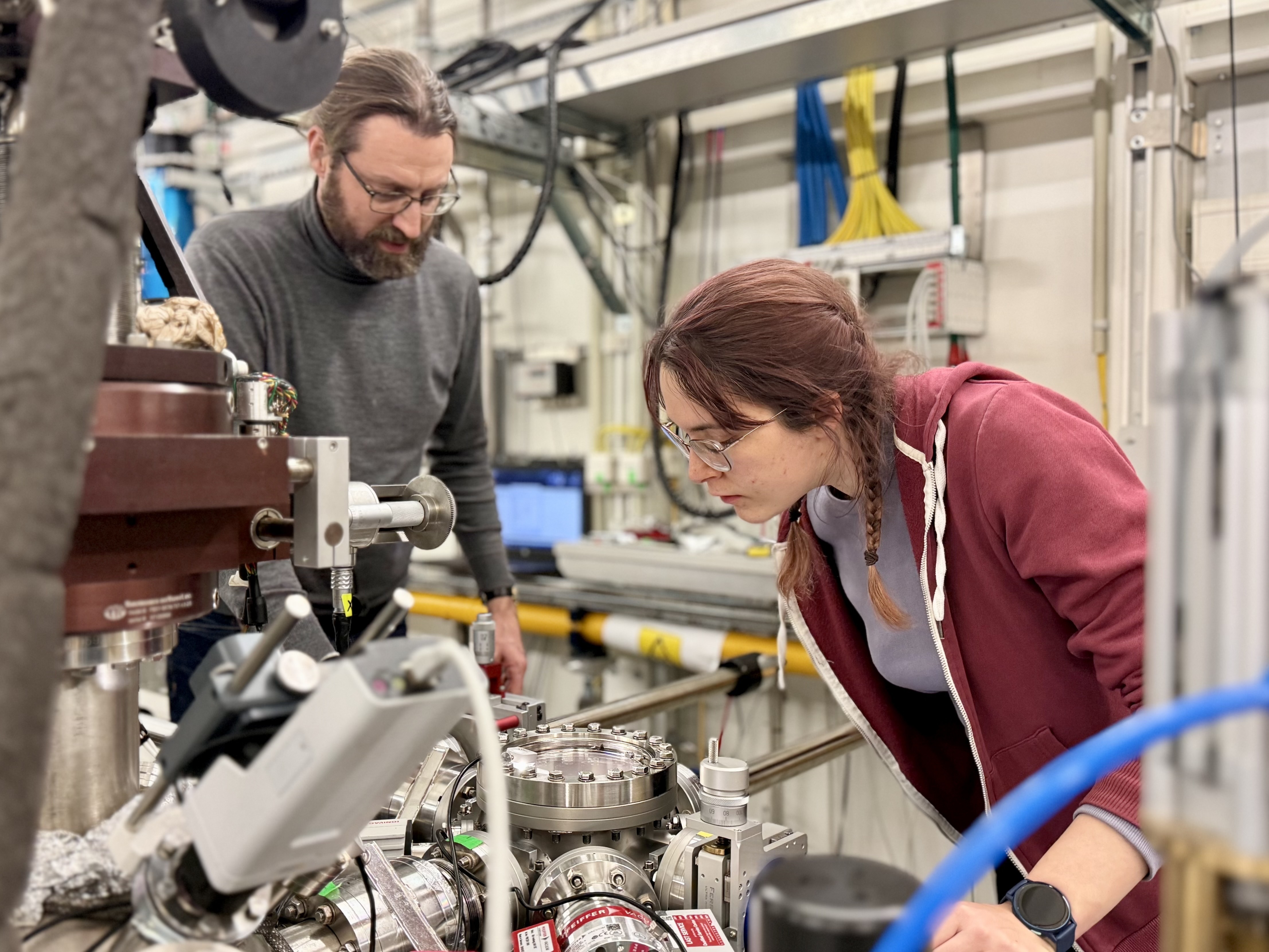
We spent a week working on the momentum microscope at beamline P22 at DESY together with Vladimir Strokov from PSI and Volkmar Koller, Sergii Chernov and Christoph Schlueter from P22. The setup makes use of the hard X-ray capabilities of the beamline to enable bulk sensitive measurements with energy and angular resolution (you can read more about this here: https://doi.org/10.1107/S1600577519012773). It was an intense and challenging, but also very enjoyable experiment given the fantastic team and machine. Watch this space for some beautiful results. For now you can enjoy photos of the beamline, dinners, and a bonus solar eclipse.
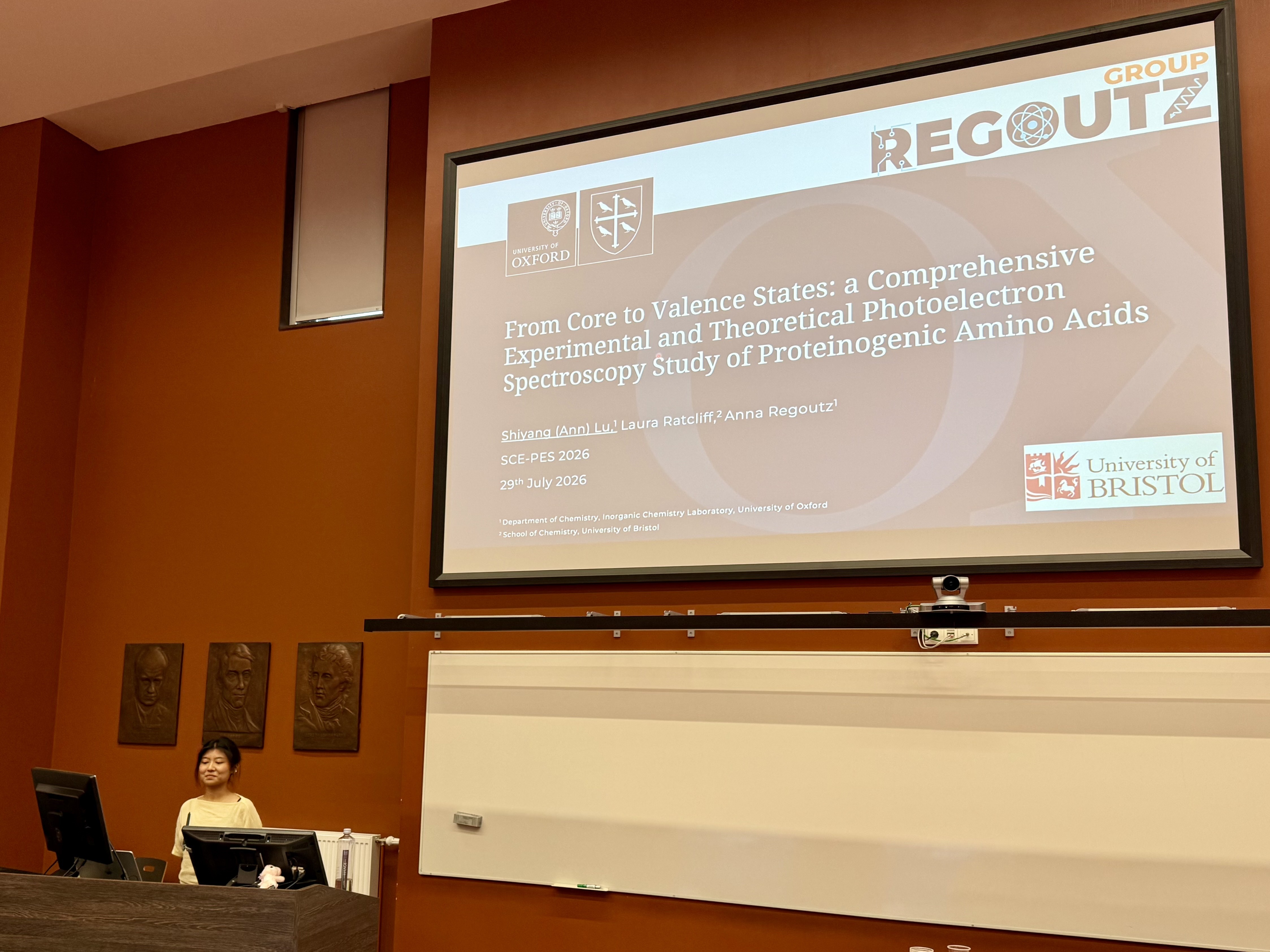
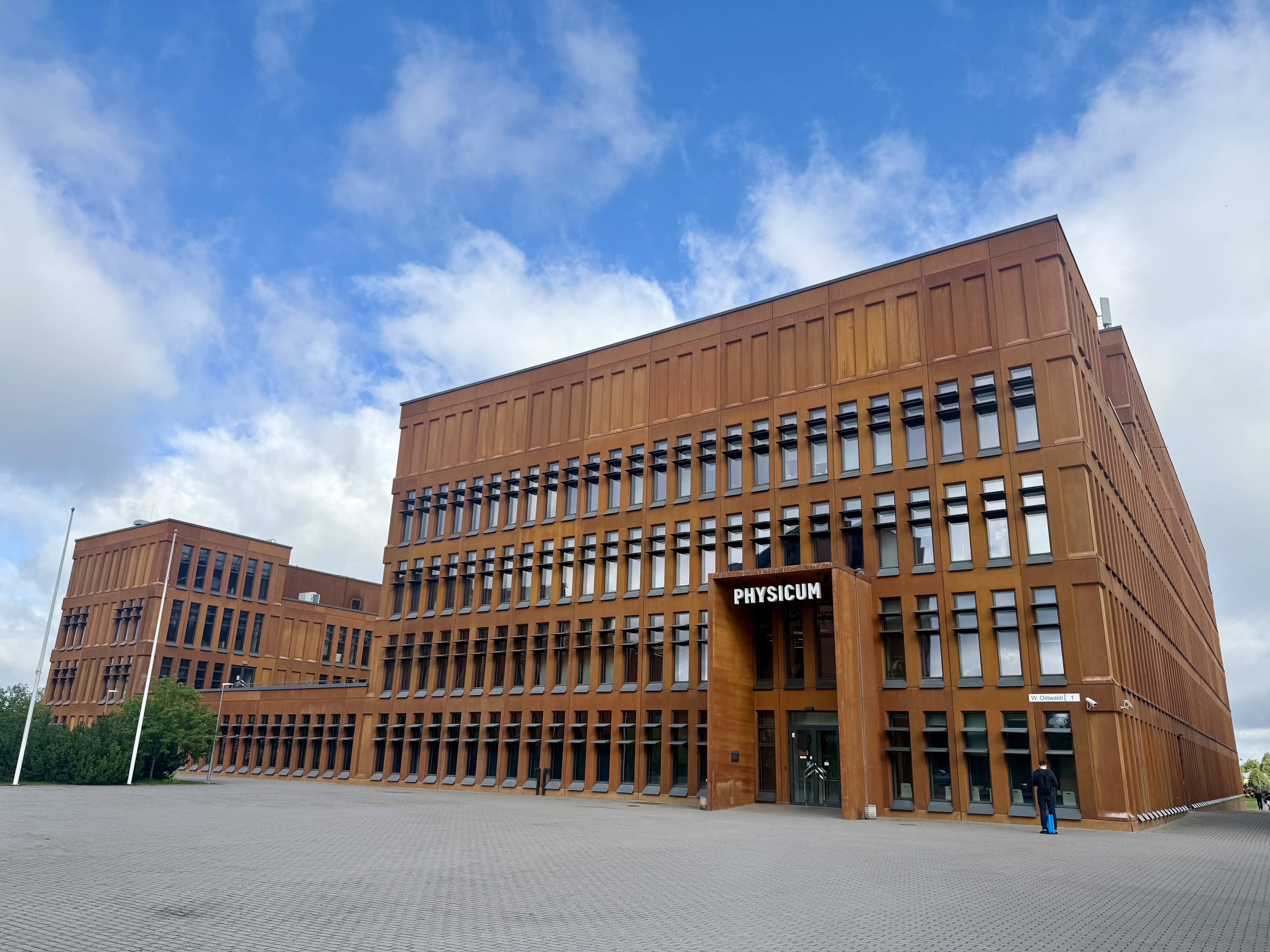
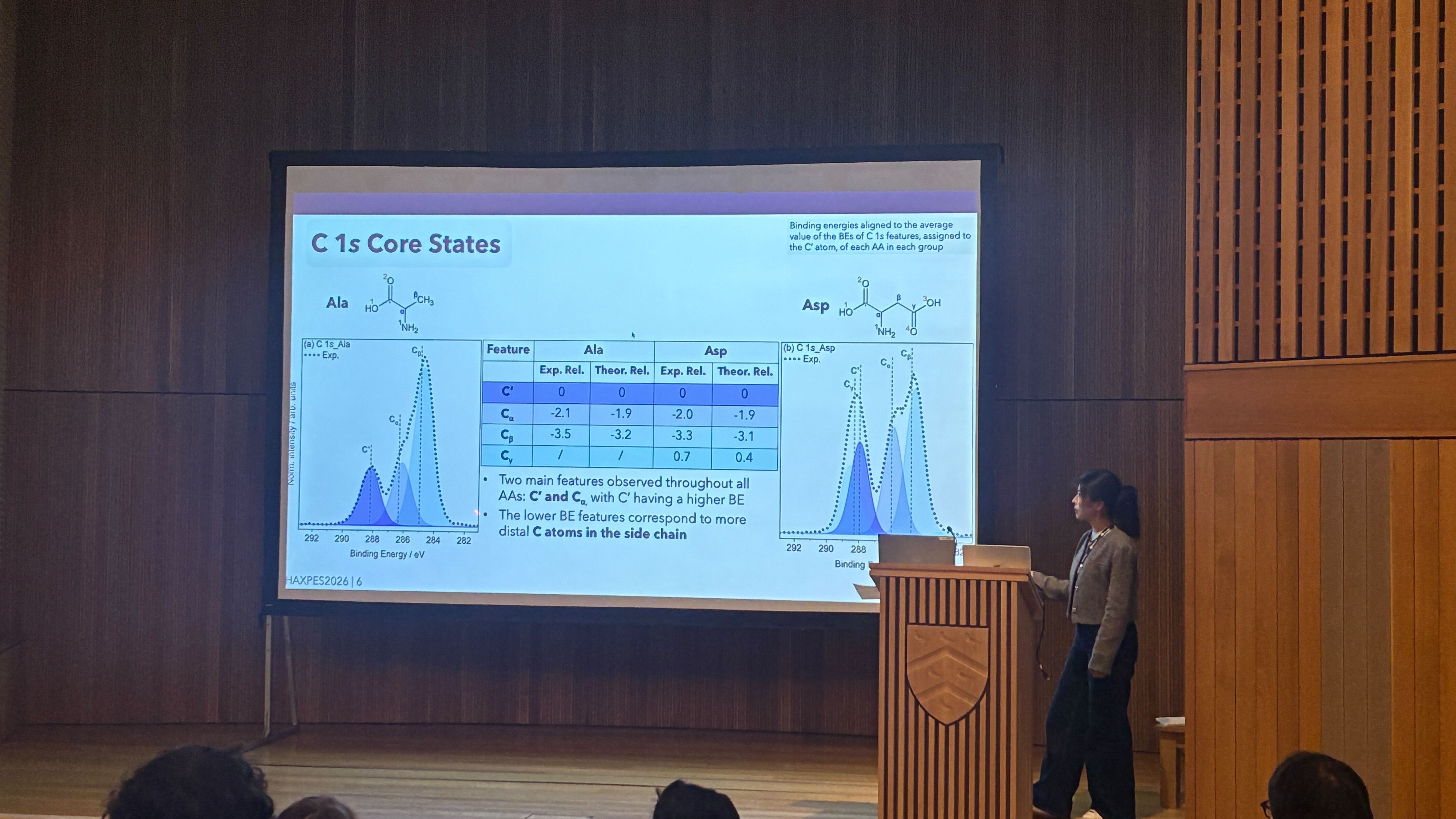
At the end of July, Ann and Anna attended the first Summer School on Computational and Experimental Photoelectron Spectroscopy (SCE-PES) at the University of Tartu in Estonia, organised by Dr J. Matthias Kahk. The summer school was organised in conjunction with the Horizon Europe MSCA Staff Exchanges project BETTERXPS that the group is a part of. The summer school combined lectures by leading experts in the theory and experiments of PES. Many of our theory collaborators giving excellent introductions to their theoretical approach of choice, from the underpinning concepts to state-of-the-art developments and applications. Anna had the pleasure of giving two lectures, introducing XPS and HAXPES, and Ann presented her work on amino acids in a fantastic student talk. We hope that this will be the first of many PES summer schools in Tartu!
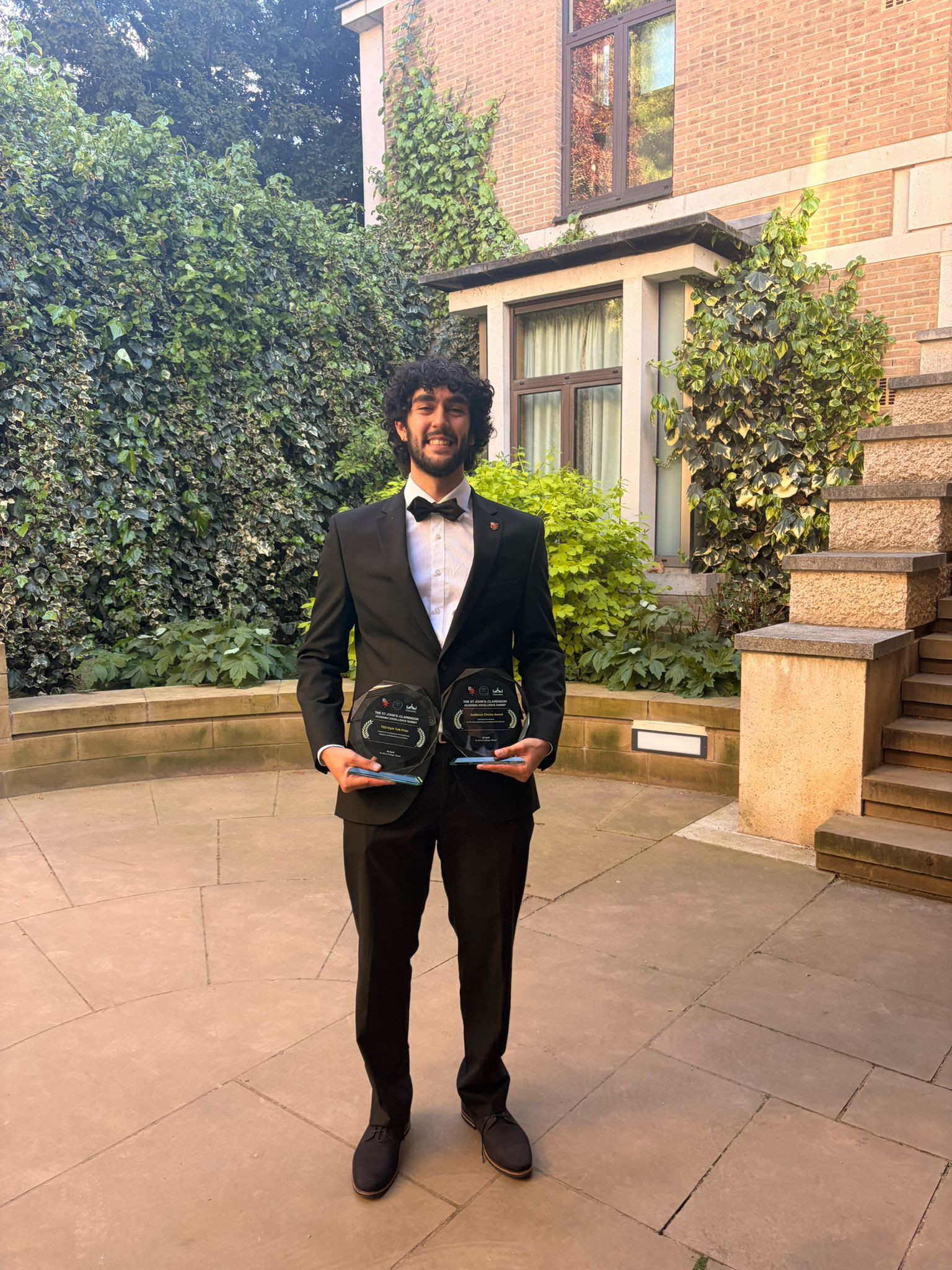
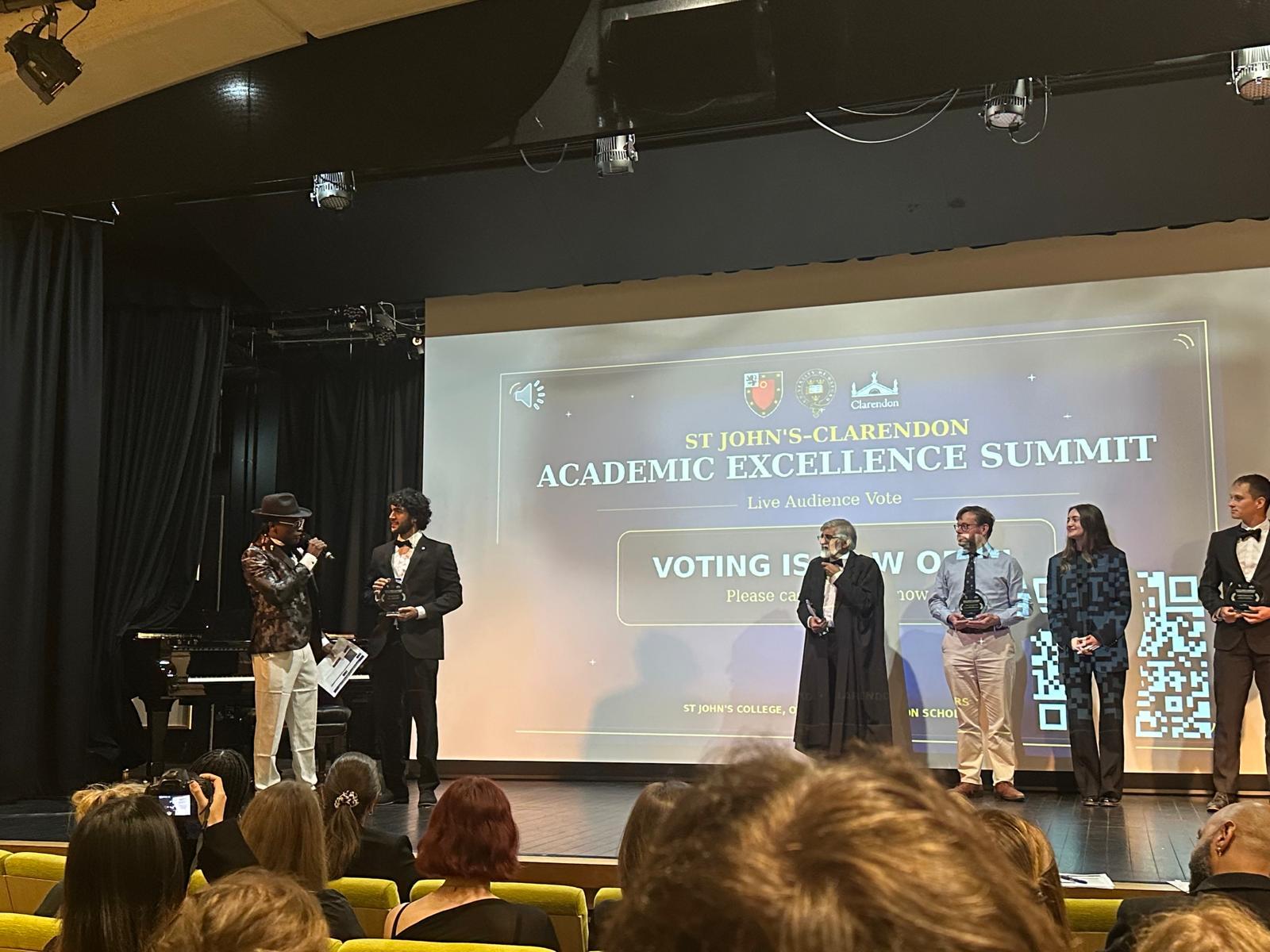
Congratulations are in order for Nick who has been awarded both the TED-Style Talk Prize and the Audience Choice Award at the inaugural St John’s – Clarendon Academic Excellence Summit. Nick’s spoke about a passion project of his outside of his Chemistry research, focusing on the “Land of a Thousand Hills”, Rwanda, and how disaster response can be improved in rural areas. You can read more about the event here.
We were very fortunate to host Tehseen Nawaz in the group through a research exchange program from her home institution, the University of Hong Kong (HKU). Tehseen recently completed her PhD at HKU and is now a post-doc in the same institution. In a recent news article, Tehseen shared some rather lovely comments on how she experienced her time in the group. I think we can be very proud that Tehseen not only enjoyed the scientific work of the group but also our human side.
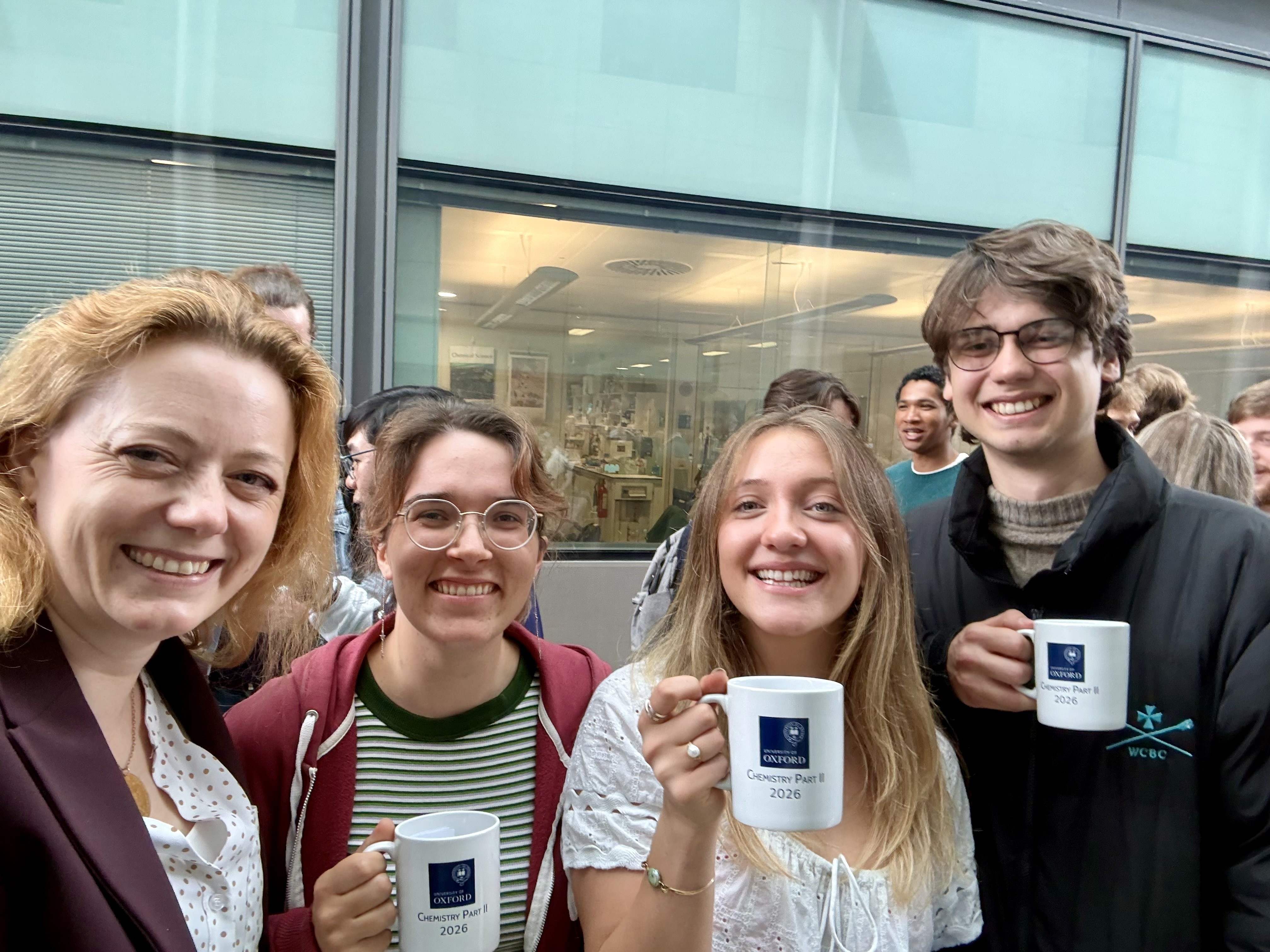
This year we were fortunate to have three fantastic students join us for their final year (Part II) research projects. Their projects were as varied as their personalities and interests. Elisabeth Edwards (Corpus Christi College) worked on photoelectron spectroscopy of gallium oxide and how crystal orientation, amorphicity, and isotope introduction influence the electronic structure and resulting photoelectron spectra. Emma Wroe (St Edmund Hall) explored how pH and temperature influence the copper oxide nanostructures synthesised through a simple solution-based route and how this modulates their glucose sensing ability. Josh Wise (Wadham College) managed to stabilise a rare mixed-metal post transition metal oxide in the form of thin films.
We are currently preparing publications from all three projects, a fact that reflects the determination and productivity of all three students. Whilst we congratulate Elisabeth, Emma and Josh on their success, we are also sad to see them finish their Part II time with us. But as all group members know, you might finish your degree, but you never truly leave the group (and Elisabeth in particular is fulfilling this, by already having a confirmed DPhil place with us in October).
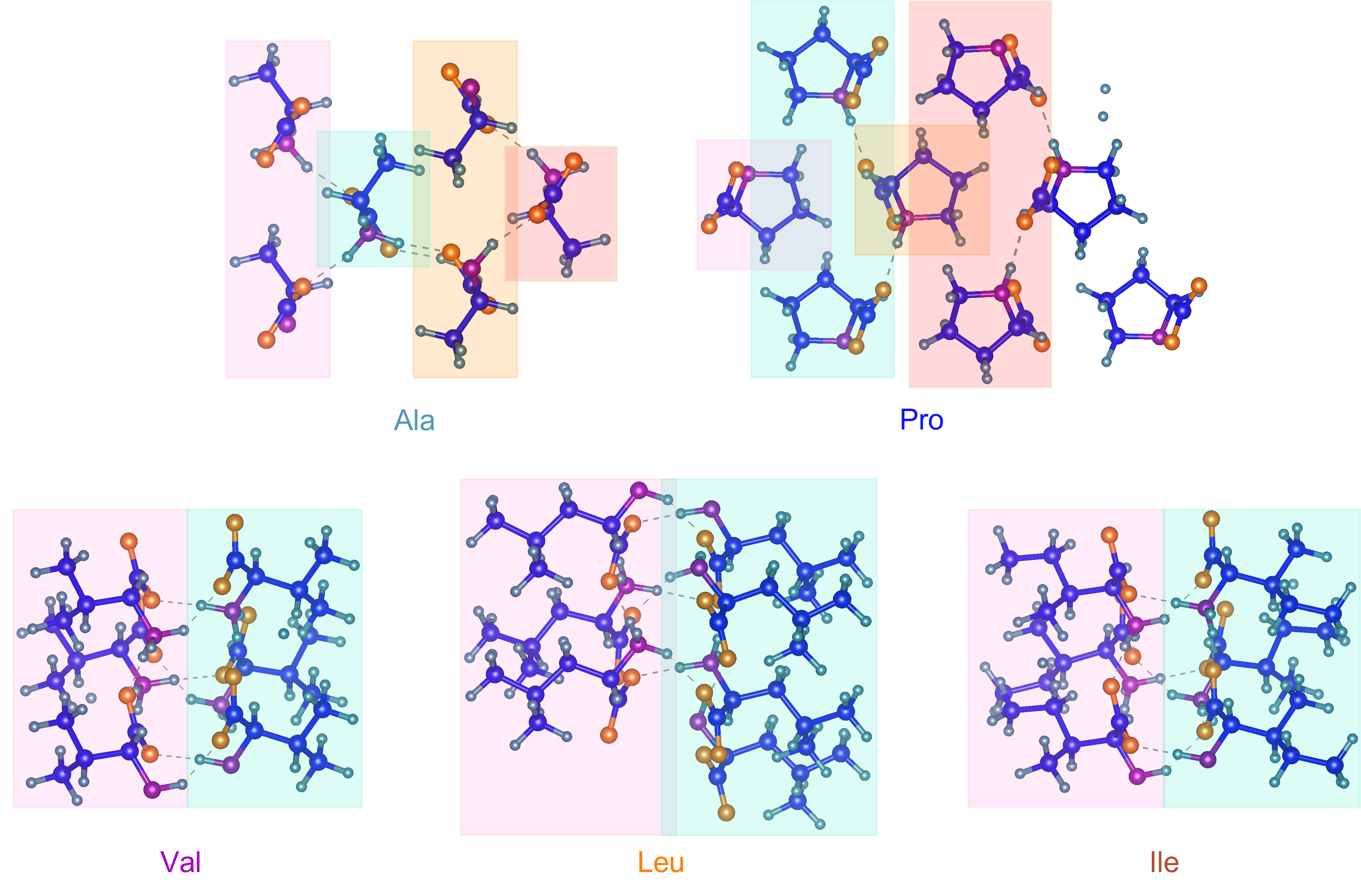
Ann’s work on the chemical bonding and electronic structure of the proteinogenic amino acids was highlighted as a research snapshot in St Edmund Hall’s Ex Aula Research Journal. The research snapshot is a very nice teaser for her work, which has just been uploaded to arxiv and is under consideration with a journal. This is a giant work which for the first time explores the core, semi-core, and valence spectra of all proteinogenic amino acids using X-ray photoelectron spectroscopy and density functional theory to provide a consistent picture of local bonding, hydrogen bonding, crystal structure and overall electronic structure.
In May the group performed two HAXPES beamtimes at beamlines I09 (Diamond Light Source) and P22 (PETRA III, DESY).
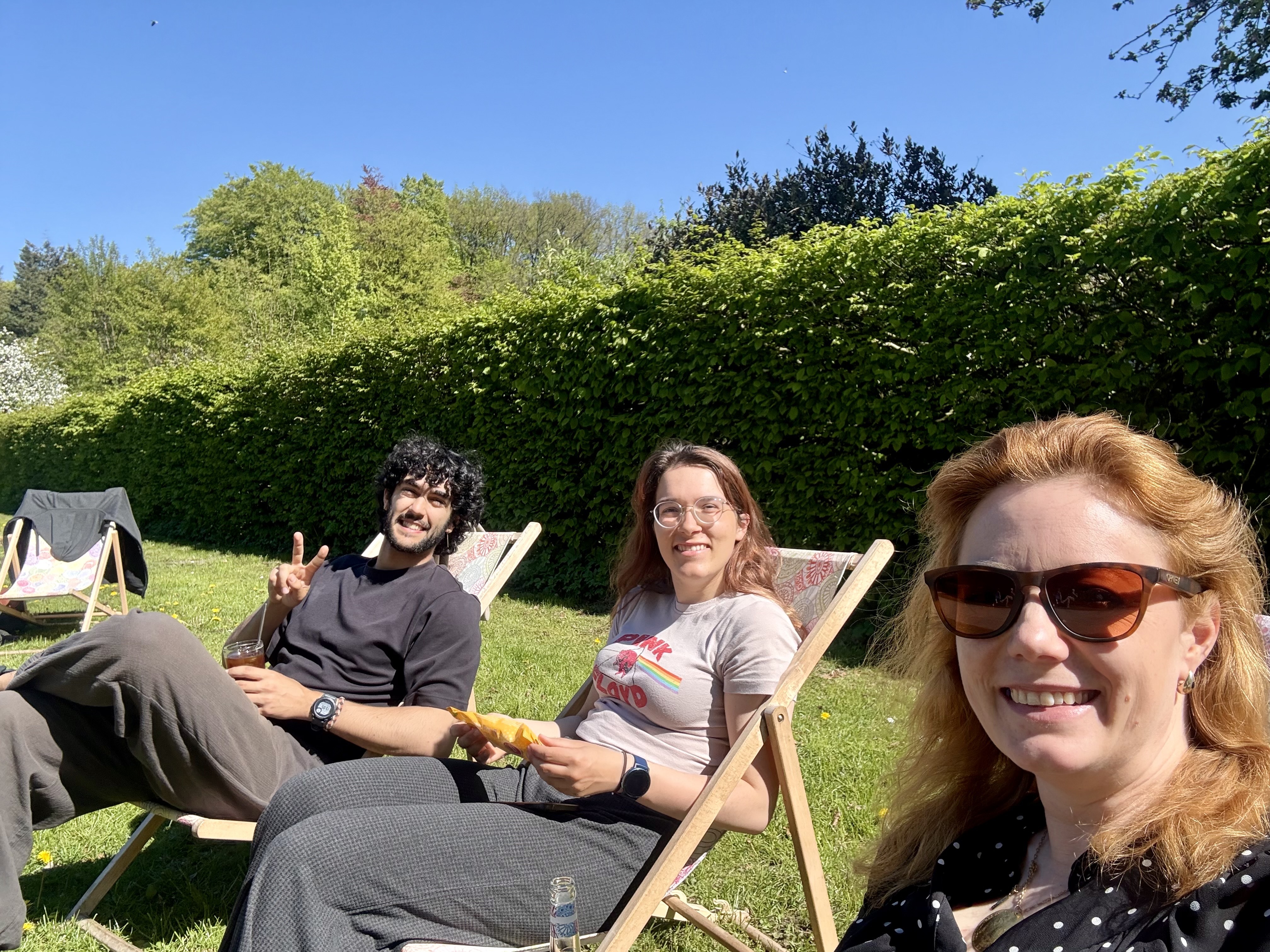
At the beginning of May, Nick, Elisabeth and Anna, spent time at P22 performing two back-to-back beamtimes. The experiments focused on the continuation of our very productive exploration of new MAX phases from Prof Christina Birkel’s group at Arizona State University and on systematic measurements on mixed post-transition metal oxides. In addition, we were able to collect data on several recently synthesised oxide thin films from our own efforts in sol-gel synthesis. Dr Volkmar Kollar was our local contact for the experiment providing both strong scientific and cheerful emotional support throughout. Obviously we also used the fantastic automation available at P22 to enjoy a slice of cake and coffee in the sunshine in the nearby park.
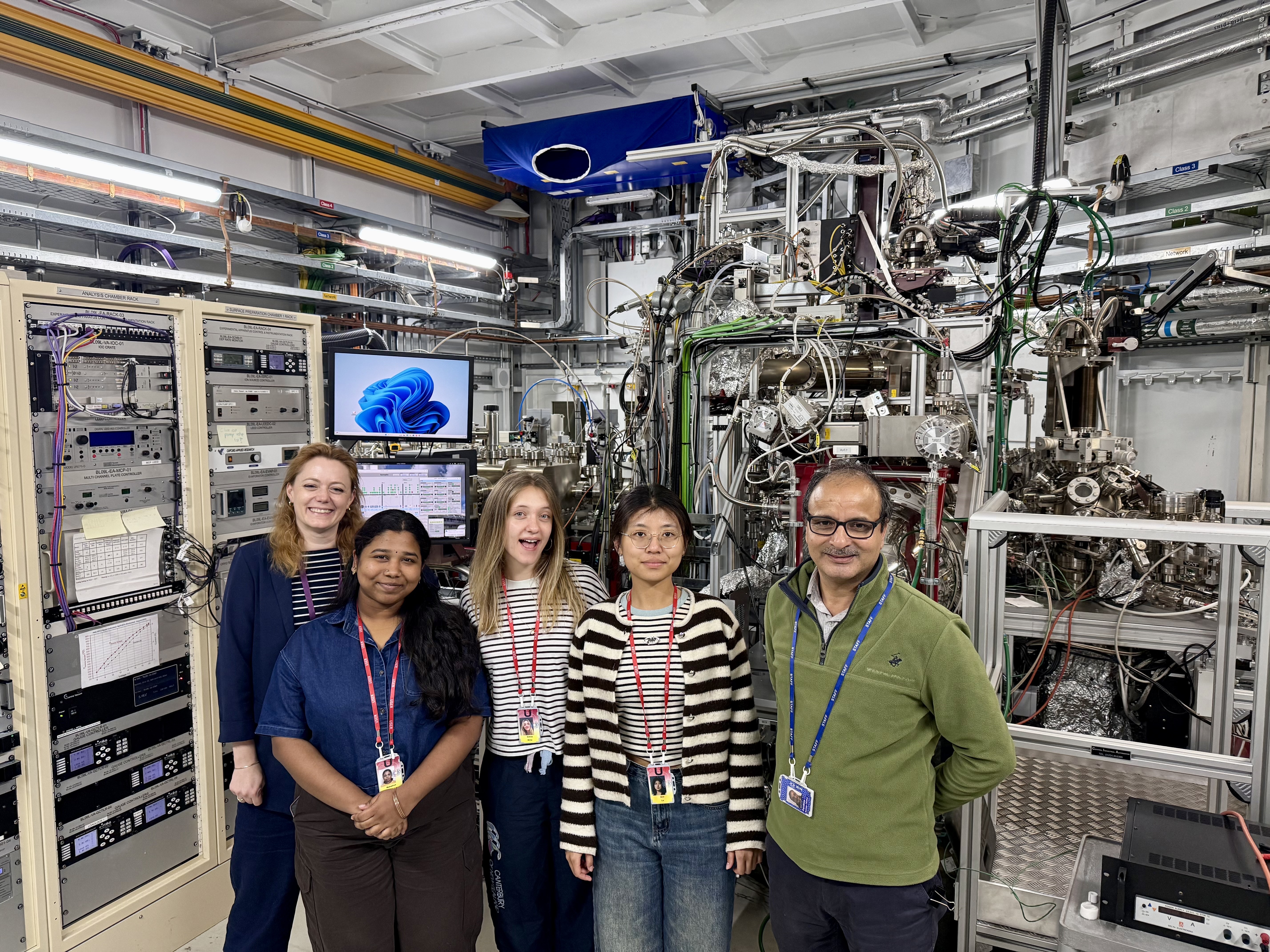
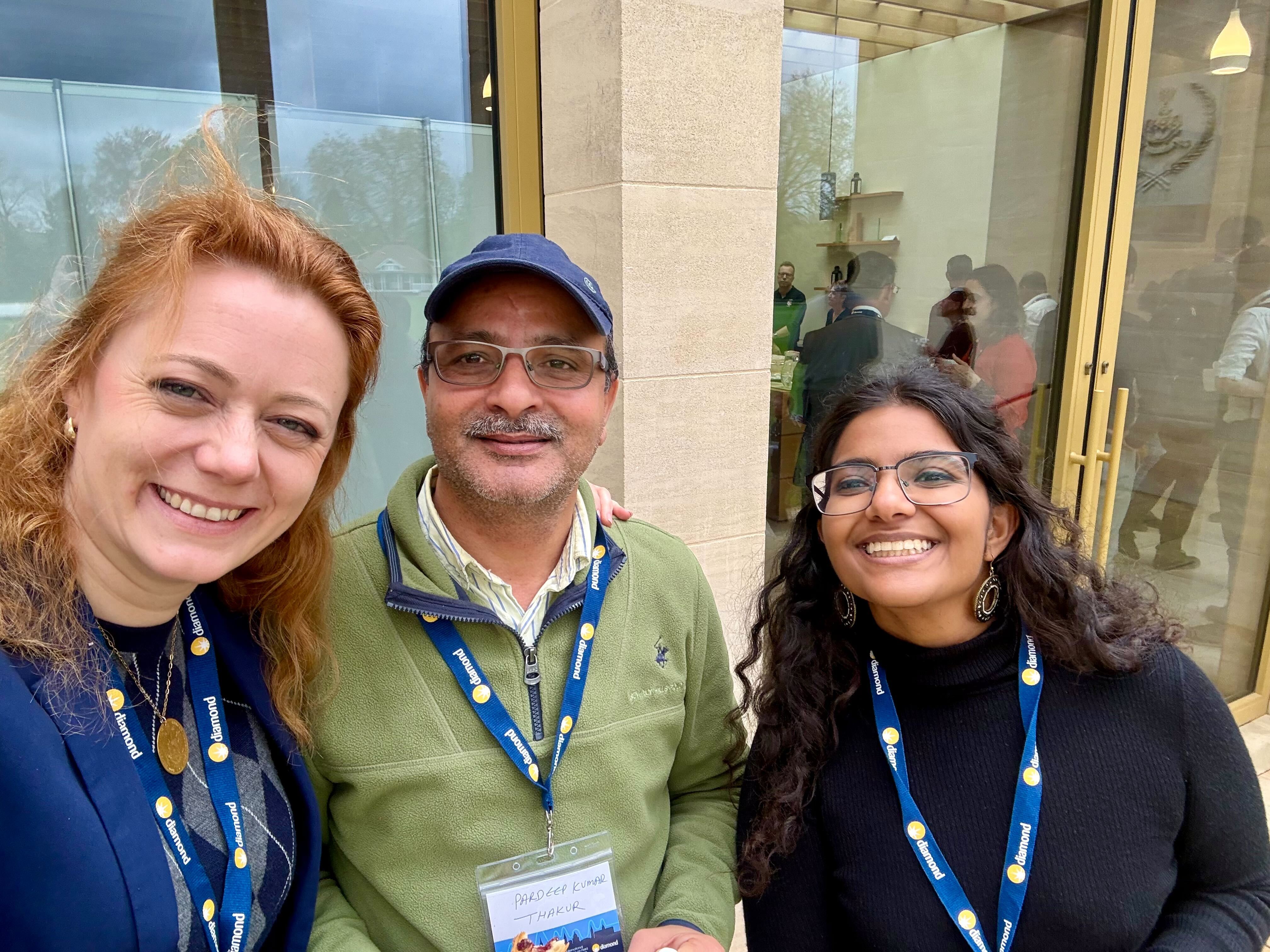
Just after this, we had another beamtime at I09 in mid-May, which was attended by Emma, Mahathee, Ann, and Anna. We measured some beautiful GeO2 thin films as well as a whole host of other post-transition metal oxide films. Excitingly this was also Emma’s and Mahathee’s first beamtime and both of them got to collect data on their own samples. Dr Pardeep Kumar Thakur was our ever competent and entertaining local contact.
We always thought that UHV equipment provides a fantastic background for artsy photographs. This led us to submit a photograph of Elisabeth working with Dr Christoph Schlueter at beamline P22 at PETRA III, DESY, Hamburg, Germany, to our departmental photo competition. Turns out, we were right and our contribution won 1st place! Elisabeth is now the happy owner of a new Kindle (the grand prize).
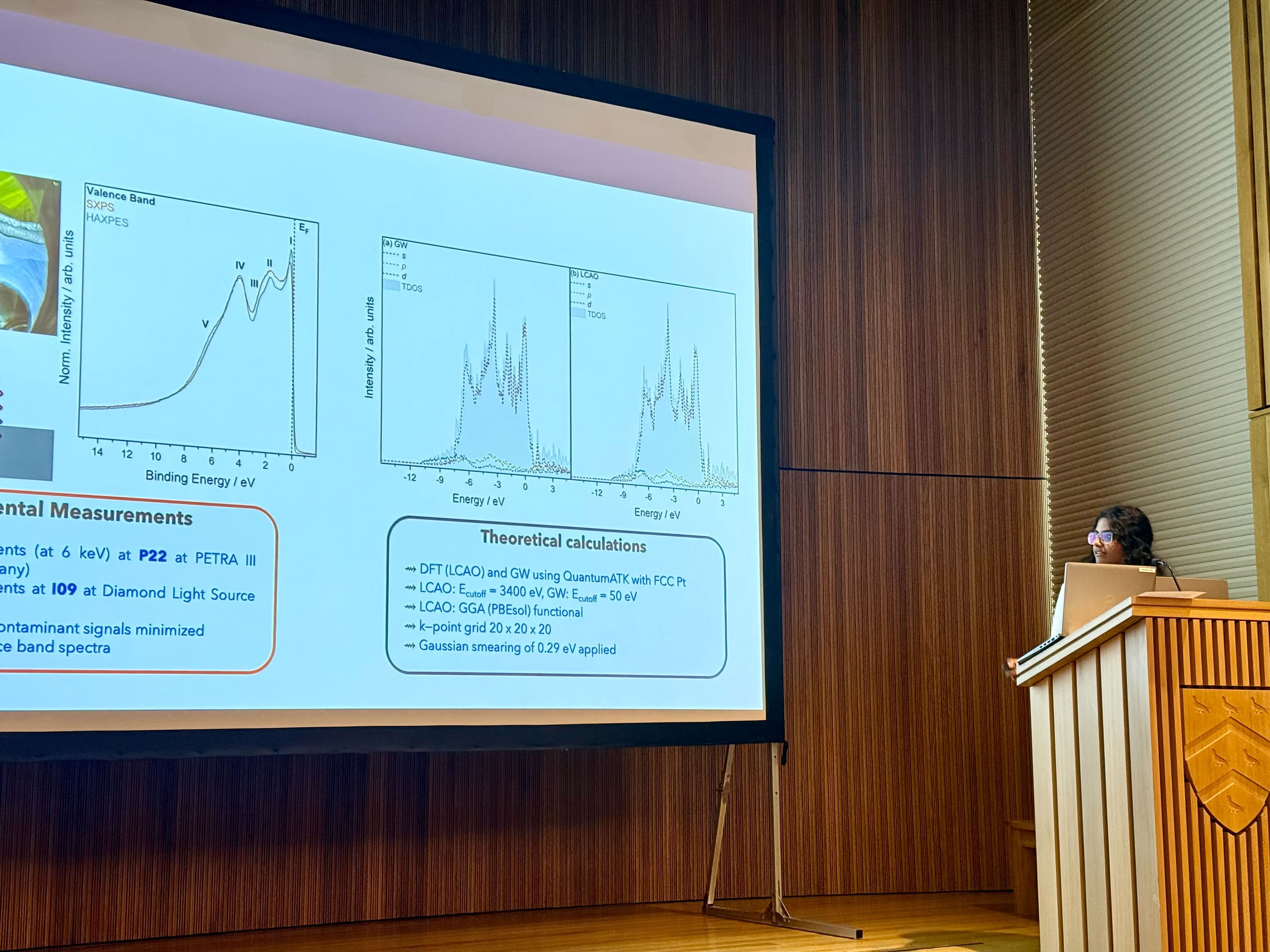
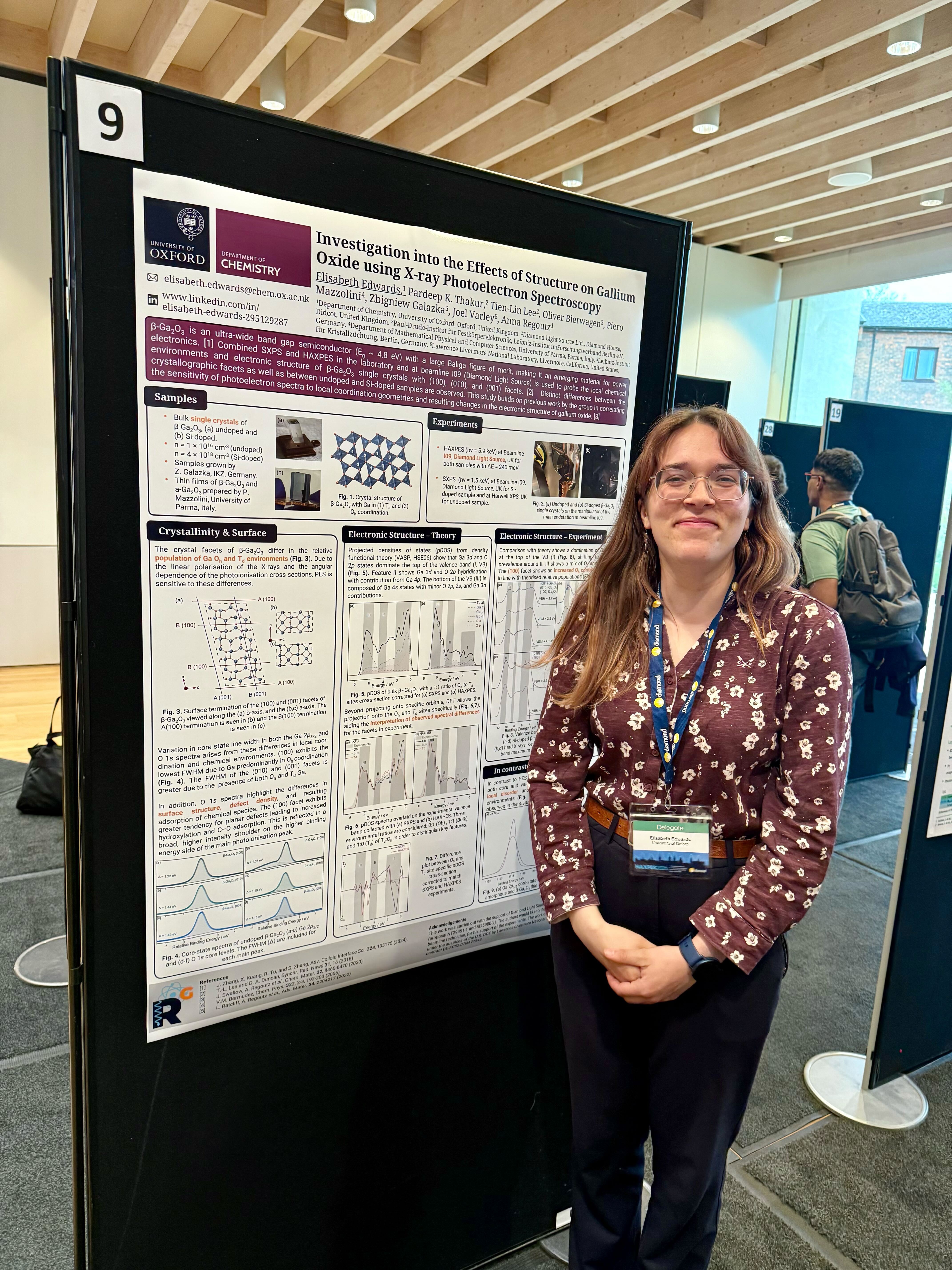
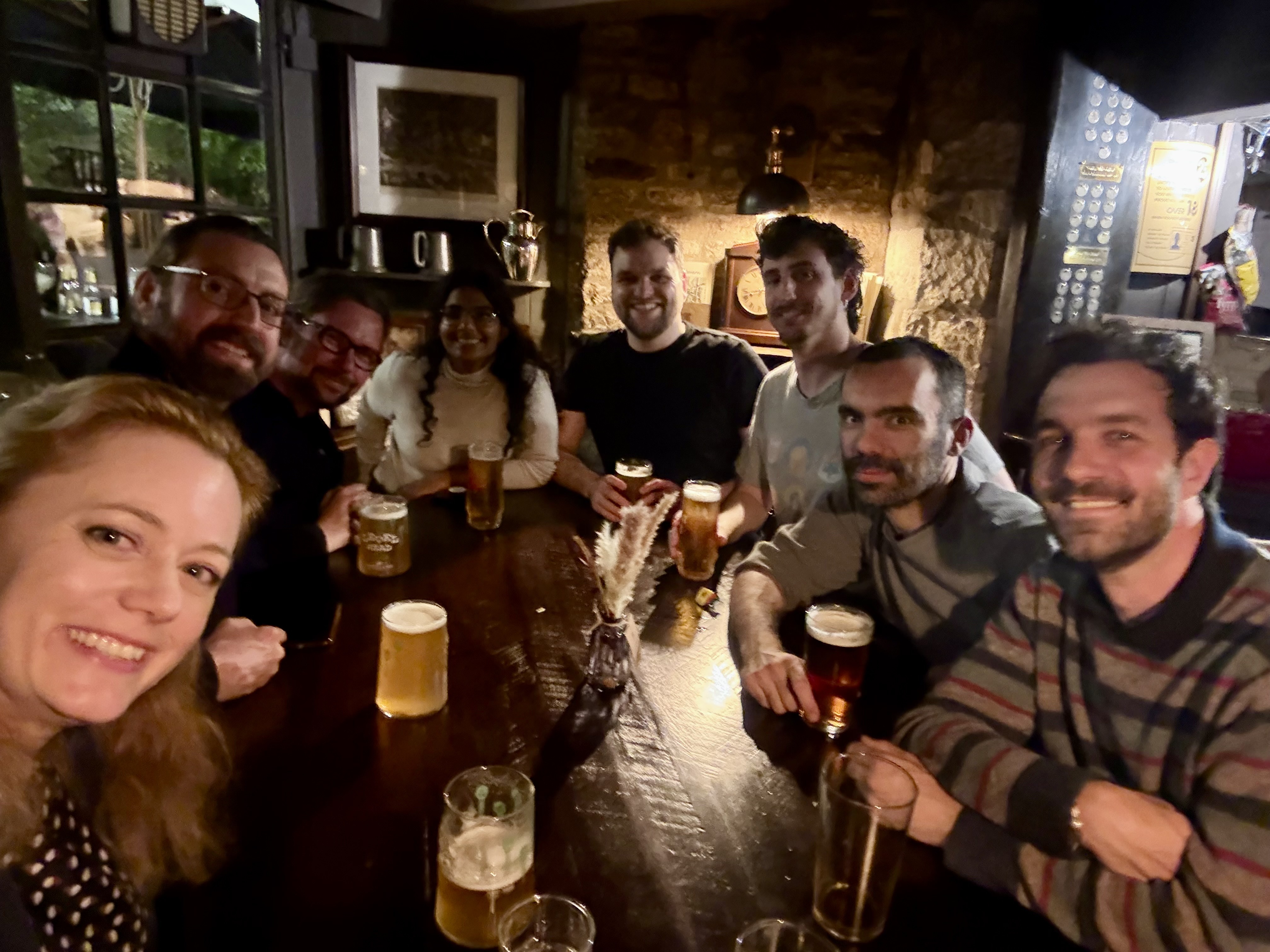
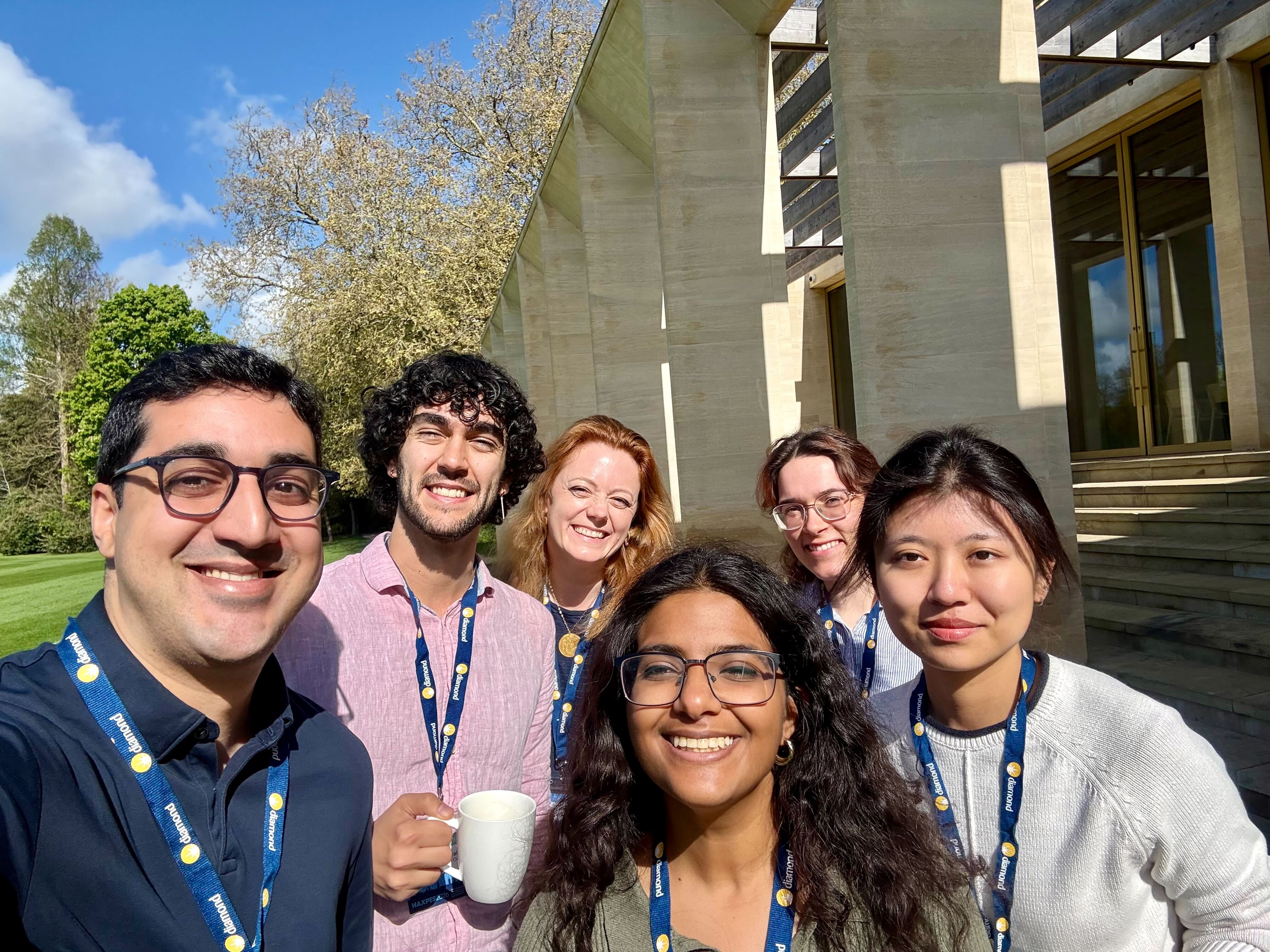
From the 13th to the 17th of April the 11th International Conference on Hard X-ray Photoelectron Spectroscopy (HAXPES 2026) took place at Worcester College in Oxford. Anna was Co-Chair of the conference together with Tien-Lin Lee from Diamond Light Source. The group had a strong representation at the meeting, with Ann giving a talk on her amino acid work, Prajna presenting her platinum metal work, Curran sharing his career path to date, and Elisabeth giving her first ever poster presentation on her Part II work on gallium oxide. Nick also attended (simply to learn and have fun).
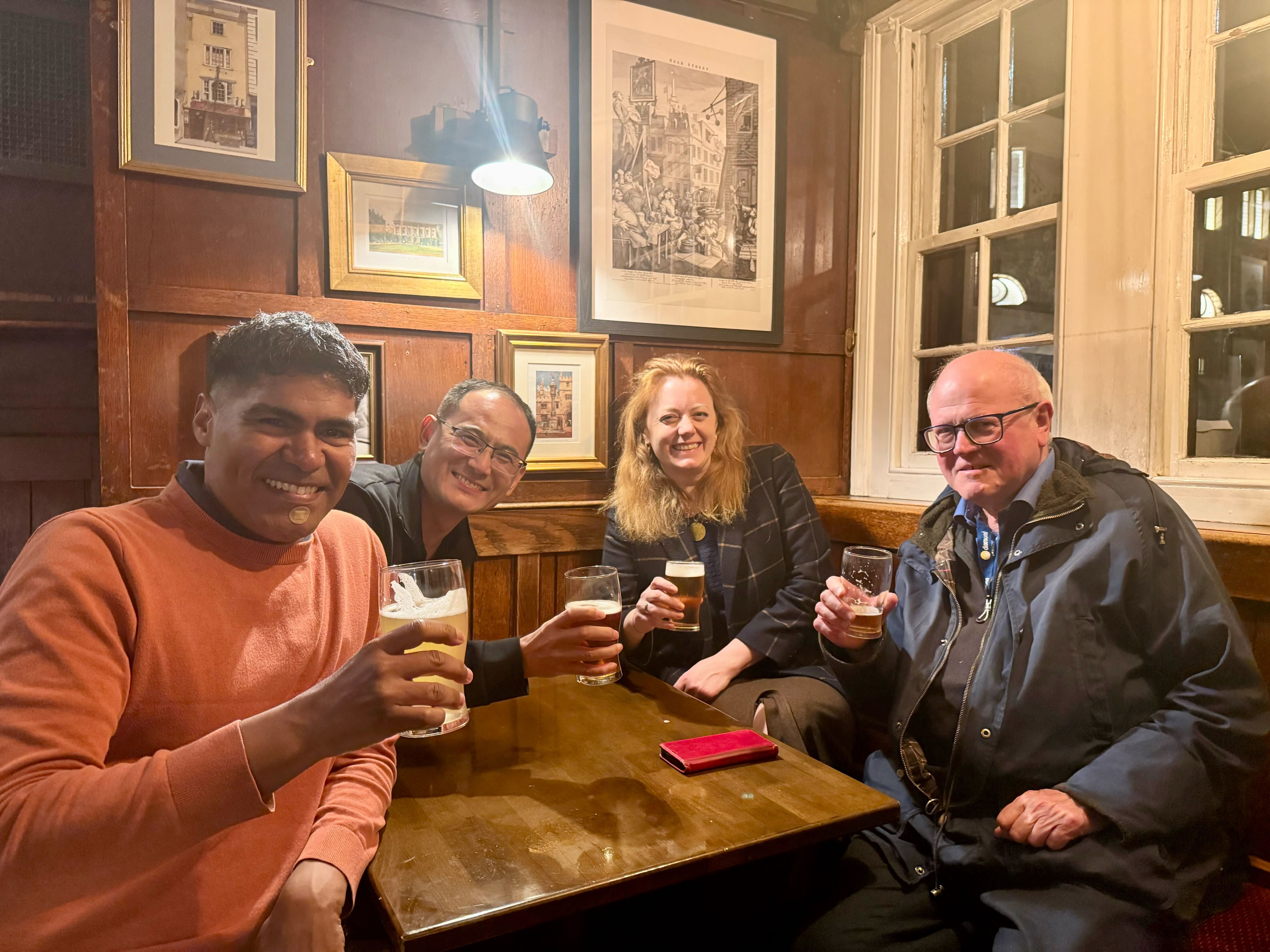
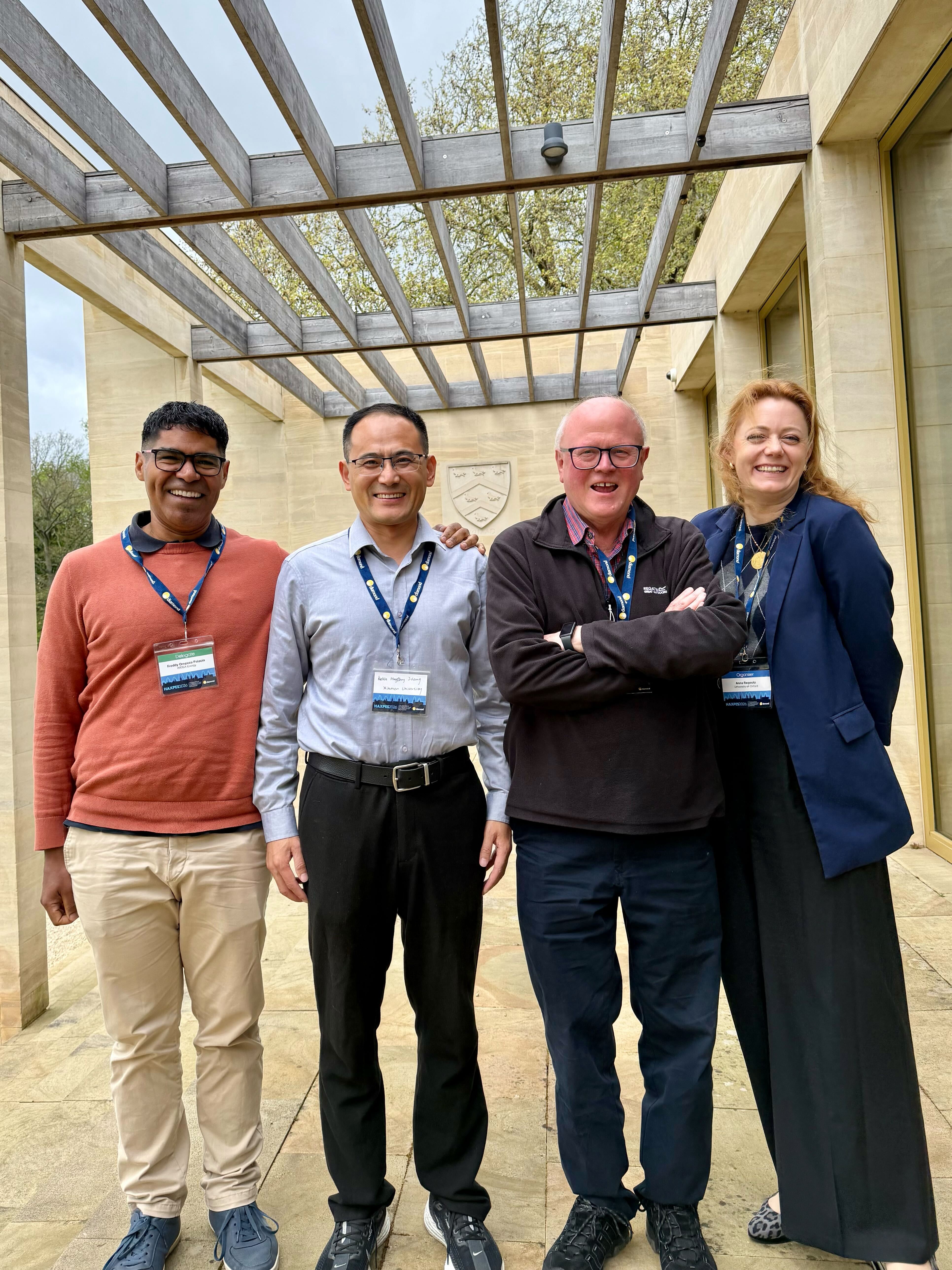
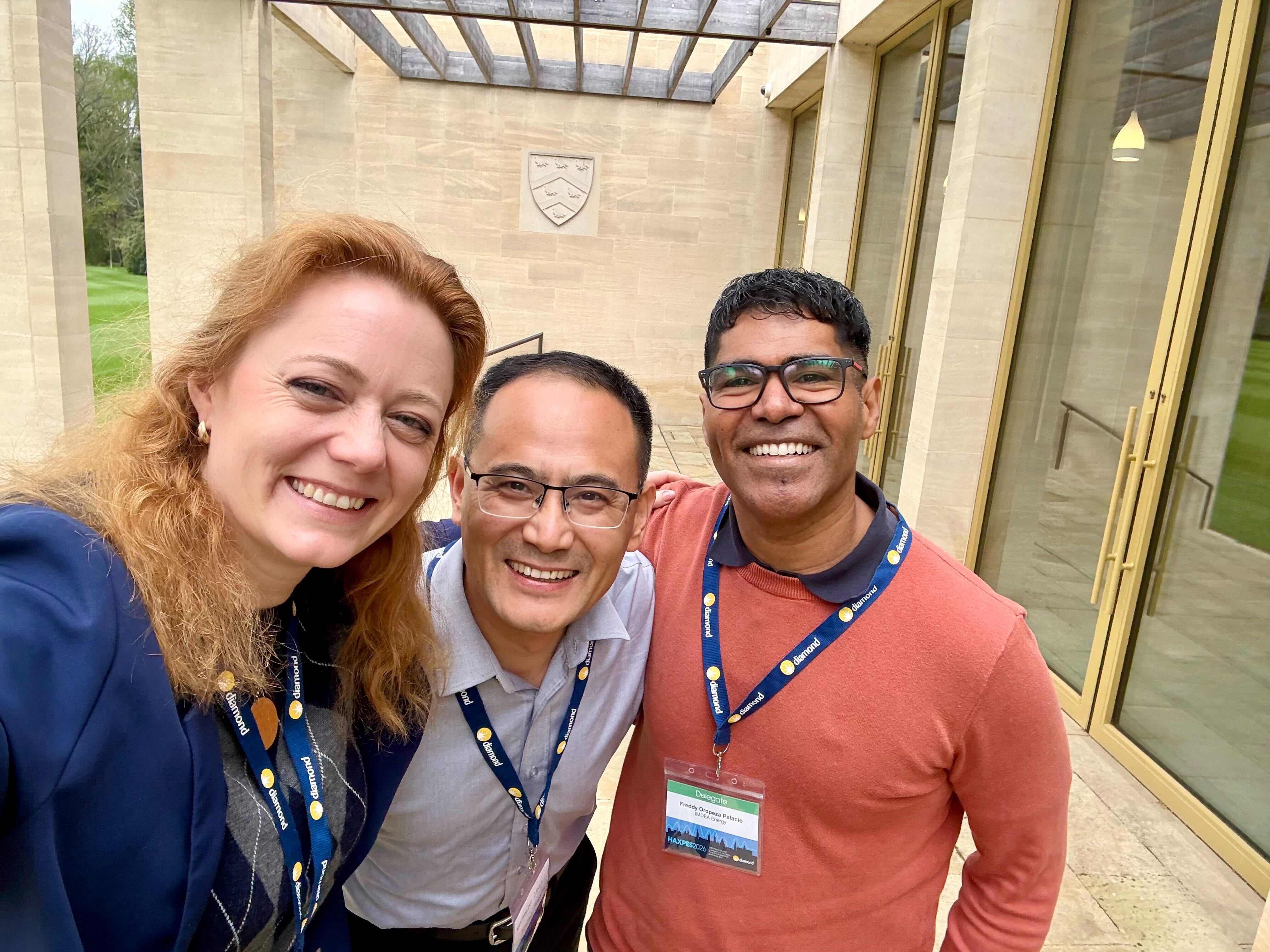
Besides many brilliant presentations from the group we also had a good time networking and catching up with old friends and new HAXPES enthusiasts. Anna was particularly happy that a mini-reunion of the Egdell group took place with Russ, Hongliang and Freddy returning to Oxford for the meeting.
Finally, at the meeting of the international advisory board meeting during the conference, Anna was elected as chair for the IAB taking over from Marc Simon.