Regoutz Group


Available Analytical Chemistry Summer Studentship

The group has an Analytical Chemistry Summer Studentship available funded by the Analytical Chemistry Trust Fund on Radiation Damage Studies on Halide Perovskite Solar Cell Materials. The project will be hosted in the Department of Chemistry at UCL and Prajna Bhatt will lead this as the day-to-day supervisor.

The summer studentship aims to uncover the effect of X-ray irradiation on perovskite-related structures, at the forefront of research in photovoltaic and X-ray detection applications. It will focus on understanding radiation damage mechanisms and to develop mitigation strategies. The project will involve synthesis of powdered perovskite materials and their chemical state, composition and crystal structure will be characterised before and after in-situ irradiation by a combinative approach of X-ray photoelectron spectroscopy (XPS), energy-dispersive X-ray spectroscopy (EDX) and X-ray diffraction (XRD). These results will be correlated with similar work on single crystals of these materials in order to understand radiation damage in both single crystals as well as polycrystalline powders. We will use high-resolution laboratory-based soft XPS to collect core and valence band spectra and iterative measurements will be employed to explore radiation sensitivity of the materials and to limit radiation damage.

The summer studentship will run for eight weeks starting on 12th June and the student will receive a weekly stipend of £395.00 for the duration of the studentship.

If you are interested in this position, please contact Anna via email by the 1st of May 2023, including a CV and short statement on why you would like to get involved in this project.


Research Project for Laidlaw Scholars – Apply Now

The call for the Laidlaw Research and Leadership Programme for 2023 is now live! UCL hosts around 25 students each year to become Laidlaw Scholars as part of a program across several universities supported by the Laidlaw Foundation. Part of the programme is a six week research project and our group is offering one such project for next summer.

The project is centred around low temperature deposition of indium oxide thin films for applications in optoelectronic devices. As part of the project you will explore low-temperature sol-gel routes to deposit high quality thin films and characterise them with a range of materials characterisation techniques, including X-ray photoelectron spectroscopy, UV-vis spectroscopy, and X-ray diffraction. You will be supported by Aysha Riaz, a PhD student in the group. You can find further information on the project and on all projects here.

Do feel free to contact Anna if you are interested and have any questions and find out more details about how to apply here. The deadline is Monday 16 January 2023 at 23:59.


Collaboration with Jerry Heng’s Group

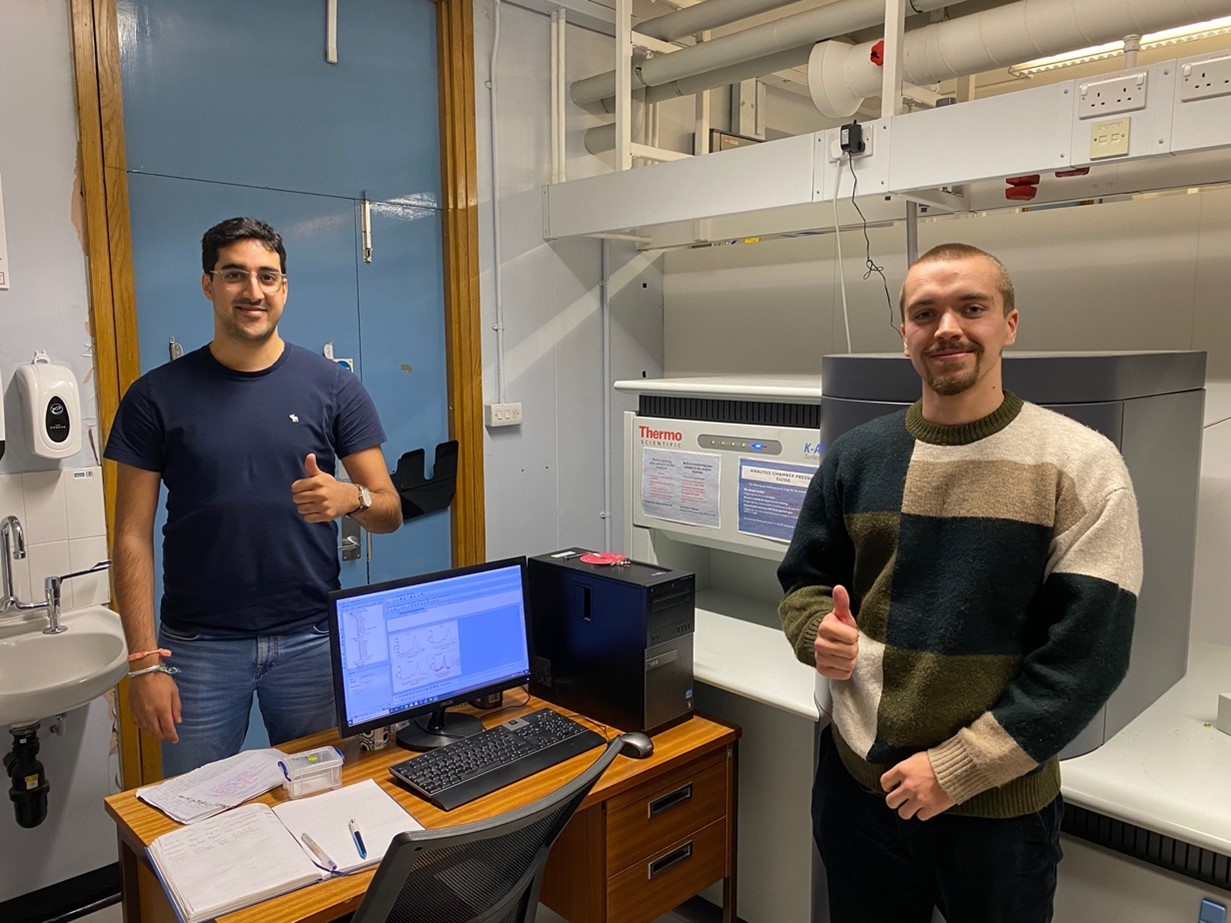
Curran welcomed PhD student Ethan Errington from Jerry Heng’s group (Imperial College London, Chemical Engineering Dep.) to the Department of Chemistry for some XPS experiments on their group’s latest samples. Jerry Heng’s group are interested in using XPS to better understand the surface chemistries of oil-in-water adsorbants. This marks the first collaboration between the groups, and we are thrilled to be providing our XPS expertise! Ethan and Curran first met each other 8 years ago when they both studied Chemical Engineering at the University of Leeds. They have both come a long way since their last collaboration which was designing a heat exchanger in their second year of their undergraduate degree.


First beamtime of the academic year!

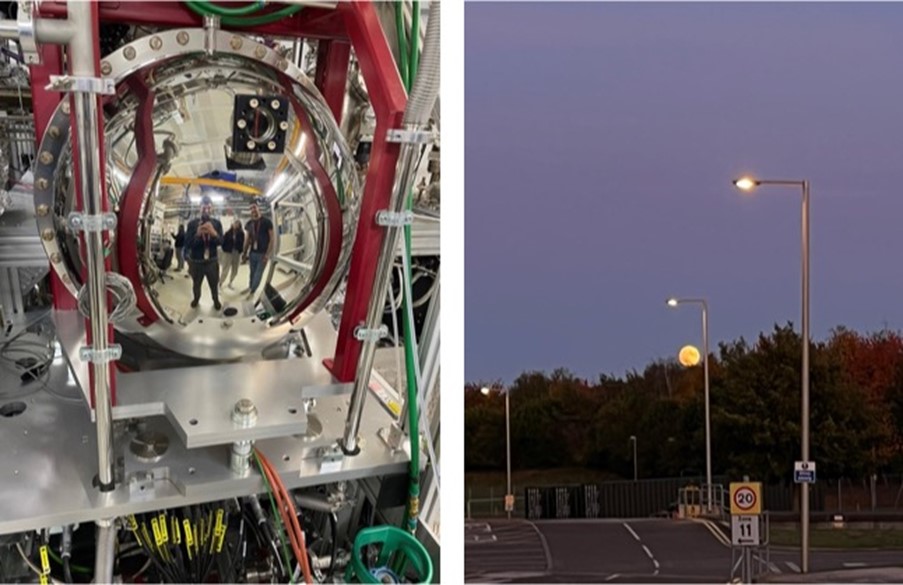
Curran and Aysha from the group were joined by Benjamin Moss from Imperial College London for four days of experiments at beamline I09 at the Diamond Light Source. They were able to measure several sets of MXene and MAX phase samples from our long-time collaborator Christina Birkel at Arizona State University. The measurements were performed with both soft and hard X-rays and will hopefully shed light on the surface and bulk characteristics of these novel materials.

Benjamin also brought some exciting metal oxide samples with him, but they put up a fight and many hours were required to overcome charging issues! However, the team powered through and after many tests, they were able to collect a good set of data. The cherry on the top was the collection of a beautiful Ti 1s spectrum of the material. Aside from the success of the measurements one highlight was definitely the view of the moon on our second night as we stumbled back to the beam line after chocolate sponge cake and chocolate custard.


Final year PhD talks

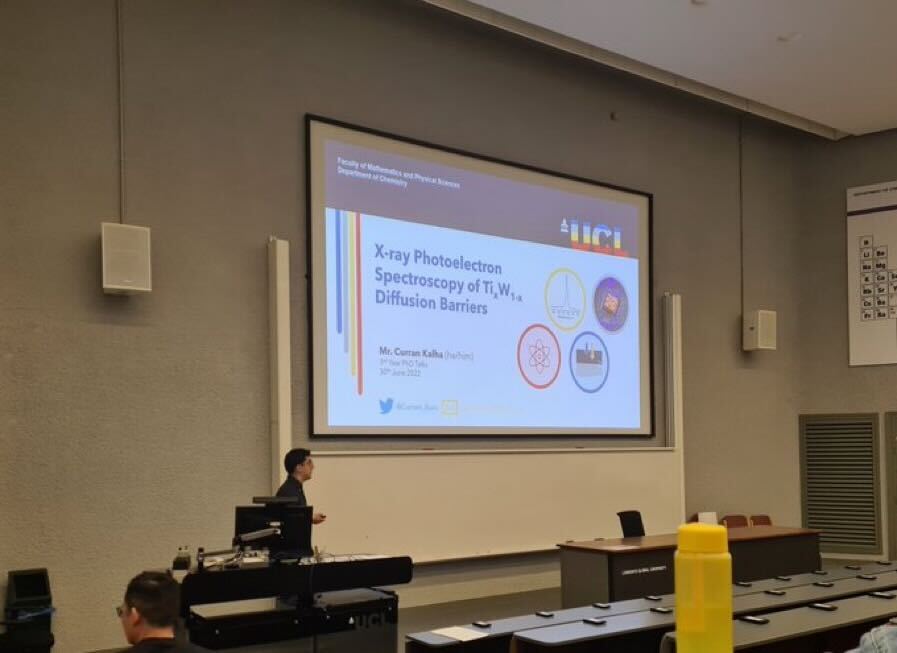
Nathalie and Curran both presented their projects as part of the departmental final year PhD talks in July. Nathalie shared her results on Structural & Electronic Effects of X-ray Irradiation on Prototypical Catalysts and Curran shared his work on X-ray Photoelectron Spectroscopy of TixW1-x Diffusion Barriers. Both talks received excellent feedback from our departmental community and Curran was named runner up for the Clarke Prize for the best talk in the inorganic chemistry section. Congratulations!


New group photograph

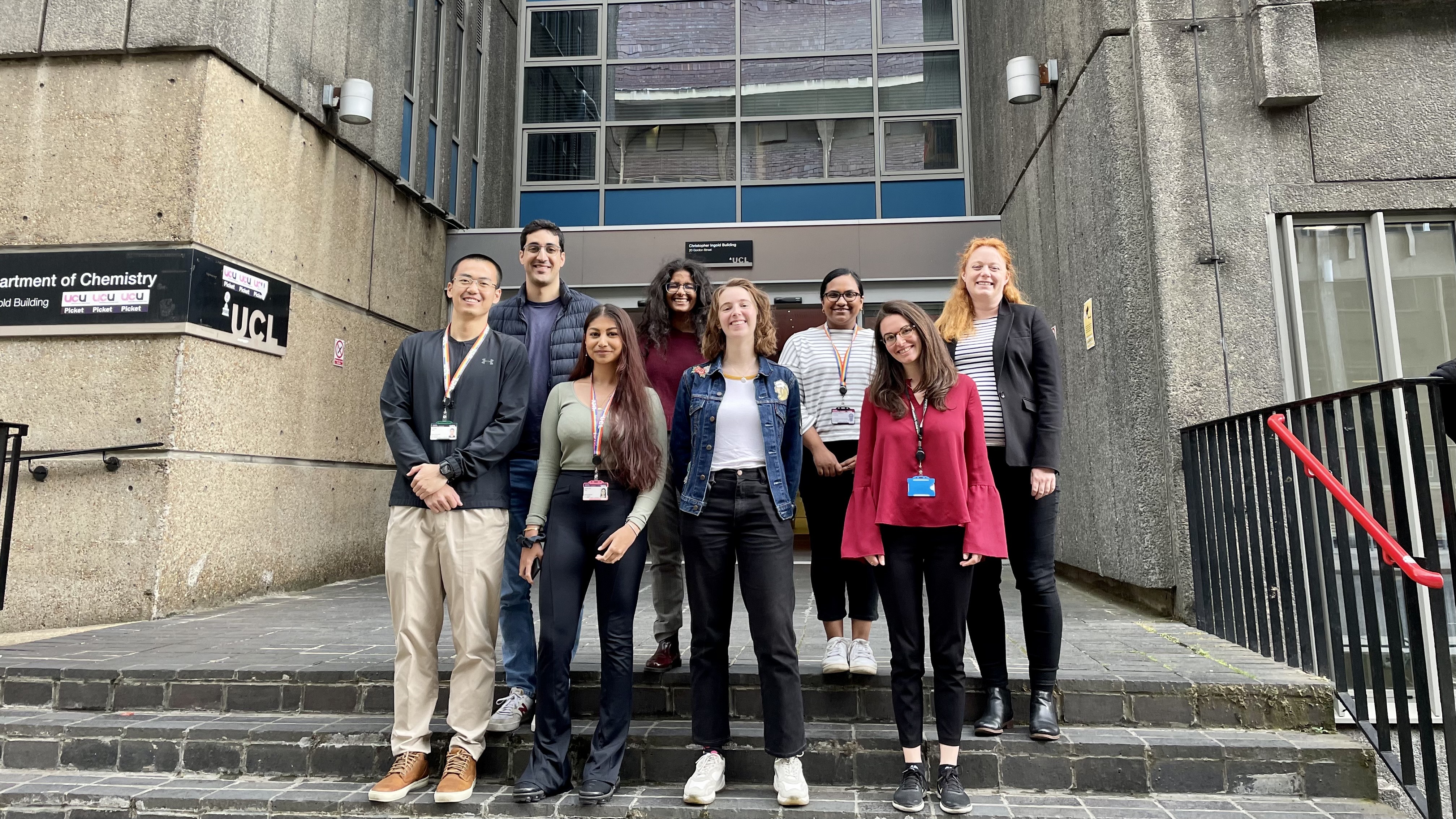
As the academic year comes to a close (and with Anna’s maternity leave imminent) we took the opportunity to take a new group photograph. This is the “group approved” version of the photograph – we’ll keep the outtakes to ourselves 🙂

The AXS group in July 2022. Front row from left to right: Yujiang Zhu, Aysha Riaz, Katherine Milton, Maria Basso. Back row from left to right: Curran Kalha, Prajna Bhatt, Nathalie Fernando, Anna Regoutz.


Oxides everywhere

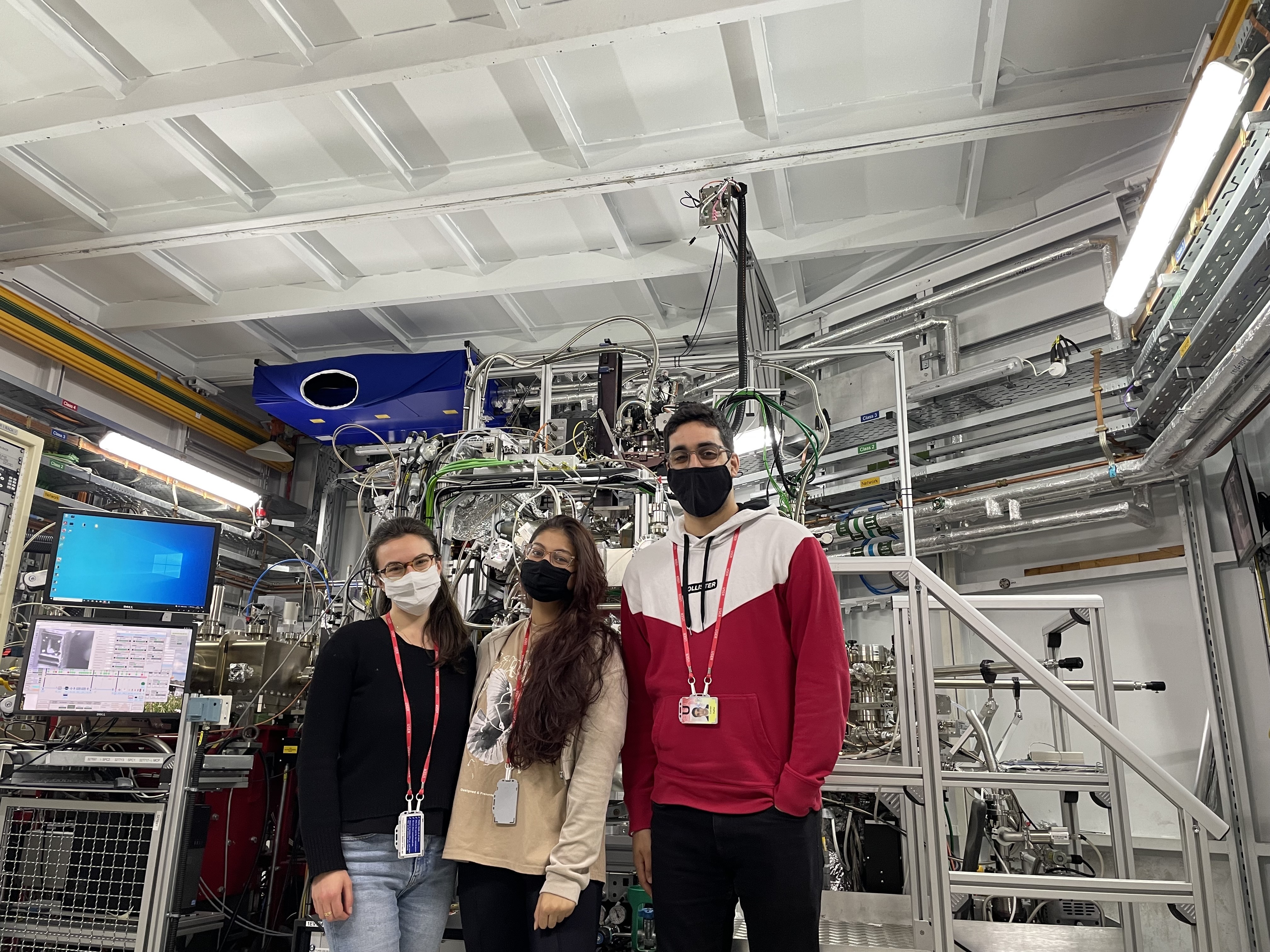
In April a team from the group including Curran, Aysha, Maria and Anna spent several days at beamline I09 at the Diamond Light Source for a combined SXPS/HAXPES experiment on a number of oxide materials, all relevant for electronic device applications.

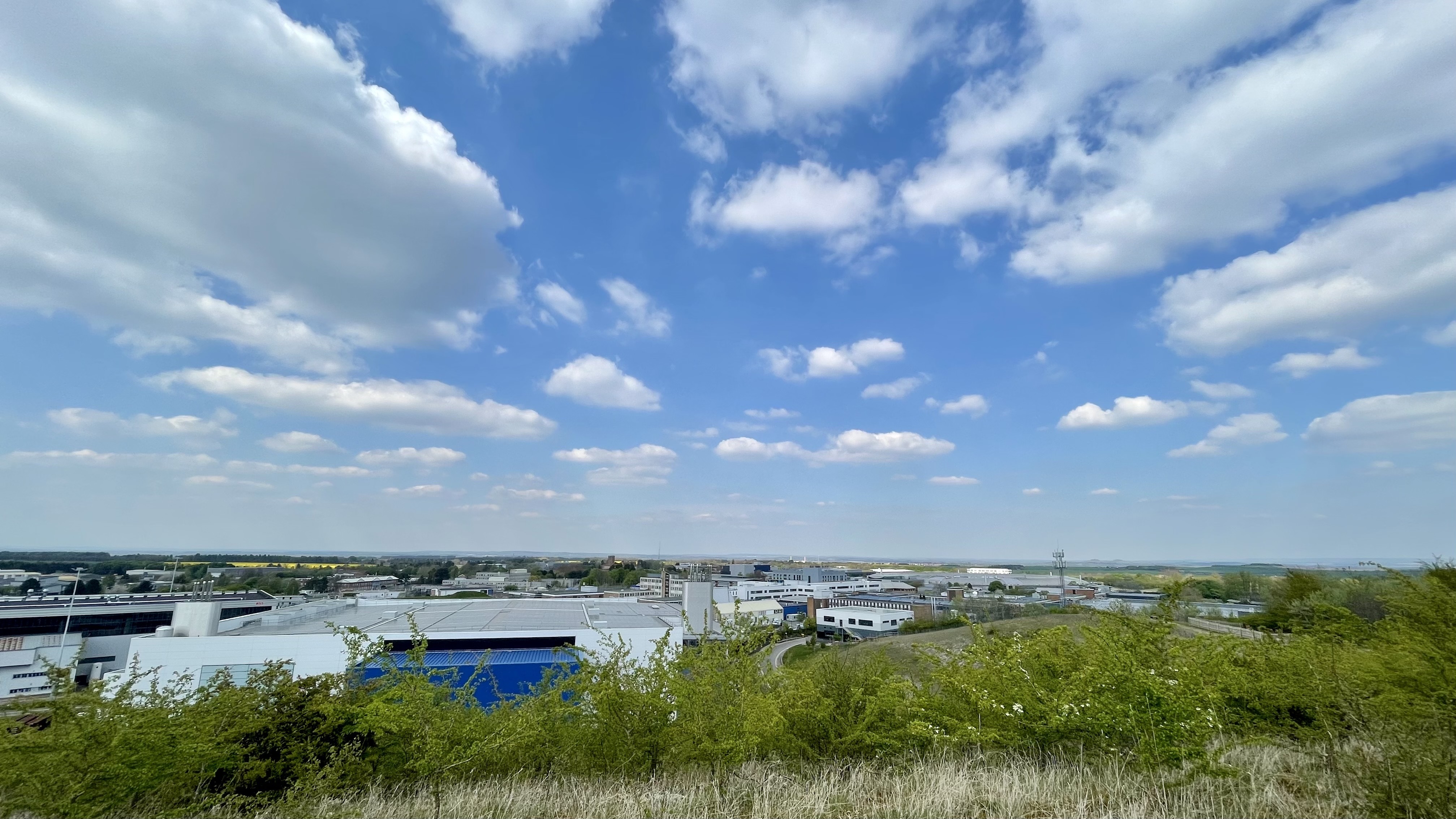
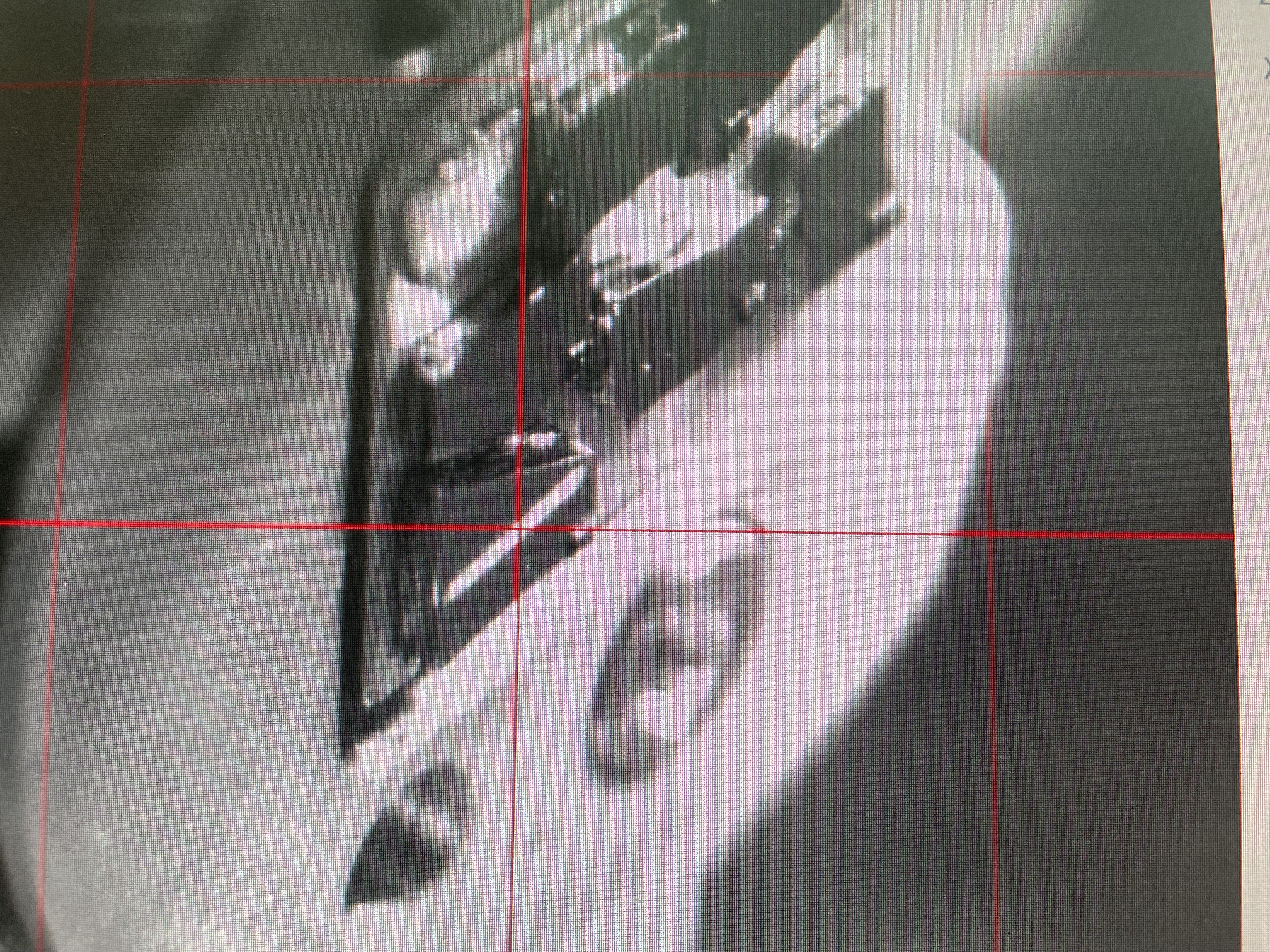
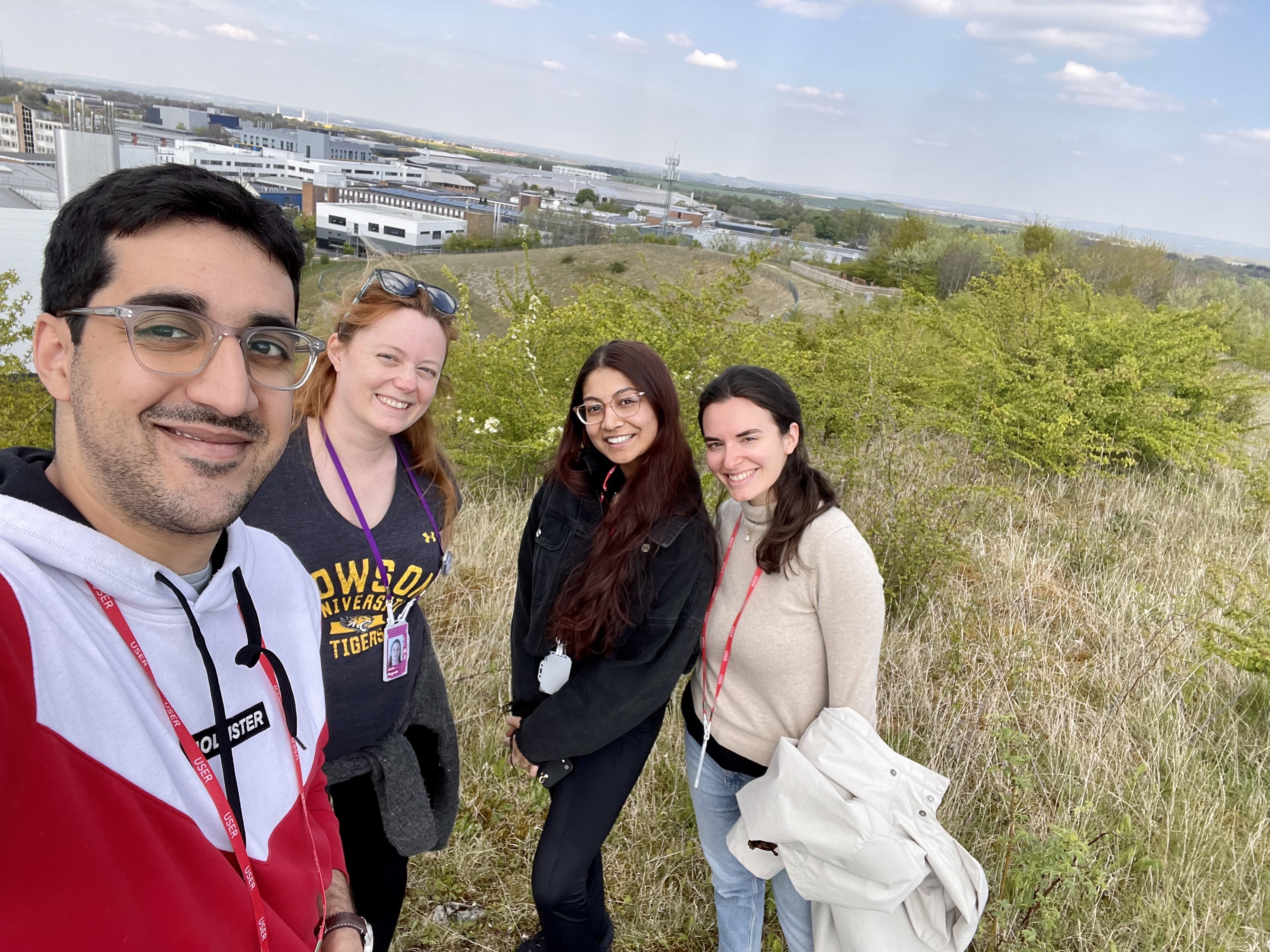
We were hunting for both chemical state information and final state effects from core level spectra as well as for signatures of the electronic structure of the materials, including some 2D electron gases at buried interfaces. In order to avoid beam induced changes to the samples we used the defocussed setup at I09 and were rewarded with some intensely bright and large beam illumination on the samples (see image below). The electronic structure experiments needed extended acquisition times to obtain the needed signal quality, so we even had time to catch some fresh air and walk to the top of ISIS hill providing a great view of Harwell campus and the surrounding greenery.

This was also Maria’s first synchrotron experience. She is spending six months in the group as a visiting PhD student as part of her PhD, which she is undertaking at the University of Padua, Italy, under the supervision of Prof Alessandro Martucci. She works on crystallisation of solution-based metal oxides on temperature-sensitive substrates.


Where is my titanium going? Testing the stability of TiW barriers

Hot off the press! Check out our latest collaboration with colleagues from Infineon Technologies Austria, KAI and HarwellXPS, exploring the interface stability of TiW/Cu heterojunctions using SXPS and HAXPES. This work marks the second publication in a series by Curran Kalha on TiW diffusion barriers and continues a long and fruitful collaboration with beamline I09 at the Diamond Light Source.

Diffusion barriers are essential components in power semiconductor devices and are designed to isolate metallisation schemes from the semiconductor devices. The binary alloy of titanium-tungsten (TiW) is an established diffusion barrier for copper metallisation schemes. However, little has been established regarding the chemical state of the TiW/Cu interface or the possible degradation mechanisms of the barrier during annealing.

In our recent paper in Journal of Applied Physics (the preprint is also on arxiv), we show that the TiW alloy is an excellent barrier for copper metallisation schemes, successfully isolating the copper after annealing for as long as 5 h at 400°C using both synchrotron-based SXPS and HAXPES. Under thermal stress the barrier starts to degrade via the out-diffusion of Ti, but using laboratory-based SXPS at HarwellXPS it is clear that the Ti quantity lost in the diffusion barrier does not significantly impact the performance of the barrier.

Stay tuned for more TiW research and the completion of Curran’s TiW trilogy (and maybe a prequel or origin story too).


Implementing inorganic materials in affordable, flexible biosensor platforms

Integrating inorganic materials, that show great potential for sensing application, into platforms that are suitable for the industrial production of cheap, non-invasive sensors is of great importance for their broad implementation. In our recent open access paper in Materials Research Express, we show the successful integration of copper oxide based electrodes for glucose sensing on printed circuit board (PCB) technology. Together with collaborators at the University of Bath led by Dr Despina Moschou we could show that direct oxidation on PCB compatible substrates is possible and how production parameters including annealing duration and temperature influence the surface morphology and chemistry as well as influencing the resulting electrochemical sensing properties.

The work in the paper is based predominantly on the Masters research of Shijia Liu and Ayse Ay, who did their Masters projects as part of their MSc in Advanced Materials Science and Engineering degrees in the group in the academic year 2017/18. The research also included the involvement of two UROP (Undergraduate Research Opportunities Programme) students, Qiaochu Luo and Xiangqi Hu.


Getting to the bottom of TiW

After spending a week at EMPA in Zurich, Switzerland, depositing high quality TiW thin films in February, Curran, Nathalie and Anna travelled to DESY, Hamburg, Germany, in the first week of March to collect HAXPES data on them. We were back at one of our favourite HAXPES beamlines, P22 at PETRA III, and the work was, as always, expertly supported by the local team of Dr Christoph Schlueter and Dr Andrei Hloskovsky.

In order to ensure that the samples where in the best possible condition for measurement we needed to apply quite an involved level of logistics including vacuum sealing, glove box transferring, and in-situ sputtering. This enabled us to measure the films in their truly metallic state without interference from surface oxidation and contamination. Although HAXPES enables to probe the bulk of a sample, overlying surface oxides can significantly influence and perturb the HAXPES spectral quality. We both explored the influence of Ti/W composition on the electronic structure as well as a challenging experiment to try and probe the buried interface between TiW and the underlying SiO2/Si substructure. We also had time to explore the local offerings of cake and caffeinated beverages.