Regoutz Group


IUPAC 2025 Award in Analytical Chemistry Presentation

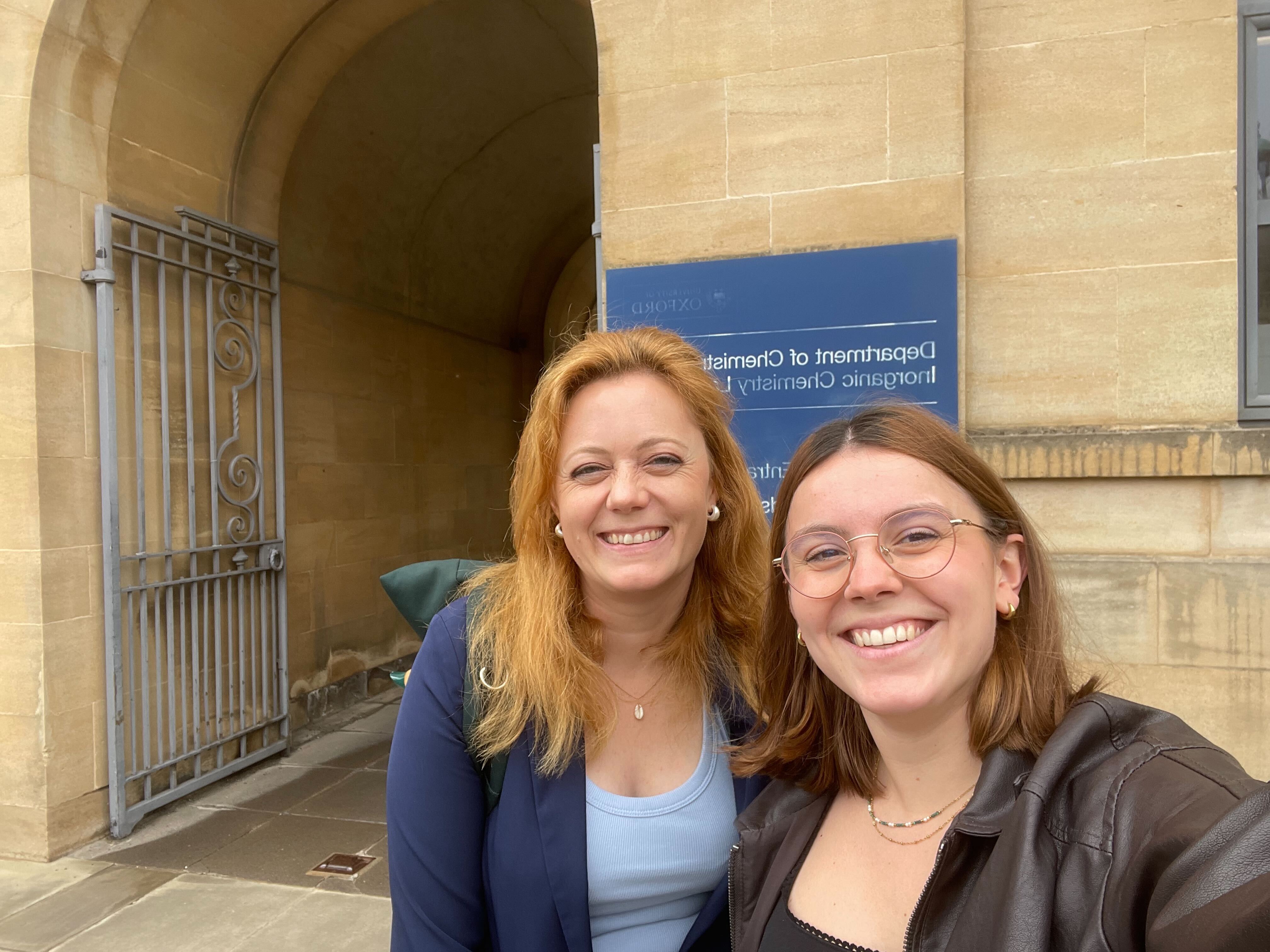
After being awarded the IUPAC Emerging Innovator Award in Analytical Chemistry for 2025 (you can read the official notice here) earlier this year, Dr Derek Craston, President of the Analytical Chemistry Division, delivered the award to Oxford in person last week. The award was presented to Anna in recognition of her leadership in exploring the structure-electronic structure relationship in inorganic solids with a goal of integrating such materials into opto-electronic devices. Anna delivered a remote award presentation during 53rd IUPAC General Assembly in Kuala Lumpur, Malaysia (sadly she was not able to attend in person.

This award is a reflection of the continuous, dedicated work of all group members to develop and apply techniques such as hard X-ray photoelectron spectroscopy creating impact across the broader chemical and physical sciences.


Internship success

Charlotte André has spent the last four months with us for an internship, forming part of her degree at the Université Paris-Saclay, France. Charlotte has been working on sol-gel deposition routes for post-transition metal oxide thin films, understanding the role dopants play in their electronic structure and film morphology. Charlotte has had an incredibly productive time with us, making well over a hundred films and successfully optimising both dip- and spin-coating routines. In parallel, she had her first experience at a synchrotron, joining an experiment at beamline I09 at Diamond Light Source, and got involved in two collaborations, analysing HAXPES data of oxide materials. We wish Charlotte all the best for the remainder of her degree and for her future plans to become a Chemistry teacher!


Gold, again!

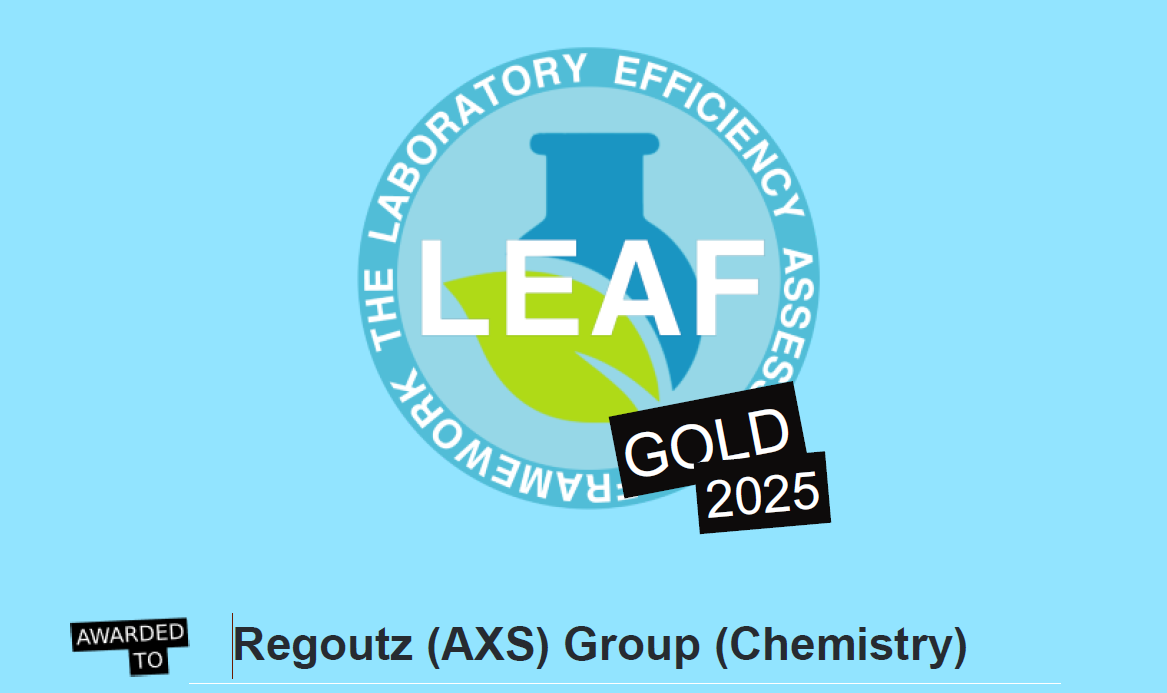
For the third year running and for the first time since our move to Oxford we have achieved a LEAF Gold Award! LEAF stands for Laboratory Efficiency Assessment Framework and was started at UCL to improve the sustainability and efficiency of laboratories. It has since been adopted by many institutions, including Oxford. With the Concordat for the Environmental Sustainability of Research and Innovation Practice being signed by institutions and funding agencies, LEAF accreditation is one way to evidence laboratory sustainability.

We continue to make progress on our LEAF journey and in the past year have focused on transferring and adjusting our ways of working as we have transitioned from UCL to Oxford. We have implemented further water and energy saving measures and have revisited our sample and chemical inventories.

If you want to know more about the LEAF process, check out the UCL-based website and do get in touch with Anna, if you have any questions or want to know more.


Mid-term meeting for MSCA BETTERXPS project

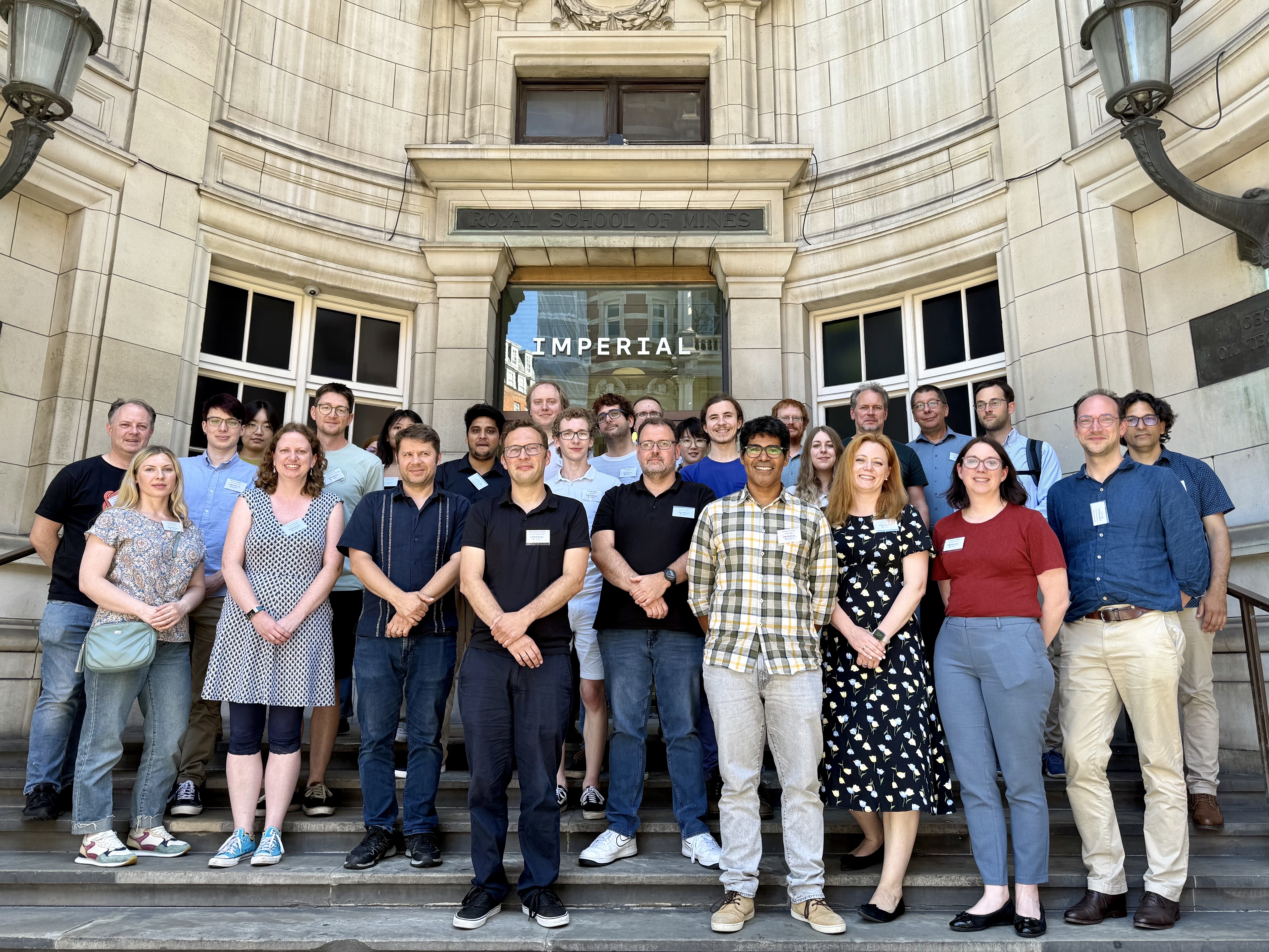
On the 30th June and 1st of July the mid-term meeting of the Marie Skłodowska-Curie Actions Staff Exchanges project BETTERXPS was held at Imperial College, London, UK. We are a proud member of the consortium, which aims to enable and encourage the more widespread use of computational methods in the interpretation of experimental XPS spectra.

Day 1 of the meeting was a scientific symposium covering both theoretical and experimental aspects of photoelectron spectroscopy from the partner academic and research institutions, our industrial partners ScientaOmicron and SPECS, as well as external invited speakers, including Dr Laura Ratcliff from the University of Bristol and Dr Dorothea Golze from TU Dresden. It was also great to see many colleagues from the UK PES community who could attend the day and contribute to the discussions.

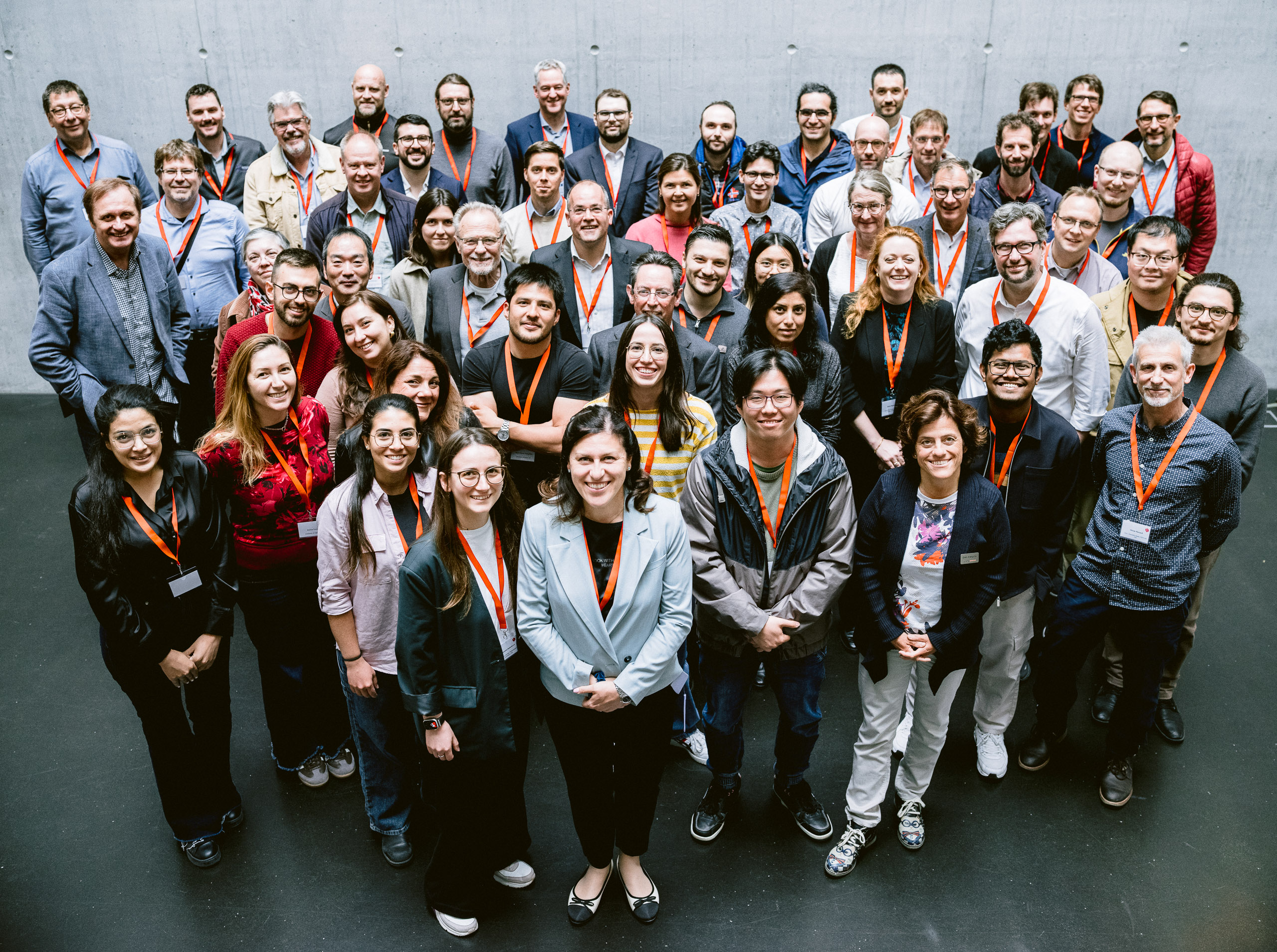
Participants of the Scientific Meeting on Day 1 of the mid-term review at Imperial College


Congratulations to Dr Andrey Ten

Congratulations are in order to Dr Andrey Ten for successfully defending and submitting his PhD at the University of Cambridge. Andrey worked with Prof Emilie Ringe in the Optical Nanomaterial Group. Andrey’s PhD thesis focused on the synthesis, characterisation, and application of magnesium nanoplasmonics and you can find his thesis here.

We had the privilege of working with Andrey during his MSc in Chemical Research at UCL in 2020/21 and wish him well for all his future endeavors!


Aysha Riaz has been selected as one of NuNano’s 2025 Women in AFM

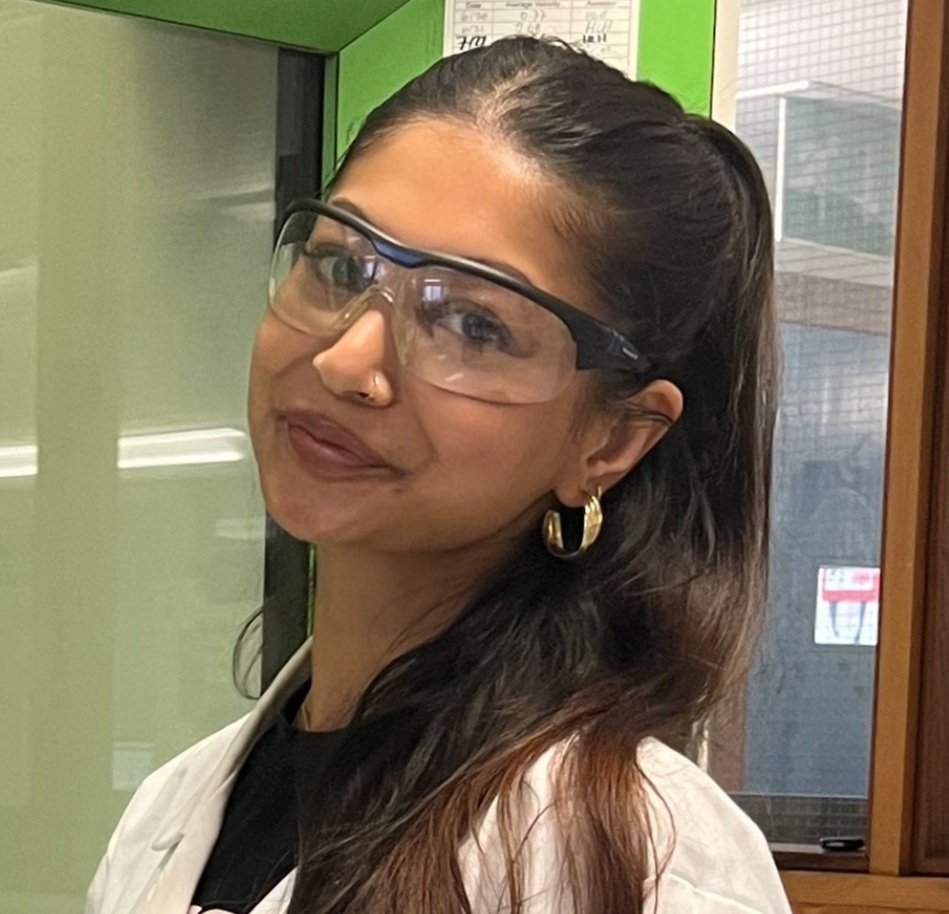
Congratulations to Aysha who has been selected as one of the NuNano 2025 Women in AFM! Aysha has used AFM throughout her PhD to study the surface morphology and film uniformity of her metal oxide thin films which she makes using sol-gel synthesis. She has been able to link changes in solution chemistry with film properties, including those characterised by AFM. You can read some of her recent work here. Aysha is currently undertaking a Nuffield Foundation Parliamentary Office of Science and Technology (POST) Fellowship whilst also finalising her PhD thesis.


Anna awarded IUPAC 2025 Award in Analytical Chemistry

Anna is the recipient of the IUPAC Emerging Innovator Award in Analytical Chemistry for 2025 (you can read the official notice here). The award was given for her leadership of an interdisciplinary team of researchers exploring the structure-electronic structure relationship in inorganic solids with a goal of integrating such materials into opto-electronic devices.

This award is a reflection of the continuous, dedicated work of all group members to develop and apply techniques such as hard X-ray photoelectron spectroscopy creating impact across the broader chemical and physical sciences.

The Analytical Chemistry Division of the IUPAC presents two awards in the field of analytical chemistry each biennium. The second award in 2025, the IUPAC Analytical Chemistry Medal, recognises lifetime achievement and has been awarded to Graham Cooks, Henry B. Hass Distinguished Professor of Chemistry, Purdue University, USA in recognition of his lifetime achievements in the field of mass spectrometry. Congratulations!


HAXPES workshop in Switzerland

EMPA (Swiss Federal Laboratories for Materials Science and Technology) hosted a HAXPES workshop on “Fundamentals, Instrumentations and Applications” between May 7th -9th 2025 at their Duebendorf campus on the outskirts of Zurich. The workshop was organised by Dr Claudia Cancellieri and Dr Lars Jeurgens and brought together the two all too often separate communities of physics-driven spectroscopy and surface analysis. It was a great opportunity to catch-up with old friends and make new connections. Anna had the pleasure of delivering a keynote on our ongoing work on the electronic structure of metal hydrides.

EMPA is also the home of a laboratory-based XPS/HAXPES system from PHI QUANTES (with Al and Cr Kα X-ray sources), which is combined with several in-situ capabilities.


How to mitigate radiation damage? Exploring the dark side

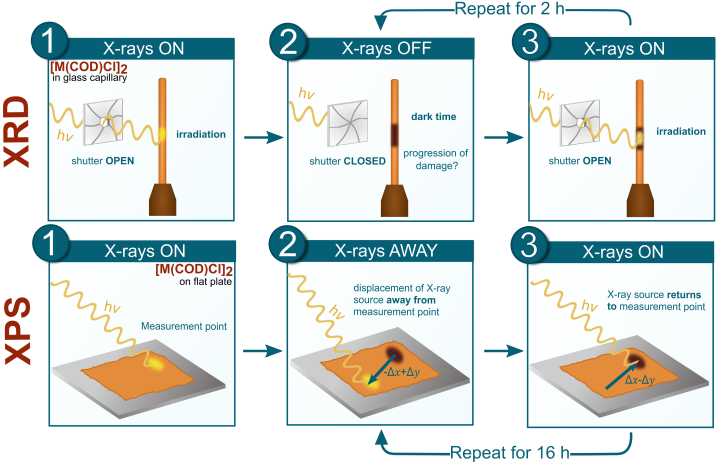
Investigating discontinuous X-ray irradiation as a damage mitigation strategy for [M(COD)Cl]2 catalysts
N. K. Fernando, C. A. Murray, A. L. Thompson, K. Milton, A. B. Cairns, and A. Regoutz, Physical Chemistry Chemical Physics, 27, 9417, 2025.

Radiation-induced changes have become an aspect of everyday life for many of us who use X-ray based techniques. With the ever increasing photon flux and ever decreasing beam footprints of laboratory and synchrotron systems radiation damage is becoming an increasing challenge for material characterisation using techniques such as X-ray spectroscopy and diffraction.

In our most recent exploration into this topic, led by Dr Nathalie Fernando, we explored a possible mitigation strategy, where short, X-ray-free “dark” periods are introduced in-between measurement windows. However, it is unclear whether this strategy helps to minimises radiation-induced damage or, in actuality, promotes it through a phenomenon called “dark progression”, i.e. the increase or progression of radiation damage that occurs after the X-ray beam is turned off. This work is now published in the RSC journal Physical Chemistry Chemical Physics.


Laying the groundwork for optoelectronic devices – the influence of stabiliser concentration on the formation of In2O3 thin films

The influence of stabiliser concentration on the formation of In2O3 thin films
A. A. Riaz, C. Kalha, M. Basso, M. Furedi, and A. Regoutz, Journal of Materials Chemistry C, 13, 177, 2025.

In2O3 is the parent oxide semiconductor for many transparent conducting oxides owing to its comparatively wide band gap and reasonable conductivity. The ability to fabricate thin films of In2O3 utilising simple and cheap solution-processed methods such a sol-gel has made it appealing for applications in displays and solar cells. The use of stabilisers in sol-gel synthesis is prevalent in current research to maintain the solution stability over time and facilitate the formation of strong M–O–M bonds. However, understanding the fundamentals behind the chemistry, especially the effect of varying the stabiliser concentration, is essential and often overlooked.

In our paper published in RSC Journal of Materials Chemistry C and led by Aysha Riaz, we show the impact on the quality of In2O3 thin films when altering the concentration of monoethanolamine used as a stabiliser. Utilising a combination of characterisation techniques such as X-ray photoelectron spectroscopy, atomic force microscopy, and ellipsometry to probe the chemistry of the thin films and UV-visible and infrared spectroscopy to follow the solution chemistry, the optimum stabiliser ratio concentration was determined.

This is the first first author research paper of Aysha’s PhD, with hopefully more to follow! Curran Kalha and Maria Basso provided support and training and the ellipsometry data were collected with the help of Máté Füredi.