Regoutz Group


2018 UROP students

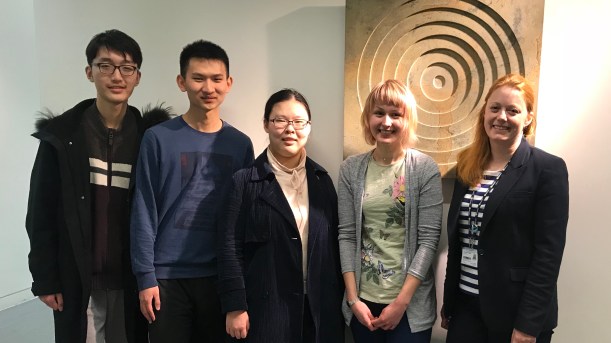
This summer we have four great UROP (Undergraduate Research Opportunities Programme) students joining the group. All four are currently studying towards their BEng/MEng degrees in Materials Science and Engineering in the department. Amy Tall has been awarded an EPSRC Vacation Bursary, and Xiangqi Hu has been awarded an Imperial College UROP Bursary. Zhuocheng Xu’s project will be supported by Thermo Fisher Scientific.

Xiangqi Hu and Qiaochu Luo will be joining our CHIRP project team working on copper oxide nanostructure for glucose sensing, Amy Tall will be working on sol-gel synthesis for metal oxide thin films, and Zhuocheng Xu will be looking at radiation damage in catalyst systems.

If you want to know more about these great young scientist check out the group website.
IMG_4155

Our 2018 UROP students: Qiaochu Luo, Zhuocheng Xu, Xiangqi Hu, and Amy Tall (from left to right). 


Intermetallic PdIn Nanoparticle Catalysts

The final version of the PdIn intermetallic nanoparticles for CO2 to methanol hydrogenation paper is out in Applied Catalysis B: Environmental! Besides following changes in the sample characteristics using core level photoemission and correlating these with other characterisation methods, it also contains valence band spectra studying the change in electronic structure upon variation of the mixture of Pd and In in these intermetallic nanoparticles. The strong quenching of the density of states and change in structure of the valence states can be used to identify the sample chemistry in detail and can be directly linked to the behaviour of the catalysts.

This paper follows our previous work on Pd2Ga-based catalysts which we published earlier this year in ACS Catalysis.

PS: The paper is open access so what are you waiting for? Go read it now 🙂

pdin_header


Characterisation LEGO

A few weeks back I found a great website by Boise State University which has LEGO instructions for a range of characterisation instruments. So naturally I had to try them out. I used Toy Pro to get all the necessary pieces and built the SEM and the XRD. I made a few custom adjustment particularly for the screens and control panels. I love the fact that the door opens on the XRD. Sadly, for now there aren’t any instructions for XPS – maybe I need to look into designing my own.

There might be a couple of safety issues in these labs (particularly the bunny next to the Erlenmeyer on the floor) but other than that I love the kits!


Polarisation dependent HAXPES – New paper out

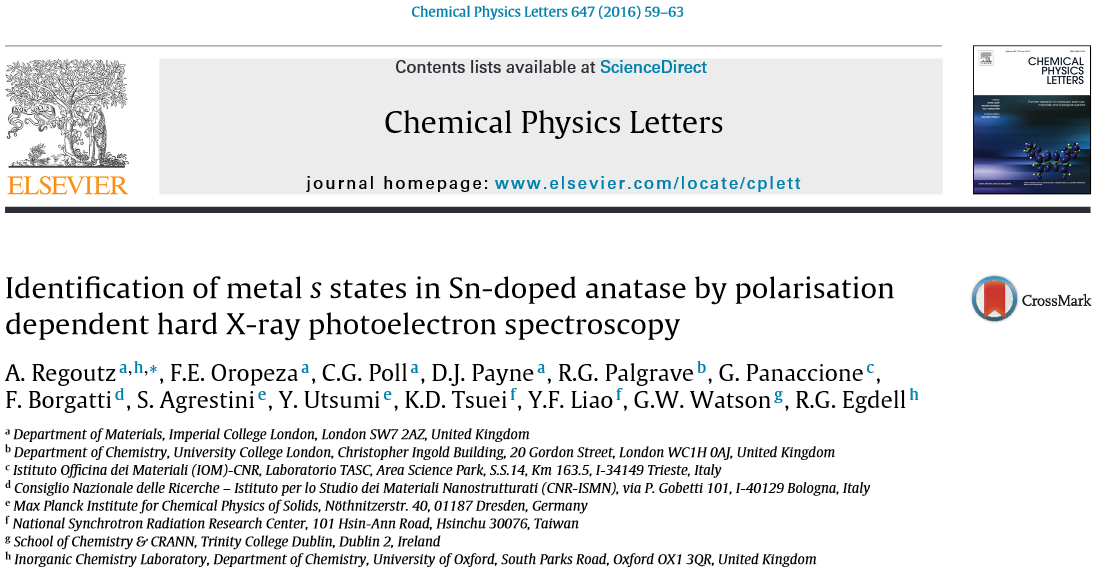
A little while ago now Chemical Physics Letters published our paper on polarisation dependent hard X-ray photoelectron spectroscopy (HAXPES). This technique is still relatively new and not many publications are available. It shows particular potential for the identification of s states in valence band. The experiments were undertaken at the Taiwanese beamline BL12XU at SPring-8.

You can find the full article on the Chem. Phys. Lett. website

chemphyslett


New paper in press – Ga:In2O3

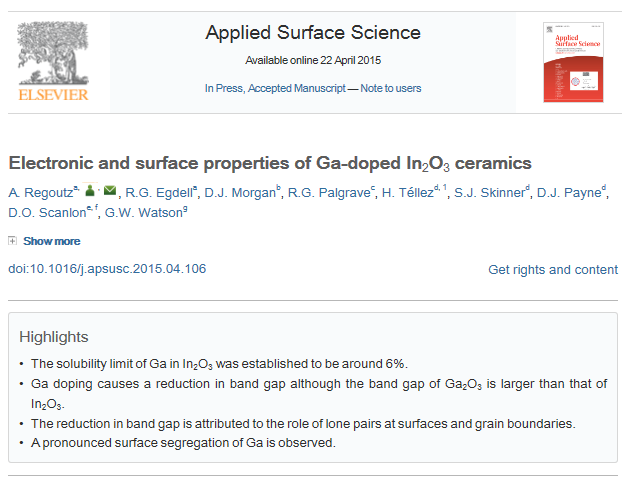
Finally, this beast of a paper has been accepted and is currently in press. You can already find the accepted manuscript on the Elsevier website. After a long review process I am very relieved that this is finally done. Now waiting for the proof and then the final version will hopefully be available soon. But with 19 figures and the current manuscript having a whopping 51 pages this might take a moment or two.

paper


PhD studentship available

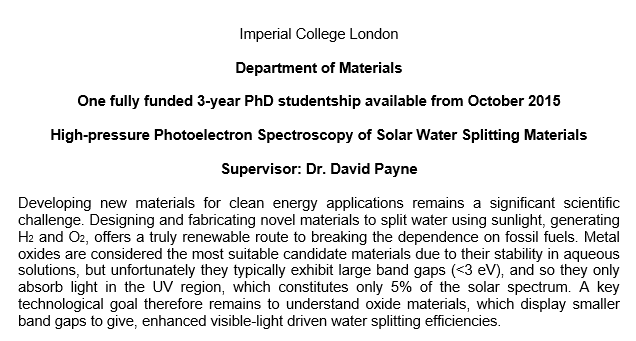
Our group has a fully funded 3-year PhD studentship in “High-pressure Photoelectron Spectroscopy of Solar Water Splitting Materials” available to start in October 2015. It’s open to all UK/EU students who meet the EPSRC residency criteria.Payne Studentships Ad 2015

The full advert can be found on the group website http://payneresearch.org. For any further information please contact Dr David Payne (d.payne – at – imperial.ac.uk).


Pyrochlore Beauty

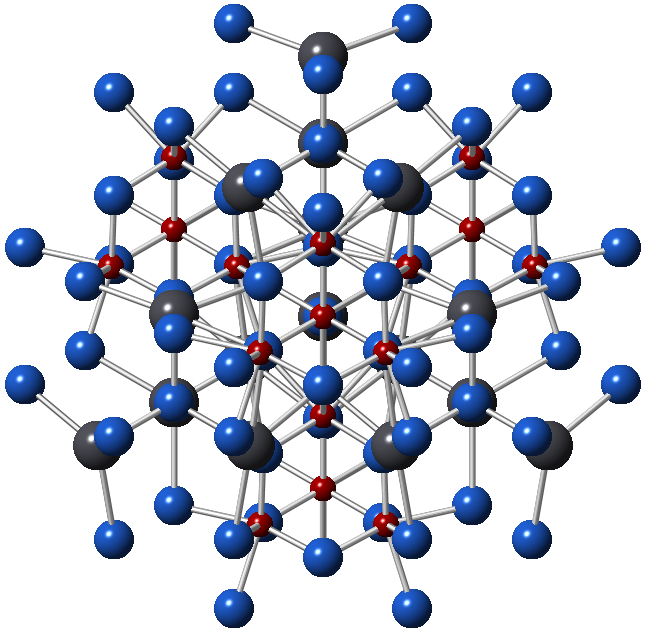
Since moving to Imperial in January I’ve gotten involved in a project on pyrochlores. To be more specific the “species” of interest is Pb2Ir2O6O’. Besides the fact that I seem to end up working with toxic chemicals wherever I go this is actually a structure of beauty. During my initial literature search I decided to play with the ONE reference structure on the ICSD and out came the picture below. It’s a view of the [111] face of said pyrochlore with the atom colours changed. I thought this is too pretty not to share. Now we’ll see how well the synthesis goes. Watch this space!

Pb2Ir2O7


New Academic Home

With the new year comes a new job. Today is day 2 at my new academic home, the Department of Materials at Imperial College London. As I described it earlier today: I have an ID card and a lab coat, and my email account works. All sorted.

To all the exciting times to come!

2015-01-05 09.21.29

2015-01-05 09.26.12

2015-01-06 09.30.12